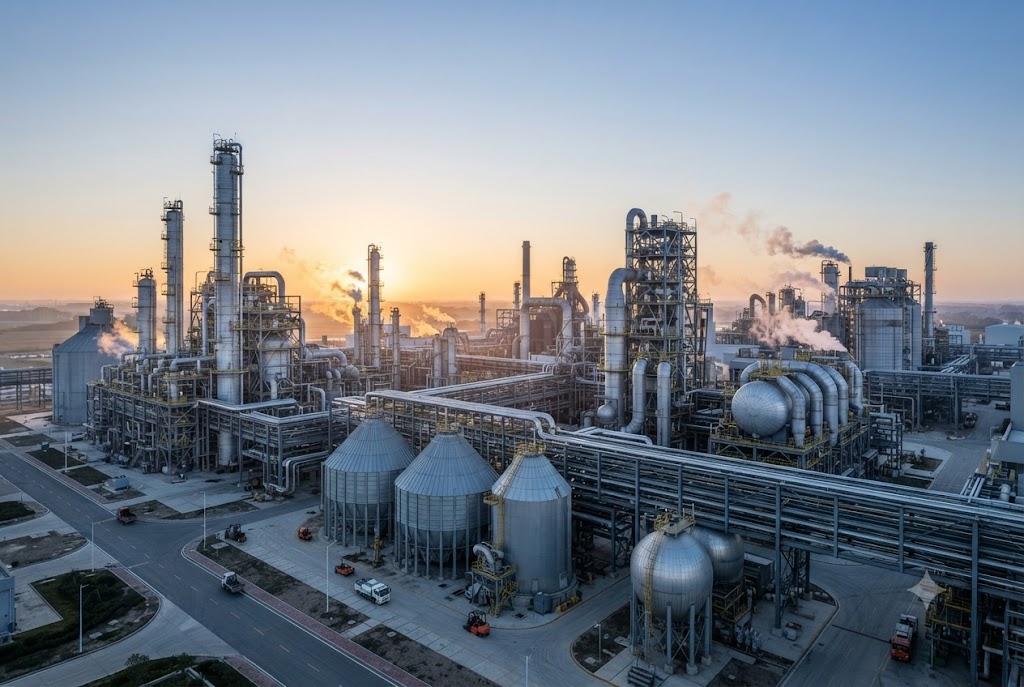
Global polymer markets face a prolonged period of structural oversupply as the world’s largest producer continues its aggressive expansion trajectory. China PVC capacity is forecast to reach 33.1 million mt/y in 2026, cementing the nation's dominance in global vinyl resin production. This projected figure follows a rapid increase from 28.8 million mt/y in 2024 to 31.6 million mt/y in 2025 according to CERA data.
Traders and procurement managers recognize this sustained capacity growth as a fundamental shift in market dynamics rather than a temporary cycle. The sheer scale of these additions ensures that Chinese producers will dictate global pricing floors for years to come. Domestic operators leverage integrated coal-to-chemicals complexes to maintain low cash costs even during periods of weak demand.
The following sections explore the implications of this massive capacity buildout and what it means for your next contract. Understanding these structural drivers is essential for navigating the current supply landscape.
Drivers Behind the Sustained Capacity Buildout
Chinese petrochemical groups continue to commission new coal-based vinyl chloride monomer units across western and northern provinces. These inland facilities benefit from abundant domestic coal reserves and integrated power generation that shields them from volatile international energy markets.
Government industrial policies actively support this expansion as part of broader regional development strategies. Local authorities provide subsidized land, favorable financing and infrastructure investments to attract large-scale chemical manufacturing projects.
Existing producers also expanded their sites to achieve greater economies of scale and improve operational efficiency. These brownfield expansions add significant volume without the full capital expenditure required for entirely new greenfield complexes.
The cumulative effect of these investments created a structural surplus that domestic demand cannot absorb. Producers must now rely heavily on export markets to balance their operating rates and maintain positive cash flows.
Global Pricing Implications of Record Capacity
The addition of over four million tonnes of new capacity in just two years permanently lowered the global cost curve for PVC resin. Chinese exporters price their material based on marginal cash costs rather than full capital recovery models.
International producers face intense pressure to match these aggressive export offers or lose market share in key importing regions. High-cost naphtha-based and ethylene-based manufacturers in Europe and Northeast Asia find themselves particularly vulnerable to this downward pricing pressure.
Global benchmark prices increasingly reflect Chinese export parity rather than traditional regional supply-demand fundamentals. This pricing dynamic compresses margins across the entire international value chain and forces widespread rationalization.
Buyers benefit from lower input costs but face increased volatility as Chinese operating rates fluctuate with domestic policy changes. Spot markets react violently to any unexpected production curtailments or export restrictions from major Chinese facilities.
Export Competitiveness and Trade Flow Shifts
Chinese producers leveraged their expanded capacity to capture significant market share across Southeast Asia, India and Africa. These emerging markets possess growing construction and infrastructure sectors that consume massive volumes of pipe and profile extrusion grades.
Export volumes surged as domestic builders faced a prolonged downturn in residential real estate development. Producers redirected surplus resin toward international waters to maintain high utilization rates at their newly expanded facilities.
Trading houses played a crucial role in facilitating this massive redirection of global trade flows. These intermediaries absorbed logistical risks and provided the necessary financing to move material from inland Chinese plants to distant overseas buyers.
Traditional exporting nations like the United States and South Korea lost significant ground in these key growth markets. Their higher cost structures prevented them from competing effectively against the sheer volume and pricing aggression of Chinese suppliers.
Downstream Market Absorption Challenges
Domestic Chinese demand growth failed to keep pace with the rapid capacity expansion over the past three years. The severe downturn in property construction eliminated the primary consumption driver for rigid PVC applications.
Infrastructure spending provided some offsetting demand but could not fully compensate for the loss of residential building activity. Government stimulus measures focused more on advanced manufacturing and green energy rather than traditional construction materials.
Export markets also showed signs of saturation as multiple regions implemented anti-dumping duties to protect local industries. India, Turkey and several Latin American countries imposed tariffs that restricted Chinese import volumes and pressured margins.
Producers responded by diversifying into higher-value specialty grades and downstream finished products. This strategic pivot aimed to capture more value domestically rather than relying solely on commodity resin exports.
Strategic Responses from International Producers
Non-Chinese PVC manufacturers implemented aggressive defensive strategies to survive in this oversupplied environment. Several major European and Japanese producers announced permanent facility closures or indefinite idlings to reduce regional supply.
Remaining international operators shifted their product slates toward specialized high-margin applications that face less direct import competition. Medical, automotive and wire-and-cable grades offered better profitability than basic construction profiles.
Companies also pursued consolidation through mergers and acquisitions to achieve greater scale and reduce fixed costs per tonne. This industry rationalization aimed to create stronger entities capable of weathering prolonged margin compression.
Trading desks restructured their global networks to focus on niche arbitrage opportunities rather than bulk commodity flows. Identifying specific grade shortages or regional supply gaps became more profitable than competing on baseline pricing.
What Procurement Teams Should Do Now
Procurement managers must treat this expanded capacity base as a permanent feature of the global supply landscape. The underlying structural drivers that created this surplus will persist regardless of short-term demand fluctuations.
Audit your current supplier portfolio to ensure adequate geographic and origin diversification. Over-reliance on any single region exposes your operations to sudden policy shifts or trade remedy actions.
Negotiate contracts that explicitly link pricing to transparent international benchmarks reflecting true global supply conditions. Avoid fixed-price agreements that fail to capture the deflationary pressure of sustained capacity growth.
Build strategic relationships with multiple Chinese suppliers to secure reliable access during periods of export restriction or domestic demand recovery. Having qualified alternatives provides crucial leverage during negotiations and protects against supply disruptions.
Ready to source PVC resin from verified global suppliers? Explore competitive offers on our platform today.