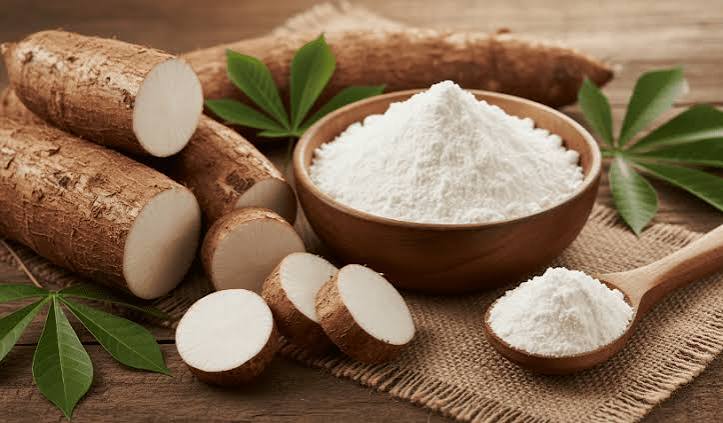
Clean-Label Starch Alternatives Replacing Chemically Modified Variants
The starch industry is entering a new phase in which functionality alone is no longer enough. Food manufacturers increasingly need starch ingredients that deliver viscosity, texture, stability and process tolerance while also fitting shorter, more recognizable ingredient lists. This is creating a stronger procurement case for clean-label starches produced through physical rather than conventional chemical modification.
The shift does not mean chemically modified starches are disappearing. They remain highly functional and cost-effective across demanding food applications. Instead, the market is becoming more segmented: chemically modified starches continue to serve applications where maximum stability and precise performance are critical, while physically modified and clean-label starches are gaining ground where consumer-facing ingredient simplicity carries commercial value.
Why Clean-Label Starch Is Becoming a Procurement Priority
Traditional chemically modified starches are engineered with chemical reagents to improve characteristics such as viscosity, stability, freeze-thaw performance, shear resistance and processing tolerance. Their technical performance is well established, but consumer and brand pressure around recognizable ingredients has encouraged manufacturers to explore alternatives.
Clean-label starches can be produced through physical processes including heat-moisture treatment, annealing, extrusion, pre-gelatinization, ultrasound and high-pressure processing. These methods alter starch structure and functional behavior without relying on conventional chemical modification.
This is particularly important for food companies reformulating products around “natural,” “simple” or “minimally processed” positioning. For procurement teams, the question is therefore changing from “Which starch performs best?” to “Which starch provides the required performance while supporting the product's label and positioning?”
Physical Modification Is Expanding the Clean-Label Toolkit
Physical modification is not a single technology. It represents a portfolio of approaches that can target different starch characteristics.
Physical approach | Main functional opportunity | Potential applications |
|---|---|---|
Heat-moisture treatment | Changes gelatinization and digestion behavior | Bakery, cereals, functional foods |
Annealing | Improves structural and thermal characteristics | Sauces, processed foods |
Pre-gelatinization | Enables rapid hydration and cold-water functionality | Instant foods, sauces, beverages |
Extrusion | Combines heat, moisture and shear | Snacks, cereals, convenience foods |
Ultrasound | Alters granule structure and functional properties | Thickeners, sauces, specialty formulations |
High-pressure processing | Modifies starch structure without conventional chemical reagents | Premium and innovative food products |
Starch blending | Combines different starch behaviors | Clean-label texture and viscosity systems |
These approaches can change pasting, rheological, thermal and structural properties, allowing suppliers to design starches for specific formulation requirements.
The significance for procurement is that clean-label starch is increasingly becoming a performance-engineered ingredient, rather than simply native starch with a marketing advantage.
The Biggest Advantage: A Simpler Ingredient Declaration
One of the strongest commercial arguments for clean-label starch is the difference in how the ingredient can be positioned on a product label.
Research reviewing clean-label starch notes that physically and enzymatically modified starches can be treated as ingredients rather than conventional chemically modified food additives, depending on the applicable regulatory framework. This allows manufacturers to use simpler source-based descriptions such as starch from corn, potato, tapioca or other botanical sources rather than relying on the terminology associated with chemically modified starches.
That distinction matters because ingredient lists increasingly influence purchasing decisions.
For brands selling premium bakery products, sauces, snacks, cereals and functional foods, a cleaner declaration can support:
Natural-positioning strategies
Shorter ingredient lists
Consumer transparency
Reformulation programs
Premium product positioning
“Free-from” or minimally processed claims where legally appropriate
The procurement value therefore extends beyond technical functionality into brand economics.
Ranking the Most Important Clean-Label Starch Routes
1. Physically Modified Starch — Strongest Near-Term Route
Physical modification offers the clearest bridge between conventional modified starch functionality and clean-label expectations.
Heat treatment, extrusion, ultrasound, pre-gelatinization and related technologies can alter starch behavior without conventional chemical reagents. Recent research is increasingly focused on precise control of starch structure and the relationship between physical processing and functional performance.
For procurement teams, this makes physically modified starch the most commercially relevant clean-label replacement category.
2. Strategic Starch Blends — High Commercial Potential
Blending different native or physically treated starches can create functionality that a single native starch cannot deliver.
A recent study, for example, demonstrated that a blend of ultrasound-treated rice and potato starch could produce viscosity and stability comparable to xanthan gum in a ketchup application.
This suggests that suppliers can increasingly engineer ingredient systems rather than individual starches.
3. Pre-Gelatinized Starches — Established and Scalable
Pre-gelatinization is already an established physical approach and can provide cold-water swelling and rapid thickening.
Its advantage is relatively straightforward: manufacturers can obtain useful functionality while maintaining a clean-label positioning. This makes pre-gelatinized starch particularly relevant for instant foods, sauces, dry mixes and convenience products.
4. Emerging Non-Thermal Technologies — Future Growth Area
High hydrostatic pressure, pulsed electric fields, ultrasound, cold plasma and other non-thermal technologies are attracting research attention.
A 2026 review describes these technologies as promising tools for precise, multiscale starch modification, while also highlighting remaining challenges around scale-up, process combinations and industrial validation.
For procurement, these technologies should therefore be treated as emerging strategic options, rather than automatic replacements for today's high-volume modified starch supply.
The Performance Gap Still Matters
Clean-label starch has an important limitation: removing chemical modification does not automatically reproduce every property of a highly engineered modified starch.
Recent technical literature continues to identify challenges involving viscosity, thermal stability, shear resistance, texture and freeze-thaw performance.
This creates a critical procurement distinction.
A starch can be attractive from a label perspective but fail commercially if it:
Breaks down during high-shear processing
Loses viscosity during heating
Produces poor freeze-thaw stability
Changes product texture
Creates excessive processing variability
Requires higher dosage
Increases total formulation cost
The winning ingredient is therefore not necessarily the cleanest starch. It is the starch that provides the best balance between label simplicity and functional performance.
Why Cost Per Kilogram Can Become Misleading
Clean-label starch procurement should move beyond a simple price-per-ton comparison.
A physically modified starch may cost more per kilogram than a conventional native or chemically modified equivalent. But if it allows a manufacturer to:
Remove another additive,
Simplify the ingredient declaration,
Reduce the number of formulation components,
Support premium positioning,
Improve consumer acceptance,
Or replace multiple functional ingredients,
its total economic value may be higher.
This creates a new procurement metric: functional cost per finished product, rather than simply cost per kilogram of starch.
Bakery and Sauces Are Important Testing Grounds
Bakery and confectionery are particularly relevant because starch functionality directly influences texture, structure and shelf performance.
Clean-label starches are increasingly being investigated for these applications because manufacturers need to balance functionality with consumer demand for natural and minimally processed ingredients.
Sauces and dressings provide another attractive application because viscosity and stability are critical. Research showing physically treated starch blends performing similarly to xanthan gum in ketchup illustrates how clean-label starch systems could potentially replace or reduce other functional ingredients.
The broader opportunity is therefore not limited to replacing “modified starch.” Clean-label starch can also become a tool for simplifying entire formulation systems.
Sustainability Adds Another Layer to the Procurement Decision
The clean-label movement is increasingly overlapping with sustainability.
Physical modification can reduce dependence on chemical reagents, while emerging technologies are being explored as greener processing approaches. The 2026 literature also links clean-label starch development with biodegradable packaging, agricultural by-product utilization and more sustainable processing strategies.
However, procurement teams should avoid assuming that every physically modified starch automatically has a lower environmental footprint.
Energy requirements, processing intensity, water use, transportation, raw-material origin and manufacturing scale still matter.
The strongest supplier proposition will therefore combine clean-label compatibility with measurable process and sustainability advantages.
How Starch Procurement Criteria Are Changing
Traditional procurement priority | Emerging clean-label priority |
Price per kg | Total functional cost |
Viscosity | Viscosity + label compatibility |
Supply volume | Supply reliability + scalability |
Native botanical source | Source + processing method |
Batch consistency | Consistency + application performance |
Technical specification | Technical + regulatory documentation |
Chemical modification capability | Physical/enzymatic modification capability |
Single ingredient performance | Formulation-system performance |
This shift is strategically important because it changes the supplier-selection process.
Food manufacturers increasingly need suppliers capable of explaining how the starch was produced, what functional properties it provides, how stable those properties are and how it behaves inside the final formulation.
What Buyers Should Ask Starch Suppliers
A clean-label starch specification should go beyond moisture, ash and viscosity.
Procurement teams should evaluate:
Botanical source — corn, potato, tapioca, rice, wheat or other source.
Modification method — native, physical, enzymatic or combination process.
Functional performance — viscosity, gelatinization, swelling and stability.
Process tolerance — heat, shear, acid and processing time.
Freeze-thaw stability — particularly important for frozen and refrigerated foods.
Sensory impact — mouthfeel, opacity, texture and flavor interaction.
Dosage requirement — whether additional starch is needed to match conventional performance.
Regulatory documentation — applicable food regulations and labeling requirements.
Batch consistency — variation between production lots.
Application support — formulation and technical assistance.
Supply resilience — raw-material availability and geographic diversification.
Sustainability data — processing energy, water use and sourcing information where available.
The supplier that can answer these questions convincingly has a stronger strategic position than one selling clean-label starch purely as a marketing concept.
The Competitive Landscape Is Moving Toward “Functionality Without Chemical Complexity”
The most important development is not that chemically modified starches are becoming obsolete.
Instead, the industry is moving toward functional equivalence with lower perceived ingredient complexity.
A 2026 academic volume dedicated specifically to clean-label starch reflects how far the field has progressed. Its coverage includes hydrothermal treatment, thermal and non-thermal physical modification, biotechnology, nanoencapsulation, food applications and biodegradable packaging.
This indicates that clean-label starch is developing into a broader technology category rather than remaining a niche reformulation strategy.
Ranking the Strategic Value of Clean-Label Starch Alternatives
Rank | Technology / strategy | Commercial potential | Key strength | Main challenge |
1 | Physically modified starch | Very High | Clean-label positioning + functionality | Matching modified-starch stability |
2 | Starch blends | High | Customizable performance | Formulation complexity |
3 | Pre-gelatinized starch | High | Established processing route | Application-specific performance |
4 | Enzymatically modified starch | High | Strong functional customization | Regulatory and process considerations |
5 | Non-thermal technologies | Emerging/High | Precise structural modification | Scale-up and economics |
6 | Native starch optimization | Moderate | Lowest processing complexity | Limited functionality |
The ranking suggests that physically modified starch currently represents the strongest bridge between clean-label demand and industrial functionality.
The Procurement Intelligence Signal
The growth of clean-label starch should be viewed as part of a larger shift in ingredient procurement.
Food manufacturers are increasingly looking for ingredients that solve several commercial problems simultaneously: functionality, consumer perception, regulatory compatibility, sustainability and formulation efficiency.
This is also connected to the broader functional-starch trend. Resistant starch, for example, is increasingly being incorporated into fiber-fortified products, showing how starches are moving beyond their traditional role as simple thickeners or texture agents.
That means the future starch supplier is less likely to compete solely on commodity price.
Instead, competitive advantage will increasingly come from specialized starch functionality, application knowledge, clean-label compatibility and reliable supply.
The Intelligence Takeaway
Clean-label starch alternatives are not simply replacing chemically modified starches; they are creating a new procurement segment built around functionality without conventional chemical modification.
Physically modified starch currently offers the strongest commercial pathway because it can alter viscosity, gelatinization, rheology and other functional characteristics while supporting simpler ingredient positioning.
For buyers, the strategic question is no longer whether clean-label starch is technically possible. It is whether a supplier can deliver consistent functional performance at an economically viable dosage while meeting labeling, regulatory and sustainability requirements.
The companies best positioned in this market will be those capable of converting native starches into highly functional, application-specific ingredients without sacrificing the clean-label value that is driving demand.
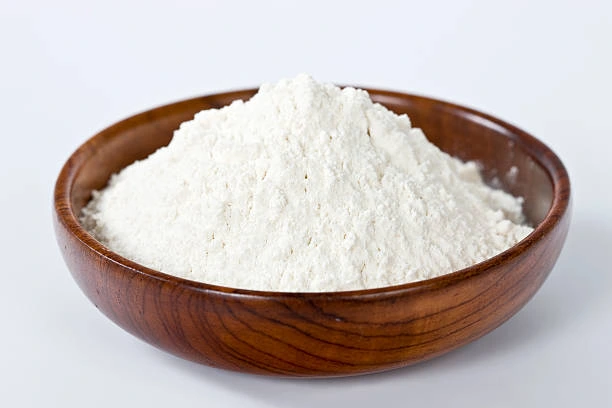
Rice Starch
Found this useful?