Coal Chemicals vs. Oil-Based Routes: China's Internal Competition for Commodity Chemical Dominance
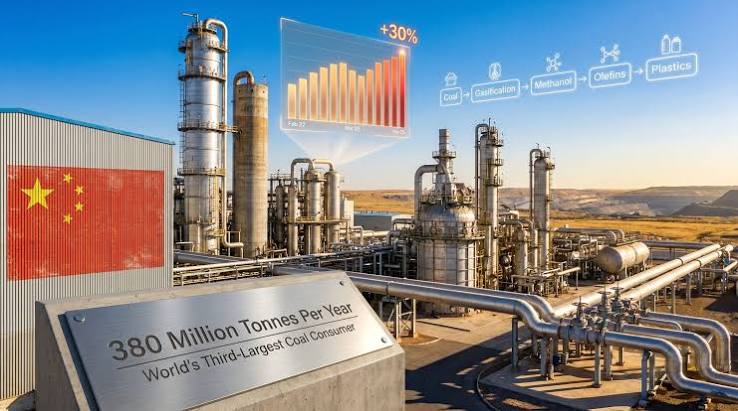
China's commodity chemical industry is increasingly shaped by competition between two major production pathways: traditional oil-based petrochemicals and coal-to-chemicals technologies. Coal-based routes are attractive because China has abundant domestic coal resources, while crude oil remains heavily dependent on imports. This makes coal an important strategic alternative when oil supply becomes expensive or geopolitically vulnerable. The competition is particularly relevant for products such as ethylene, propylene, methanol and polymers, where different feedstocks can ultimately serve overlapping downstream markets.
Coal-to-Chemicals Is Gaining Strategic Importance
Recent events have highlighted the security advantage of China's coal-based chemical sector. During the 2026 Iran-related oil disruption, Chinese coal-chemical producers benefited from lower domestic coal prices while oil-dependent petrochemical producers faced sharply higher crude costs. Reuters reported that coal-chemical companies saw their share prices rise as the sector demonstrated its ability to produce petroleum substitutes and chemicals without relying on vulnerable maritime oil routes.

Oil-Based Petrochemicals Still Dominate
Despite the expansion of coal chemistry, oil remains the dominant feedstock for many of China's most important commodity chemicals. Research on China's chemical material flows found that petroleum accounted for roughly 80% of ethylene production and 75% of propylene production, while coal played a much larger role in methanol and ammonia. China's modern refining and petrochemical complexes are also continuing to expand, with new ethylene capacity expected in 2026 even as the industry faces severe overcapacity.
The Economics Can Shift With Oil Prices
The competitive balance between the two routes is highly sensitive to feedstock prices. When crude oil becomes expensive or supply is disrupted, coal-based production can become relatively more attractive. When oil prices fall, however, oil-based crackers and integrated refineries can regain their cost advantage. The 2026 oil shock demonstrated this clearly, with China's coal-chemical sector gaining competitiveness while traditional petrochemical producers faced higher costs.
Carbon Intensity Is the Biggest Trade-Off
The major disadvantage of coal-based chemicals is their carbon footprint. Coal-to-chemicals processes generally require more energy and produce significantly higher emissions than conventional oil- and gas-based routes. A recent assessment estimated that China's coal-based chemical production avoided the need for roughly 100 million tonnes of oil equivalent of oil and gas in 2024, but generated an estimated 410–440 million tonnes of additional CO₂ emissions. This creates a major dilemma for chemical buyers and policymakers balancing feedstock security against decarbonization targets.
China Is Not Choosing One Route Over the Other
The more likely outcome is coexistence rather than a complete victory for either pathway. China is continuing to expand modern oil-based petrochemical complexes while simultaneously investing in coal-to-chemicals to strengthen feedstock security. Inner Mongolia, for example, is developing a major coal-to-oil, gas and chemicals base, while the country's petrochemical industry continues adding ethylene and downstream capacity.
What Buyers Should Watch
For commodity chemical buyers, the key issue is how this competition affects cost, availability and carbon intensity. If oil prices remain volatile, coal-based production could provide China with a valuable cost and security buffer. But tighter carbon regulations could increasingly penalize coal-derived chemicals and favor lower-carbon oil, gas or alternative-feedstock routes. China's internal competition between these pathways could therefore influence not only domestic chemical prices, but also the country's future position in global commodity chemical trade.
Acrylic Acid (Glacial) - China
Found this useful?