INEOS Marks 10 Years of US Ethane Supply to Grangemouth
INEOS Marks 10 Years of US Ethane Supply to Grangemouth
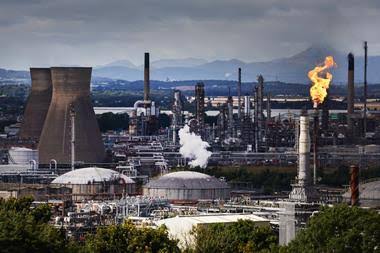
INEOS is celebrating a decade of US shale ethane supply to its Grangemouth complex in Scotland. On 28 September 2016 the purpose-built Dragon-class vessel JS INEOS Insight delivered the first cargo of 27,500 m³ of US ethane, establishing a transatlantic feedstock route that has since brought more than 400 shipments to the site. The project, backed by roughly $2 billion of investment in ships, storage and related infrastructure, was designed to offset declining North Sea gas availability and secure a competitive, reliable feed for ethylene and downstream petrochemical production at Grangemouth. Ten years on, the supply chain remains a central pillar of the site’s operating model.
Origin of the Project
As North Sea gas supplies tightened, Grangemouth faced a structural feedstock risk. INEOS responded by creating what it has described as a virtual pipeline from US shale production to Europe: a dedicated fleet of specialised ethane carriers and new receiving and storage infrastructure on the Firth of Forth. The first Dragon ship’s arrival in September 2016 marked the operational start of that system and demonstrated that large-scale, long-distance ethane transport was technically and commercially viable.
Scale of Deliveries Over a Decade
More than 400 ethane cargoes have been received at Grangemouth since the inaugural shipment. INEOS has illustrated the cumulative volume as equivalent to filling more than 175 ethane storage tanks, or an Olympic-sized swimming pool roughly every 23 hours over the ten-year period. That steady flow has underpinned continuous ethylene production and reduced the site’s exposure to volatile European natural-gas markets and to the progressive decline of local gas feedstock.
Fleet and Infrastructure
The original fleet comprised eight Dragon-class ethane carriers. By the end of 2026 the broader ethane fleet linked to INEOS’s requirements is expected to number 20 vessels, combining the Dragons with larger very large ethane carriers (VLECs). Onshore, the project included major storage capacity at Grangemouth—among the largest ethane tanks in Europe at the time of construction—and the systems needed to receive, store and feed the cracker. Recent operational developments at the site, including the commissioning of an additional furnace, have been supported by this secure ethane base.

Strategic Value in a High-Cost Energy Environment
European and UK gas prices have remained elevated relative to US levels for extended periods. Access to US ethane has given Grangemouth a feedstock cost and availability profile that pure reliance on local or pipeline gas could not match. Nick Williamson, CEO of INEOS O&P UK, has described the anniversary as evidence of the vision and engineering effort required to move shale ethane across the Atlantic and of the lasting benefit to manufacturing at the site.
Implications for European Petrochemicals
The Grangemouth ethane route is one of the clearest examples of European crackers adapting to the shale-gas era by importing advantaged US feedstock rather than shutting capacity. It has helped keep a major UK petrochemical complex running through periods of weak European margins and high energy costs. At the same time, it illustrates the growing dependence of some European assets on transatlantic logistics and on the continued willingness of US producers to export ethane.
Outlook
A decade after the first Dragon ship docked at Grangemouth, US ethane supply has moved from a bold experiment to a proven, high-volume feedstock artery. With more than 400 deliveries completed and the carrier fleet still expanding, the system is positioned to support the site for years to come. Its long-term role will depend on US ethane availability and pricing, shipping costs, and the competitiveness of Grangemouth’s downstream slate—but the tenth anniversary confirms that the original investment has delivered the feedstock security it was designed to provide.
Sources
Sodium Dihydrogen Phosphate (SDP) (99,5%) - China
Found this useful?