Covestro Leads EU Project to Produce Aniline From Biomass Through a Continuous Process
EU Project to Produce Aniline From Biomass Through a Continuous Process
Aniline has been made from petroleum-derived feedstocks for well over a century, and it remains one of the most consequential intermediates in the entire polyurethane supply chain. That's about to be tested. Covestro is now leading an EU-funded project, backed by $10 million in funding, to develop a continuous, biobased manufacturing process for aniline, a shift that could eventually decouple one of the industry's largest-volume chemicals from crude oil entirely. The project is scheduled to run until December 2029, giving the consortium roughly four years to move the concept from lab-scale development toward a commercially viable process.
Why Aniline Matters This Much
Aniline sits at the center of one of the chemical industry's most important value chains. It's the key precursor to MDI (methylene diphenyl diisocyanate), which in turn is the building block for rigid and flexible polyurethane foams used across construction insulation, automotive components, furniture, and appliances. Global aniline demand is tied almost directly to global polyurethane demand, which means:
Any disruption to conventional aniline production has downstream effects across construction, automotive, and consumer goods manufacturing.
Aniline's environmental footprint, since it is currently produced almost exclusively from petroleum-derived benzene and nitric acid, has made it a target for decarbonization efforts as polyurethane producers face growing pressure to lower embedded emissions.
A biobased alternative wouldn't just change aniline's sourcing, it would ripple through the pricing and sustainability profile of MDI and the polyurethane products built on top of it.
Covestro, as one of the world's largest polyurethane and polycarbonate producers, has a direct commercial interest in solving this problem rather than waiting for a competitor or supplier to solve it first.
What Makes This Project Different: The Continuous Process Angle
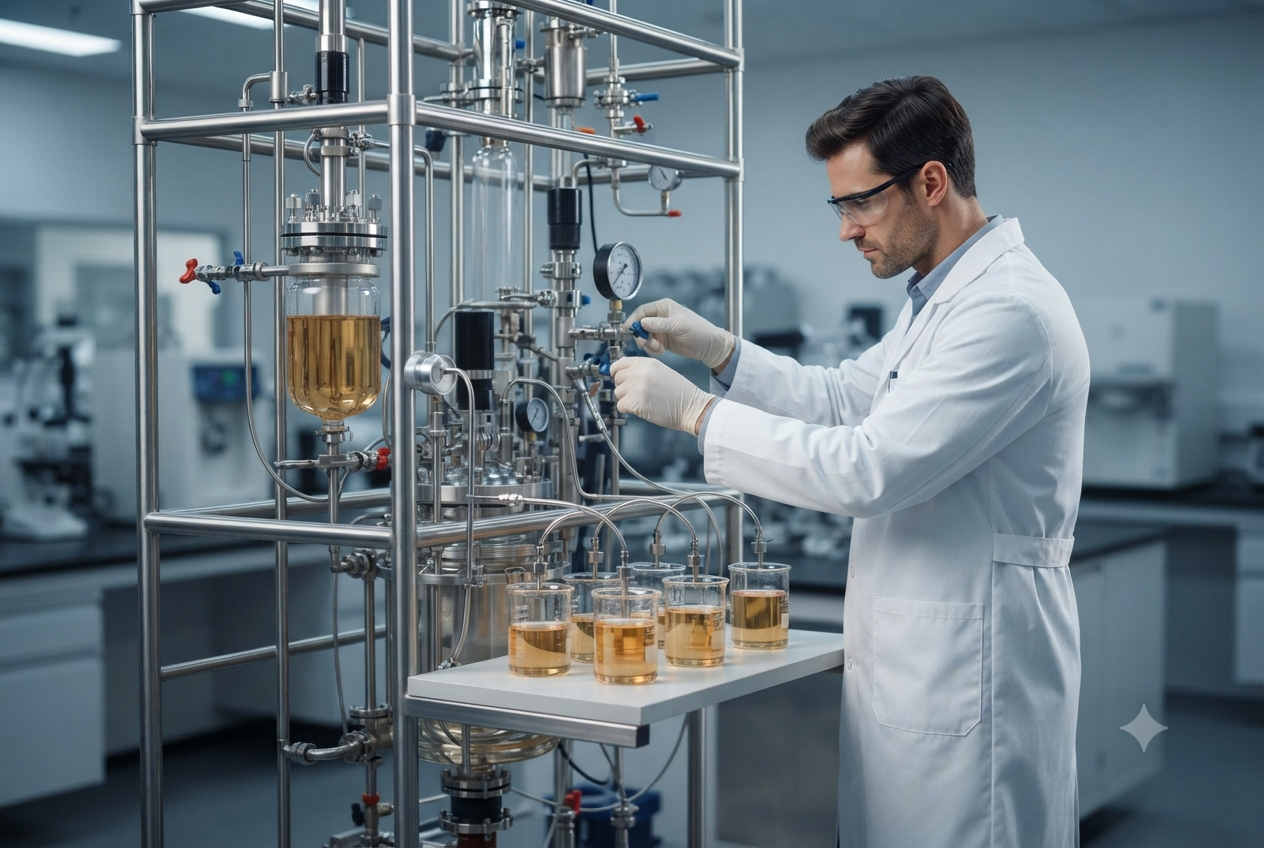
The project's stated goal isn't simply to produce aniline from biomass, researchers have explored biobased aniline routes before, it's to do so through a continuous process rather than a batch process. That distinction matters more than it might seem:
Continuous processes generally offer better yield consistency, lower per-unit energy consumption, and easier scale-up to commercial production volumes compared to batch methods.
Batch-based biobased chemistry often struggles to compete economically with established petrochemical routes precisely because it can't match the throughput efficiency of continuous petrochemical plants.
If the consortium can demonstrate a continuous biobased aniline process at meaningful scale, it directly addresses the cost gap that has kept many bio-based chemical alternatives from reaching commercial viability.
In other words, the technical bet here is as much about process engineering as it is about feedstock chemistry.
The Funding and Timeline Context
The $10 million in EU funding places this squarely within the bloc's broader push to decarbonize energy-intensive chemical manufacturing and reduce dependency on fossil-based feedstocks. A timeline running to December 2029 suggests this is being treated as a multi-phase research and development effort rather than a fast-tracked commercial rollout:
Early phases will likely focus on process validation and biomass feedstock selection at lab or pilot scale.
Later phases would need to address scale-up engineering challenges before any commercial-scale continuous production becomes realistic.
A four-plus-year runway is consistent with the kind of timeline typically required to move novel continuous chemical processes from concept to demonstrated feasibility, though full commercial deployment would likely extend well beyond the project's formal end date.
What This Signals for the Polyurethane Supply Chain
Even at an early research stage, a project of this scale from a producer as significant as Covestro sends a signal to the rest of the value chain. Buyers and suppliers tied to polyurethane production should watch this space for a few reasons. A successful biobased, continuous aniline process would give Covestro a differentiated sustainability story relative to competitors still reliant entirely on conventional petrochemical routes, which increasingly matters as downstream customers in construction and automotive face their own emissions reporting pressure. It could also, over a longer horizon, introduce a second feedstock pathway for aniline production, reducing the industry's exposure to benzene and crude oil price volatility. And because Covestro is leading rather than merely participating in the consortium, the company is positioning itself to control any resulting intellectual property and process know-how rather than simply licensing innovation developed elsewhere.
What This Means for Buyers Over the Next Five Years
This is a research-stage project, not an imminent supply shift, but it's worth tracking closely if your business touches polyurethane, MDI, or aniline sourcing in any way. The four-year timeline to December 2029 gives the market a rough window for when meaningful technical results, or the absence of them, should start to emerge. Buyers with long-term sourcing strategies tied to polyurethane feedstocks should treat this as an early signal of where sustainability-driven process innovation is heading in this category, and factor that into how they evaluate supplier relationships and contract structures over the coming years.
Ready to source polyurethane feedstocks from verified global suppliers? Explore competitive offers on our platform today.
Propylene Oxide
Found this useful?