Digital Transformation in Chemical Supply Chain Management
Chemical supply chains involve multiple stages, from raw material sourcing and manufacturing to warehousing, transportation and final delivery. Managing these activities across different countries and business partners requires accurate information, timely communication and coordinated decision-making. As global chemical markets become more interconnected, traditional supply chain management methods increasingly struggle to provide the speed and visibility that businesses need.
Digital transformation in chemical supply chain management is changing how manufacturers, distributors, importers and procurement teams coordinate these operations. Technologies such as artificial intelligence (AI), cloud computing, the Internet of Things (IoT), automation and advanced data analytics help businesses monitor supply chain activities and respond to operational challenges more effectively.
For chemical traders and industrial buyers, digitalization offers opportunities to improve purchasing decisions, reduce administrative delays and strengthen supplier relationships. Businesses that integrate digital tools into their operations can build more transparent, efficient and adaptable supply networks.
Why Digital Transformation Matters in the Chemical Industry
Chemical supply chains have unique operational requirements. Many products require specialized storage, temperature control, hazardous material handling and strict transportation procedures. Manufacturers also depend on consistent raw material availability to maintain production schedules and meet customer commitments.
Traditional supply chain systems often rely on separate spreadsheets, manual documentation, telephone communication and disconnected software platforms. These methods can create information gaps between suppliers, manufacturers, warehouses and logistics providers.
Digital transformation connects these activities through integrated systems that allow businesses to share information more efficiently.
Improving supply chain visibility
Visibility allows procurement managers and supply chain professionals to understand where materials are located, how much inventory remains available and whether shipments will arrive as scheduled.
Digital platforms can combine information from suppliers, warehouse management systems and transportation providers. This gives businesses a clearer picture of their supply chain activities and helps them identify potential delays earlier.
For example, an importer purchasing industrial chemicals from overseas manufacturers can use digital shipment tracking to monitor cargo movements, estimated arrival dates and customs clearance progress.
Supporting faster business decisions
Manual reporting can delay important procurement and inventory decisions. Digital systems organize operational information and present it in a format that managers can use to evaluate purchasing requirements.
A procurement team can review historical consumption, current inventory and supplier lead times before placing a new order. This reduces dependence on fragmented information and supports more consistent purchasing decisions.
Key Technologies Transforming Chemical Supply Chains
Digital transformation does not depend on one technology. It involves combining several tools to improve different stages of supply chain operations.
Artificial intelligence and predictive analytics
Artificial intelligence helps chemical businesses analyze large volumes of operational information and identify patterns that may be difficult to recognize through manual reporting.
Predictive analytics uses historical and current data to estimate future conditions. Chemical manufacturers and distributors can apply these capabilities to:
Demand forecasting: Estimate future chemical requirements using historical sales, customer orders and consumption patterns.
Inventory planning: Identify potential shortages and recommend appropriate replenishment levels.
Supplier evaluation: Analyze delivery performance, purchasing history and quality records.
Production planning: Support manufacturing schedules by comparing expected demand with available raw materials.
Risk identification: Highlight unusual changes in supplier performance or transportation schedules.
For example, a manufacturer producing detergents may use demand forecasting to estimate requirements for sodium hydroxide, surfactants and other formulation ingredients. Better forecasts help procurement teams coordinate purchasing with expected production needs.
AI should support rather than replace professional judgment. Procurement managers must still consider market developments, supplier communication and product-specific requirements.
Internet of Things and real-time monitoring
The Internet of Things connects physical equipment and monitoring devices to digital systems. Sensors installed in warehouses, storage tanks, transportation vehicles and production facilities can collect operational information.
In chemical logistics, IoT applications can help monitor:
Storage temperatures for temperature-sensitive products.
Humidity conditions in warehouses.
Tank levels and material availability.
Vehicle location and transportation progress.
Equipment operating conditions.
Environmental conditions during chemical storage and handling.
For example, temperature monitoring can help warehouse operators identify unsuitable storage conditions before they affect product quality. Similarly, connected sensors can provide alerts when storage tanks approach critical inventory levels.
These capabilities improve operational awareness and help businesses respond to problems before they affect deliveries or manufacturing activities.
Cloud computing and integrated platforms
Cloud-based systems allow authorized users to access supply chain information through connected digital platforms. Manufacturers, suppliers, distributors and buyers can coordinate activities without depending entirely on separate local systems.
Enterprise Resource Planning (ERP) platforms can integrate procurement, finance, inventory, production and order management. Warehouse Management Systems (WMS) support storage and stock movement, while Transportation Management Systems (TMS) help coordinate shipments and delivery schedules.
Integrating these platforms reduces information duplication and improves communication between departments.
Digitalization of Chemical Procurement and Supplier Management
Procurement is one of the most important areas where digital transformation can improve chemical supply chain performance. Traditional purchasing processes often involve repeated emails, manual quotations, separate supplier records and lengthy approval procedures.
Digital procurement platforms centralize these activities and help buyers manage supplier relationships more systematically.
Online sourcing and quotation management
Digital sourcing platforms allow buyers to identify suppliers, compare product specifications and request quotations through centralized channels.
For chemical traders and importers, this can simplify the process of evaluating different suppliers and purchasing options.
Useful capabilities include:
Electronic requests for quotation (RFQs).
Centralized supplier profiles and product catalogues.
Digital quotation comparison.
Purchase order creation and tracking.
Supplier communication records.
Order history and procurement reporting.
For example, a buyer sourcing titanium dioxide can compare quotations from different suppliers while reviewing grade specifications, packaging options, origin and delivery conditions.
This makes supplier evaluation more structured and reduces the administrative work associated with repeated purchasing activities.
Supplier performance and verification
Digital supplier management systems help businesses maintain updated supplier records and monitor commercial performance.
Procurement teams can record delivery history, product quality issues, documentation status and payment performance. These records provide a useful foundation for supplier evaluation and future purchasing decisions.
However, digital registration alone does not guarantee supplier reliability. Buyers should independently verify business credentials, product documentation, manufacturing capabilities and relevant compliance requirements.
Automation in Chemical Warehousing and Logistics
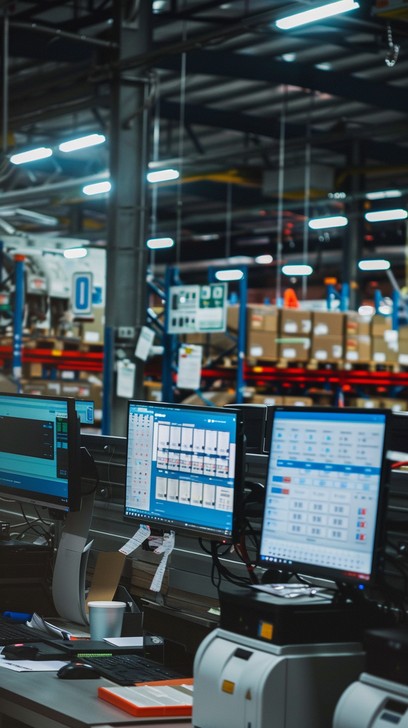
Warehousing and transportation involve repetitive activities that can consume significant time and resources. Digital automation helps businesses coordinate these operations while improving the accuracy of inventory records and shipment handling.
Smart warehouses and automated inventory
Modern warehouse management systems provide digital records of incoming materials, storage locations, stock movements and outgoing shipments.
Barcode scanning and Radio Frequency Identification (RFID) technology can help warehouse employees identify products and update inventory records during receiving, picking and dispatch operations.
Automated warehouse equipment can also support repetitive material handling activities. Depending on the facility, businesses may use automated guided vehicles, conveyor systems and robotic equipment to move materials.
Chemical warehouses must still maintain strict safety procedures. Automation does not replace chemical segregation, compatible storage arrangements, hazard identification or employee training.
Digital transportation management
Transportation Management Systems help logistics teams coordinate shipments and monitor delivery activities.
These systems can support route planning, carrier selection, freight documentation and shipment tracking. They also help businesses maintain communication between suppliers, transport providers and customers.
For chemical distributors handling multiple products and destinations, centralized transportation information can improve delivery coordination and reduce avoidable administrative delays.
Blockchain, Traceability and Regulatory Compliance
Chemical supply chains require reliable product documentation. Buyers frequently need information about product origin, batch numbers, quality specifications, safety documentation and transportation history.
Digital traceability systems help connect these records across different stages of the supply chain.
Improving product traceability
Blockchain technology provides a shared digital record system in which authorized participants can record and verify transactions. When properly implemented, it can strengthen the integrity of supply chain records.
Potential chemical industry applications include:
Tracking raw material origins.
Recording manufacturing and batch information.
Maintaining product movement histories.
Supporting verification of supplier documentation.
Improving transparency across distribution networks.
Blockchain is not necessary for every chemical transaction. Businesses should evaluate whether the technology offers meaningful advantages over conventional databases and document management systems.
Supporting compliance and documentation
Chemical businesses operate under different national and international regulatory requirements. Documentation may include Safety Data Sheets (SDS), Certificates of Analysis (COA), transport documents, customs records and product-specific regulatory information.
Digital document management systems help businesses store, organize and retrieve these records more efficiently.
Automated reminders can also help teams monitor document revisions, certifications and expiry dates. However, businesses must maintain accurate information and ensure that documentation meets the requirements of the relevant destination market.
Challenges of Digital Transformation in Chemical Supply Chains
Although digitalization offers significant opportunities, implementation requires careful planning. Chemical companies may operate older manufacturing facilities, disconnected information systems and complex international supplier networks.
High investment and integration costs
Implementing ERP systems, warehouse software, connected sensors and automation equipment requires financial investment. Businesses must consider software licensing, infrastructure, maintenance and employee training.
Smaller chemical traders and distributors may find large-scale digital transformation difficult to finance. They can begin with practical solutions such as electronic procurement, centralized inventory records and cloud-based document management.
Data quality and cybersecurity
Digital systems depend on accurate and consistent information. Incorrect product specifications, duplicate supplier records or outdated inventory figures can create problems across purchasing and logistics operations.
Cybersecurity presents another important concern. Supply chain platforms contain commercially sensitive information, including supplier contracts, customer records, purchasing volumes and financial details.
Companies should introduce appropriate access controls, secure authentication, data backups and regular security reviews.
Employee training and organizational adoption
Technology cannot deliver its full value if employees do not understand how to use it. Procurement professionals, warehouse operators and logistics teams need training that reflects their responsibilities.
Management should also explain how digital systems will improve daily workflows. Gradual implementation and employee involvement can reduce resistance and improve adoption.
The Role of Digital Transformation in Sustainable Chemical Operations
Digital technologies can also help chemical companies improve resource efficiency and monitor environmental performance. Sustainability increasingly influences how manufacturers select raw materials, manage production processes and distribute products.
Monitoring energy and resource consumption
Connected sensors and analytical systems can help manufacturers monitor energy, water and raw material consumption across production facilities.
By identifying unusual consumption patterns, businesses can investigate operational inefficiencies and improve resource planning.
Digital production monitoring can also help identify excessive material losses, equipment inefficiencies and opportunities to reduce waste.
Improving environmental traceability
Chemical companies increasingly need better information about the environmental impact of their products and supply chains.
Digital platforms can help organize information about raw material origins, transportation activities, energy consumption and product lifecycle data. These records can support sustainability reporting and improve communication with customers.
The European Chemical Industry Council (Cefic) identifies AI, digital twins, cloud computing, blockchain and IoT as important technologies for improving sustainability across chemical value chains.
cefic
Future Outlook: Digital Chemical Supply Chains in 2027
Digital transformation will continue to influence how chemical businesses manage procurement, production and international distribution. The focus is gradually shifting from isolated software applications towards integrated digital supply networks that connect different business functions.
The World Economic Forum's August 2026 discussion of smart factory ecosystems highlights the growing importance of combining digital and AI capabilities across chemical manufacturing and supply chain operations.
World Economic Forum
Several developments are likely to shape the next stage of adoption:
AI-powered planning: More businesses will use predictive analytics to support demand forecasting, inventory decisions and supplier risk assessment.
Connected supply networks: Integrated platforms will improve information sharing between manufacturers, distributors, logistics providers and customers.
Digital twins: Virtual representations of physical assets and processes can help companies simulate operational conditions and evaluate potential improvements.
Advanced traceability: Digital records will support better tracking of chemical products, batches and material origins.
Intelligent warehousing: Automation and connected monitoring systems will support more coordinated inventory and distribution activities.
What chemical buyers should prioritize
Importers, exporters and procurement managers should approach digital transformation as a business improvement strategy rather than simply a technology investment.
Practical priorities include:
Digitizing supplier records and procurement documentation.
Introducing centralized inventory and order management systems.
Using shipment tracking to improve delivery visibility.
Establishing consistent product specifications and digital quality records.
Strengthening cybersecurity and data management practices.
Training procurement and logistics teams to use digital platforms effectively.
Businesses should begin with processes that create the greatest operational difficulties and expand their digital capabilities as results become measurable.
Chemical companies that combine reliable supplier relationships with accurate digital information will be better positioned to manage complex purchasing requirements and changing market conditions. For traders and industrial buyers, digital procurement platforms also create opportunities to compare suppliers, evaluate product availability and coordinate international sourcing more efficiently.

Methanol
Found this useful?