Europe’s Biggest Carbon Capture Project Links Dutch Ammonia Production to Norwegian CO₂ Storage
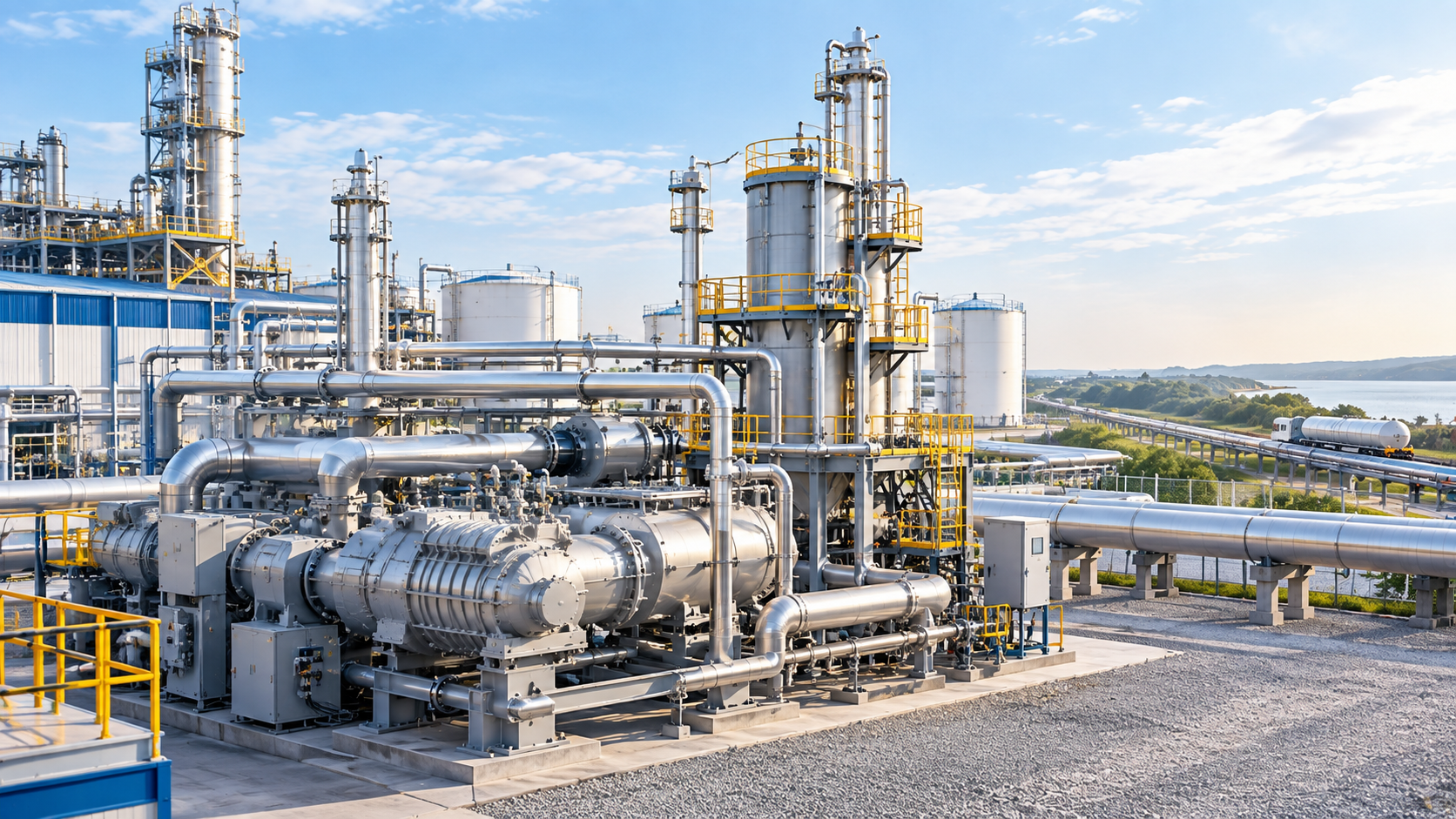
A major shift in Europe’s carbon management infrastructure is now underway, with carbon capture in Europe moving from individual plant projects toward integrated international supply chains. Yara and Northern Lights have opened a cross-border carbon capture and storage chain connecting Yara’s Sluiskil ammonia facility in the Netherlands with permanent CO₂ storage beneath the Norwegian seabed.
The system can capture up to 800,000 tonnes of CO₂ per year, creating a significant new pathway for reducing emissions from ammonia production. For chemical producers, traders and procurement teams, the project also highlights how carbon management is becoming an operational and logistics issue that extends beyond the factory gate.
How the Yara and Northern Lights CCS Chain Works
The project connects several stages that traditionally operate as separate parts of the industrial value chain. Yara captures CO₂ generated during ammonia production at Sluiskil, after which the carbon dioxide enters a transport and storage system operated through the Northern Lights partnership.
The captured gas moves across national borders before reaching permanent geological storage beneath the Norwegian seabed. This creates an integrated carbon capture and storage or CCS chain covering capture, conditioning, transportation and permanent storage.
The model matters because capturing carbon at an industrial site does not solve the entire emissions challenge by itself. The captured material needs reliable infrastructure that can move it safely to a suitable storage location.
For chemical manufacturers, this means future decarbonisation projects increasingly depend on partnerships with transport operators, storage providers, ports and government authorities.
Why Ammonia Production Is Central to the Project
Ammonia manufacturing represents an important application for carbon capture because CO₂ can arise from the production processes used to manufacture hydrogen and ammonia. Capturing these emissions can therefore target a concentrated industrial source rather than relying only on reductions elsewhere in the production chain.
Yara’s Sluiskil facility is part of a broader European fertilizer manufacturing network. The integration of carbon capture into such a facility demonstrates how established chemical plants can become part of emerging CO₂ management infrastructure.
For ammonia buyers, this development also adds another dimension to supplier evaluation. Procurement teams may increasingly examine not only production capacity, specifications and pricing but also the emissions profile and carbon management strategy associated with a supply source.
Cross-Border CO₂ Storage Creates a New Trade Framework
The most distinctive feature of the project is its international structure. CO₂ is captured in the Netherlands and ultimately stored beneath Norwegian waters, meaning the complete chain depends on infrastructure and regulatory coordination across national boundaries.
That arrangement creates several operational requirements:
Regulatory coordination: Dutch capture operations and Norwegian storage activities must operate within their respective regulatory frameworks while supporting one connected chain.
Transport reliability: Captured CO₂ requires dependable transportation infrastructure to prevent bottlenecks between the capture facility and storage destination.
Storage assurance: Permanent storage requires suitable geological formations, monitoring systems and long-term management.
Commercial coordination: Producers, transport operators and storage providers need compatible contracts and delivery schedules.
Documentation: Cross-border movement creates additional requirements for tracking the origin, quantity and destination of captured carbon.

800,000 Tonnes of Annual Capture Changes the Scale
The ability to capture up to 800,000 tonnes of CO₂ annually places the project at a significant industrial scale. Rather than treating carbon capture as a small demonstration activity, the system connects a major chemical production site with dedicated transportation and permanent storage infrastructure.
Scale matters for the chemical industry because large production facilities generate emissions continuously. A carbon management system must therefore handle substantial volumes while maintaining predictable operations.
The project also provides a practical reference point for companies considering similar infrastructure. Industrial CCS requires more than installing capture equipment. It requires sufficient storage capacity, transportation access and commercial arrangements that can support the system over many years.
For chemical traders and importers, these developments could eventually influence how buyers compare products from producers operating under different carbon management regimes.
What the Project Means for European Chemical Supply Chains
The project could have implications beyond the Sluiskil facility because carbon management is becoming increasingly connected with industrial competitiveness in Europe. Producers that invest in lower-emission manufacturing may gain access to supply chains where customers place greater emphasis on carbon intensity and production methods.
For procurement managers, several considerations are becoming more relevant:
Supplier carbon strategy: Buyers may request more detailed information about emissions reduction projects and carbon capture infrastructure.
Production location: Regional access to CO₂ transport and storage infrastructure could influence the economics of manufacturing sites.
Contract structures: Long-term supply agreements may increasingly incorporate environmental performance requirements alongside traditional commercial terms.
Infrastructure access: Ports, pipelines and storage facilities could become strategic assets for energy-intensive chemical producers.
Product differentiation: Lower-carbon production pathways may create new commercial categories within established chemical markets.
These factors do not replace conventional procurement criteria. Quality, consistency, lead times, production capacity, pricing and regulatory compliance remain fundamental, but carbon management can become an additional consideration in supplier selection.
The Infrastructure Behind Permanent CO₂ Storage
Carbon capture receives much of the attention because it happens directly at the industrial facility. However, permanent storage requires a separate infrastructure system capable of handling large quantities of compressed CO₂ over long periods.
Northern Lights provides the storage and transport component that allows captured carbon from industrial sources to reach geological formations beneath the Norwegian seabed. The approach demonstrates how centralized storage infrastructure can potentially serve multiple industrial emitters.
This model may become particularly important for European chemical clusters. Instead of every plant developing an individual storage solution, multiple facilities could potentially connect to shared transportation and storage networks where geography and infrastructure allow.
That could create new commercial opportunities for companies involved in CO₂ handling equipment, compression systems, specialized logistics, monitoring technologies and industrial services.
Procurement Risks Are Shifting Beyond Chemical Prices
Chemical procurement traditionally focuses on factors such as raw material costs, freight rates, energy prices, currency movements and production availability. Large-scale CCS introduces another layer of infrastructure dependency.
A producer may have the technical capability to capture CO₂ but still depend on transportation and storage capacity elsewhere in the chain. Any disruption in one section could affect the economics or operational performance of the wider system.
Procurement teams evaluating suppliers connected to carbon management infrastructure should therefore pay attention to:
Capacity: How much captured CO₂ can the connected infrastructure handle?
Reliability: Can transportation and storage services support continuous industrial production?
Geographic access: Does the production facility have practical access to ports, pipelines or other CO₂ transport systems?
Contract duration: Are capture, transport and storage arrangements structured for long-term industrial use?
Traceability: Can the producer provide clear documentation of captured and stored carbon volumes?
These questions can become increasingly important as customers place more emphasis on the carbon intensity of chemical supply chains.
What This Means for Ammonia Buyers
Ammonia remains a critical industrial chemical used across fertilizers, chemical synthesis and other applications. Its production economics depend heavily on energy and feedstock conditions, making emissions management an increasingly important part of the sector’s strategic planning.
The Sluiskil project demonstrates one pathway for reducing emissions associated with established ammonia production. It does not change the fundamental requirements for buyers, but it adds another factor to the way procurement teams can assess producers and supply chains.
Buyers sourcing ammonia may increasingly compare conventional production with different decarbonisation pathways. These can include carbon capture, lower-carbon hydrogen production and other technologies that reduce emissions associated with ammonia manufacturing.
For traders and importers, the shift could also create opportunities to differentiate supply based on production characteristics. Reliable documentation and transparent information about manufacturing processes can become valuable commercial tools when customers have carbon-related purchasing requirements.
The Outlook for Cross-Border Carbon Capture in Europe
The Yara and Northern Lights connection demonstrates that carbon capture can operate as an international industrial chain rather than as an isolated facility-level technology. The Netherlands provides the industrial capture point while Norway provides access to offshore geological storage.
This structure could influence future European projects where industrial clusters lack nearby storage formations. Cross-border infrastructure can potentially connect emitters with storage locations that would otherwise remain inaccessible.
Several factors will shape the next stage of development:
Expansion of CO₂ transportation infrastructure could make CCS accessible to more industrial facilities.
Additional storage capacity could support larger networks of European emitters.
Regulatory alignment will remain important as captured CO₂ crosses national boundaries.
Industrial clusters could create economies of scale by sharing transport and storage infrastructure.
Buyers may place greater commercial value on products associated with measurable emissions reduction pathways.
For the chemical sector, the broader significance lies in the integration of production, energy, logistics and carbon management. Companies that previously treated emissions as primarily an environmental reporting issue may increasingly manage them as part of their physical supply chain.
What Buyers Should Do Now
The launch of this cross-border CCS chain gives procurement teams a useful signal about where European chemical supply chains are heading. Carbon management is becoming connected to production assets, transportation networks and long-term industrial contracts.
Buyers can prepare by strengthening supplier information requirements, understanding the carbon management infrastructure available in key production regions and tracking how producers are integrating capture technologies into existing facilities.
For chemical traders, the opportunity extends to identifying suppliers with reliable production capacity and emerging low-carbon pathways. As industrial carbon capture expands, access to credible supply information could become an increasingly important part of international chemical sourcing.
The Sluiskil to Norwegian storage chain shows what becomes possible when capture, transportation and permanent storage operate as one connected system. Its scale also signals that carbon management is moving deeper into mainstream industrial planning, with potential implications for ammonia, fertilizers and the wider European chemicals market.
Ready to source Ammonia Anhydrous from verified global suppliers? Explore competitive offers on our platform today.
Sources:
Ammonia Anhydrous
Found this useful?