
Higher Margin Portfolio Shift: Why Specialty Chemicals Are Outperforming Commodity Grades
The specialty chemicals sector is becoming the preferred destination for capital as chemical producers confront persistent commodity oversupply, weak utilization and compressed margins. Deloitte's 2026 chemical industry outlook identifies portfolio transformation as a central response, with producers rationalizing basic chemical assets while prioritizing specialty businesses with more differentiated products and stronger margins.
This shift is no longer just an industry forecast. Companies including SABIC, BASF, PTT Global Chemical and Synthomer are making identifiable portfolio changes that show how producers are moving capital, manufacturing capacity and commercial resources toward higher-value applications.
For chemical traders and procurement teams, these moves matter because they can reshape product availability, supplier competition and investment in specific chemical categories.
Why Commodity Chemical Margins Remain Under Pressure
Commodity chemicals operate in markets where products often have limited differentiation and customers can switch suppliers based primarily on price, logistics and availability.
The problem becomes more severe when producers add capacity faster than demand grows. Deloitte points to increasing global overcapacity in basic chemicals, including new ethylene, polyethylene and polypropylene capacity, while weaker demand and regional cost disadvantages are pressuring plant utilization.
That environment creates a difficult equation for producers.
Higher volumes do not necessarily translate into higher profits when additional supply pushes prices down. Plants can continue operating while generating disappointing returns, particularly when energy, labor and maintenance costs remain elevated.
Specialty chemicals offer a different model.
A specialty product designed for a particular coating, adhesive, electronic component or industrial process can carry greater differentiation and face fewer direct substitutes. That can give producers more pricing power and stronger customer relationships.
SABIC Is Moving Capital Away From Lower-Return Businesses
SABIC provides one of the clearest current examples of portfolio restructuring.
In January 2026, the company announced the divestment of its European Petrochemicals business and its Engineering Thermoplastics business in the Americas and Europe for a combined enterprise value of $950 million. SABIC explicitly linked the transactions to portfolio optimization, improved returns and greater focus on high-margin markets and products where it has competitive advantages.
The significance extends beyond the individual assets.
SABIC is effectively treating capital allocation as a competitive tool. Businesses that require substantial capital but produce structurally weaker returns become candidates for divestment, while capital can move toward activities offering stronger value creation.
For buyers, this can eventually affect the breadth of a producer's product portfolio.
When a large chemical group exits an asset, customers may face a new ownership structure, a different manufacturing footprint or a transition toward alternative suppliers.
BASF Is Concentrating Its Care Chemicals Portfolio
BASF is taking a similar approach within specialty chemicals, although its portfolio decisions are more targeted.
In March 2026, BASF agreed to sell its Softex business to GOVI CAST. The business produces calcium and ammonium stearate dispersions used mainly as anti-tack and mold-release agents in glove manufacturing, along with applications in cement mixing and textile coatings. BASF said the transaction supports its strategic portfolio optimization within Care Chemicals.
The transaction also illustrates an important feature of specialty chemical portfolio management.
BASF is not simply shutting down the business. The transaction includes customer relationships, formulation and production know-how, plus a tolling and supply arrangement designed to maintain continuity during the transition.
For procurement teams, that means portfolio optimization can produce new supplier relationships without immediately disrupting product availability.
A product may move from a multinational chemical group to a more focused specialty producer that sees greater strategic value in the same niche.
PTT Global Chemical Is Setting a Clearer Specialty Target
PTT Global Chemical offers perhaps the most explicit example of a major petrochemical producer attempting to change its business mix.
The company announced a five-year strategy targeting a shift from an 80:20 commodity-to-specialty mix toward 70:30 by 2030. The plan includes expanding specialty businesses such as allnex while also developing bio-based chemicals and other higher-value activities.
The strategic logic is straightforward.
Commodity businesses expose producers to global capacity cycles, feedstock movements and intense price competition. Specialty businesses can provide greater differentiation through formulation technology, application expertise and customer-specific performance.
PTT Global Chemical's strategy therefore demonstrates that the specialty shift is not limited to traditional specialty chemical companies.
Large petrochemical producers are increasingly looking to move further downstream in the value chain.
Synthomer Shows How Product Mix Can Lift Profitability
Synthomer provides another useful example because its recent performance shows how portfolio mix can influence earnings.
In its 2026 interim results, the company said its Coatings & Construction Solutions division continued shifting toward higher-margin specialty products, supported by innovation and greater focus on attractive applications. Revenue increased 7.5% in the first half of 2026 while EBITDA increased 33.3%, taking the EBITDA margin from 9.3% to 11.5%.
That does not mean every specialty chemical automatically generates superior returns.
Instead, Synthomer demonstrates the commercial effect of combining higher-value products with targeted end-market growth and cost discipline.
For procurement professionals, this is an important distinction.
The objective is not simply to buy "specialty" materials. Producers want products with a combination of differentiation, customer relevance and attractive economics.

What Makes Specialty Chemicals More Defensible?
The economic advantage of specialty chemicals generally comes from differentiation.
A commodity chemical may compete primarily on specification and price. A specialty material can compete on a broader combination of performance characteristics, formulation expertise, technical service and customer qualification.
That can create stronger barriers to switching.
A customer using a specialty additive in a demanding coating may need to conduct testing before approving another grade. An electronics manufacturer may require extensive qualification before changing a critical process chemical.
These switching costs can protect suppliers from immediate price competition.
The most attractive specialty categories often combine:
Technical differentiation: The product solves a specific performance problem.
Customer qualification: Switching suppliers requires testing or approval.
Application expertise: Suppliers provide formulation or technical support.
Limited substitutes: Few products can reproduce the required performance.
Growing end markets: Demand comes from applications with structural growth.
These characteristics explain why chemical producers continue to pursue specialty portfolio expansion even when broader chemical demand remains uneven.
Commodity Assets Are Not Automatically Bad Businesses
The portfolio shift does not mean commodity chemicals have no strategic value.
Large-scale commodity assets can remain highly competitive when producers have access to low-cost feedstocks, efficient plants, favorable logistics or strong regional demand.
The problem arises when an asset lacks a durable cost advantage.
Deloitte expects further pressure on commodity chemical assets as new capacity comes online while demand recovery remains relatively weak.
That creates a two-speed chemical market.
Efficient commodity producers can continue operating profitably, while higher-cost plants or assets in structurally oversupplied regions become candidates for restructuring, closure or sale.
This distinction matters when evaluating future supply.
A portfolio exit does not necessarily mean the underlying chemical will disappear. Production may simply migrate toward lower-cost regions or more competitive owners.
Specialty Chemicals Are Also Facing a New Competitive Reality
Specialty does not automatically mean high margin forever.
As a product category becomes commercially attractive, competitors enter. Chinese producers are expanding capabilities across numerous chemical markets, while established companies continue investing in new formulations and applications.
This means specialty producers must continue innovating.
Clariant's strategy illustrates this challenge. The company has been expanding production in China to serve local demand while increasing localization of its Chinese product portfolio, partly in response to Europe's higher energy and labor costs.
The implication is important for traders.
The specialty opportunity is not simply about identifying a product labeled as high value. It is about identifying where technical differentiation remains defensible.
Portfolio Shifts Can Create New Sourcing Opportunities
When a producer exits a commodity asset or sells a noncore specialty business, procurement teams can see several consequences.
Some are immediate, while others develop over several years.
New ownership: A specialty business may move to a company that has greater strategic focus on the product.
Capacity rationalization: Producers may close inefficient production lines after portfolio reviews.
Regional changes: Manufacturing may move toward lower-cost locations.
Product consolidation: Chemical groups may eliminate overlapping grades and concentrate on higher-volume formulations.
New suppliers: Divestments can create opportunities for specialized manufacturers and distributors to enter established customer relationships.
For chemical traders, these transitions can create openings where customers need alternative sources.
The Best Specialty Products Are Often Application-Led
One of the strongest signals behind the portfolio shift is the move toward application-specific chemistry.
A producer may have limited pricing power selling a standard industrial chemical, but a modified grade designed for a particular process can be considerably more valuable.
Application-led specialty chemicals can include:
Coating additives that improve durability or dispersion.
Adhesive components designed for specific substrates.
Polymer modifiers that improve processing performance.
Electronic chemicals requiring high purity.
Specialty surfactants designed for particular formulations.
Performance additives for construction materials.
Functional materials used in energy and advanced manufacturing.
This approach also strengthens customer relationships because the supplier becomes part of the customer's product-development process.
Why Procurement Teams Should Watch Producer Portfolio Changes
Portfolio restructuring can provide an early warning about future supply conditions.
If a major producer announces that it is exiting a chemical category, buyers should examine whether competitors have enough capacity to absorb displaced demand.
Conversely, an acquisition by a specialty-focused company may signal that a product line is likely to receive additional technical investment.
Procurement teams should monitor:
Divestments: Which businesses are being sold or closed?
Capacity expansions: Where are producers investing?
Product rationalization: Which grades are being consolidated?
Ownership changes: Who is acquiring the business?
Regional manufacturing: Where will production occur?
End-market exposure: Which applications are receiving capital?
This information can be as important as conventional price monitoring.
The Shift Is Changing How Chemical Traders Compete
Chemical trading has traditionally rewarded access to competitive supply and reliable logistics.
The specialty transition adds another layer.
Traders need to understand the technical purpose of the chemical, the customer's formulation requirements and the competitive landscape around each product.
A supplier that can offer a technically equivalent alternative may be more valuable than one offering only a lower price.
That creates room for traders to provide:
Alternative-origin sourcing.
Application-specific grade matching.
Inventory financing.
Regional stock.
Regulatory documentation.
Technical data comparison.
Supply continuity planning.
The more specialized the chemical, the more important this support becomes.
Where the Portfolio Shift Could Go Next
The specialty transformation is likely to continue, but it will not follow one universal path.
Petrochemical companies may move downstream into specialty formulations. Diversified chemical groups may divest smaller businesses that no longer fit their strategic priorities. Specialty producers may acquire niche technologies to strengthen their application portfolios.
Recent moves by SABIC, BASF and PTT Global Chemical show three different versions of the same strategic direction: reduce exposure to weaker-return activities and direct more resources toward businesses with stronger differentiation or growth prospects.
For investors, that can mean more chemical M&A.
For manufacturers, it can mean fewer suppliers for certain commodity grades but more innovation around specialty products.
For procurement teams, it means supplier maps will need to be updated more frequently.
What Buyers Should Do Now
Procurement teams should not wait for a plant closure or portfolio sale before evaluating supply risk.
A stronger strategy is to identify which materials are vulnerable to producer rationalization and which specialty products are receiving new investment.
For each critical chemical, buyers can assess:
Whether the product sits in a commodity or specialty segment.
How concentrated global production is.
Whether major producers are expanding or exiting.
How difficult qualification of an alternative supplier would be.
Whether the product has strong growth in its end markets.
Whether regional supply offers a meaningful cost advantage.
This creates a more forward-looking sourcing strategy.
The objective is not to abandon commodity chemicals. It is to understand where producer economics are changing and anticipate the resulting supply consequences.
The Bottom Line for Chemical Buyers
The specialty chemical portfolio shift is becoming visible through concrete corporate decisions rather than industry rhetoric. SABIC is divesting businesses while emphasizing high-margin markets, BASF is optimizing its Care Chemicals portfolio, PTT Global Chemical is targeting a larger specialty share and Synthomer is reporting stronger earnings alongside a shift toward higher-margin specialty products.
The underlying market logic is straightforward: persistent commodity overcapacity makes scale alone less valuable when producers lack a structural cost advantage, while differentiated specialty products can offer stronger margins, customer stickiness and more defensible market positions. Deloitte's 2026 outlook identifies exactly this portfolio transformation as a major strategic response to the industry's current condition
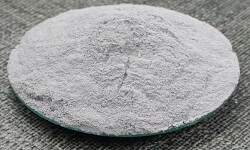
Fumed Silica
Found this useful?