
Ferric Chloride: Industrial Uses in Wastewater Treatment and Processing
Ferric chloride is a widely used industrial chemical that plays an important role in wastewater treatment, water purification and chemical processing. Its strong coagulation properties help industries remove suspended particles, reduce phosphorus levels and improve the quality of wastewater before discharge or reuse.
Known by its chemical formula FeCl₃, ferric chloride is an iron-based inorganic compound used by municipal treatment plants, manufacturing facilities and metal processing industries. Its effectiveness in separating impurities makes it an important chemical for businesses that need reliable wastewater management and industrial processing solutions.
US EPA+1
For chemical traders, procurement managers and industrial buyers, understanding ferric chloride grades, applications and handling requirements helps ensure consistent supply and efficient plant operations.
What Is Ferric Chloride and How Is It Produced?
Ferric chloride, also called iron(III) chloride or iron trichloride, is an inorganic compound with the molecular formula FeCl₃. It appears as a dark brown or reddish-brown liquid in commercial solutions, while its anhydrous form is generally available as a solid.
The compound dissolves in water and produces an acidic solution. Its chemical behaviour makes it useful in coagulation, precipitation and several industrial processing applications.
Manufacturing Process of Ferric Chloride
Manufacturers produce ferric chloride through different industrial routes. One established method involves reacting iron or iron-containing materials with hydrochloric acid and an oxidising agent.
Another production route involves the chlorination of iron using chlorine gas under controlled industrial conditions.
Ferric chloride can also emerge from steel pickling operations, where hydrochloric acid removes oxide scale from steel surfaces. Manufacturers can recover and process iron-rich spent pickling solutions to produce ferric chloride products.
The manufacturing process influences the final product's concentration, purity and impurity profile. Industrial buyers should therefore evaluate product specifications rather than relying only on the chemical name.
Commercial Forms and Product Characteristics
Ferric chloride is commonly supplied in two main forms:
Liquid ferric chloride: A brown or reddish-brown acidic solution widely used in wastewater treatment plants with bulk chemical dosing systems.
Anhydrous ferric chloride: A solid form used in selected chemical processing, laboratory and metal treatment applications.
Commercial liquid grades may have different concentrations depending on supplier specifications and customer requirements. Buyers should verify the actual FeCl₃ concentration before comparing quotations.
Ferric Chloride Applications in Wastewater Treatment
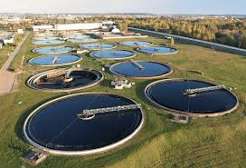
Wastewater treatment represents the primary industrial application of ferric chloride. Municipal sewage facilities and industrial plants use this chemical to remove suspended solids, reduce phosphorus concentrations and improve water clarification.
Ferric chloride works as a coagulant. When introduced into wastewater, it reacts with water and forms iron-based hydroxide compounds that help destabilise suspended particles.
These particles combine into larger flocs that treatment facilities can separate through sedimentation, clarification or filtration.
Coagulation and Flocculation
Industrial wastewater often contains fine particles, organic materials, colloidal substances and other impurities that remain suspended in water.
Ferric chloride reduces the stability of these particles and encourages them to combine into larger aggregates.
The process generally involves:
Chemical dosing: Operators introduce ferric chloride into wastewater at a controlled concentration.
Rapid mixing: Mechanical mixing distributes the chemical throughout the water.
Floc formation: Destabilised particles combine into larger flocs.
Sedimentation: Heavier flocs settle in clarification tanks.
Filtration: Additional treatment removes remaining suspended materials.
This process improves water clarity and reduces the solids load entering downstream treatment stages.
Phosphorus Removal from Wastewater
Excess phosphorus in discharged wastewater can contribute to eutrophication, which promotes excessive algae growth in lakes, rivers and other water bodies.
Ferric chloride helps control this problem through chemical precipitation. Iron ions react with dissolved phosphate compounds to form iron phosphate precipitates that treatment facilities can remove through solids separation.
Municipal wastewater plants use this process to meet phosphorus discharge requirements and improve effluent quality. The exact chemical dosage depends on wastewater composition, treatment targets and operating conditions.
US EPA+1
Industrial Effluent Treatment
Different manufacturing industries generate wastewater containing suspended solids, organic substances and dissolved contaminants.
Ferric chloride supports wastewater treatment in sectors such as:
Textile manufacturing: Helps remove suspended materials, colour-associated particles and other contaminants through coagulation.
Food processing: Supports the separation of suspended organic matter from industrial wastewater.
Chemical manufacturing: Helps clarify process wastewater before further treatment.
Metal processing: Supports treatment systems handling wastewater containing suspended metal-bearing solids.
Paper production: Helps manage suspended fibres and other solids in selected wastewater treatment processes.
Treatment performance depends on the wastewater composition, chemical dosage and combination of treatment technologies.
Other Industrial Uses of Ferric Chloride
Beyond wastewater treatment, ferric chloride serves several specialised industrial purposes. Its chemical reactivity and ability to interact with metals make it useful in electronic manufacturing, metal finishing and chemical production.
Metal Surface Treatment and Etching
Ferric chloride is widely used as an etching agent in printed circuit board (PCB) manufacturing. It reacts with copper and removes unwanted copper sections from circuit board surfaces, leaving the required conductive patterns.
Manufacturers also use ferric chloride in selected metal surface treatment operations. Product concentration and process conditions influence etching speed, surface quality and chemical consumption.
NOAA+1
Chemical Processing and Catalytic Applications
Ferric chloride also functions as a catalyst in selected chemical reactions. Chemical manufacturers use its Lewis acid properties to support reactions that require catalytic activation.
Its applications extend to producing certain chemical intermediates, pigments and other specialised materials. However, its suitability depends on the reaction chemistry and required product specifications.
Sludge Conditioning and Dewatering
Wastewater treatment generates sludge containing water, organic materials and captured impurities. Managing this sludge requires additional treatment to reduce its moisture content and transportation volume.
Ferric chloride can support sludge conditioning by helping particles aggregate and improving their separation during mechanical dewatering.
Treatment facilities may combine ferric chloride with polymer-based conditioning agents to improve filter press or centrifuge performance. Proper dosage helps operators balance chemical consumption, sludge quality and disposal costs.
Factors Affecting Ferric Chloride Quality and Performance
Ferric chloride performance depends on product concentration, chemical purity and the operating conditions of the treatment system. Industrial buyers should review technical specifications before selecting a supplier.
Ferric Chloride Concentration
Concentration determines how much active chemical a treatment facility receives with each delivery. Liquid products with different FeCl₃ percentages may require different dosing volumes.
Buyers should compare products using the actual concentration stated in the supplier's Technical Data Sheet rather than relying on general descriptions such as industrial grade.
Iron Content and Impurity Levels
Product purity affects suitability for specific industrial applications. Excessive impurities may interfere with treatment performance or introduce unwanted materials into downstream processes.
Procurement teams should evaluate:
Ferric chloride concentration.
Free acidity.
Ferrous iron content.
Insoluble matter.
Density and specific gravity.
Relevant heavy metal impurities.
For drinking water applications, buyers should also confirm compliance with applicable potable-water treatment standards.
pH and Chemical Dosage
Ferric chloride produces acidic conditions when added to water. Its hydrolysis consumes alkalinity and can lower wastewater pH.
Treatment operators must monitor pH and alkalinity to avoid excessive chemical consumption or disruption of downstream biological treatment systems.
Jar testing provides a practical method for determining suitable chemical dosages before implementing large-scale treatment adjustments.
Global Procurement and Supply Chain Considerations
Ferric chloride procurement requires careful coordination between chemical manufacturers, distributors and industrial consumers. Buyers should consider product availability, transportation requirements and supplier consistency when negotiating purchasing agreements.
The chemical supply chain also depends on access to iron-containing raw materials, hydrochloric acid and chlorine or other relevant production inputs.
Choosing Reliable Ferric Chloride Suppliers
Supplier selection should focus on technical capability and consistent product quality rather than quotation price alone.
Important supplier evaluation factors include:
Product specifications: Confirm concentration, purity and impurity limits.
Quality documentation: Request a Certificate of Analysis (COA), Technical Data Sheet (TDS) and Safety Data Sheet (SDS).
Production consistency: Check whether suppliers maintain uniform specifications across batches.
Supply capacity: Confirm their ability to fulfil regular bulk requirements.
Delivery reliability: Evaluate transportation arrangements and delivery schedules.
Commercial terms: Compare payment conditions, packaging costs and freight charges.
For large treatment facilities, establishing long-term supply agreements can help maintain uninterrupted chemical availability.
Transportation and Storage Requirements
Ferric chloride requires careful transportation because its commercial liquid form is highly corrosive. Incompatible storage materials can suffer corrosion, leaks and equipment damage.
Buyers should consider suitable corrosion-resistant tanks, compatible pipelines and appropriate transfer equipment.
Important storage practices include:
Use compatible storage materials approved for ferric chloride.
Keep containers properly closed and protected against contamination.
Provide secondary containment around bulk storage tanks.
Maintain clear chemical identification and safety documentation.
Train personnel in spill response and emergency procedures.
Industrial facilities should follow the supplier's SDS and applicable transport regulations when handling ferric chloride shipments.
NOAA+1
Environmental and Operational Considerations
Ferric chloride supports wastewater management, but its application requires proper chemical control. Excessive dosing can increase residual iron, sludge production and treatment costs.
The resulting sludge also requires appropriate handling, dewatering and disposal according to local environmental requirements.
Treatment operators should monitor several important parameters:
Residual iron: Check treated water to ensure iron levels remain within applicable limits.
Water pH: Maintain suitable conditions for coagulation and downstream treatment.
Sludge production: Monitor solids generation and dewatering efficiency.
Chemical consumption: Review dosage regularly to reduce unnecessary expenditure.
Effluent quality: Test treated water against applicable discharge requirements.
Safe handling also remains essential because ferric chloride can cause skin and eye burns. Workers should use suitable protective gloves, chemical-resistant clothing and eye protection. Facilities should maintain appropriate ventilation, emergency washing equipment and spill-control procedures.
What Industrial Buyers Should Consider Before Purchasing
Ferric chloride buyers should match product specifications with their operational requirements. A wastewater treatment plant may prioritise coagulation efficiency and phosphorus removal, while a PCB manufacturer may focus on etching performance and chemical consistency.
Before placing bulk orders, procurement teams should evaluate the following:
Application suitability: Confirm whether the chemical is intended for wastewater treatment, sludge conditioning or metal processing.
Required concentration: Select the appropriate liquid or solid grade for the facility's dosing system.
Technical documentation: Review COA, SDS and TDS before approving a supplier.
Packaging compatibility: Ensure transportation containers and storage equipment can handle corrosive chemicals.
Supplier reliability: Evaluate production capacity, product consistency and delivery performance.
Total procurement cost: Consider chemical consumption, freight, storage and handling expenses.
Comparing suppliers across these factors helps businesses reduce purchasing risks and maintain reliable industrial operations.
The Outlook for Ferric Chloride in Industrial Processing
Demand for effective wastewater treatment chemicals remains important as municipalities and manufacturers focus on water quality, pollution control and industrial efficiency.
Ferric chloride offers a practical solution for coagulation, phosphorus precipitation and sludge conditioning. Its additional applications in PCB manufacturing and metal processing also support demand across different industrial sectors.
For chemical distributors and procurement professionals, maintaining access to reliable ferric chloride supplies can create opportunities in municipal water treatment, manufacturing and specialised processing markets.
Businesses that prioritise product quality, safe handling and dependable supplier relationships can strengthen their chemical procurement strategies.

Ferric Chloride Anhydrous
Found this useful?