Global lithium consumption expanded 45% year-over-year through May 2026, significantly surpassing even the most optimistic industry projections. Albemarle had forecasted growth between 15% and 40% for the full year, yet actual demand has already exceeded that upper bound with seven months remaining.
For chemical traders and procurement managers, this acceleration compresses timelines for securing qualified supply. The gap between consumption and new supply additions widens monthly, creating structural tightness that spot purchases alone cannot resolve.
Buyers who based 2026 coverage strategies on consensus forecasts now face immediate shortfalls. Contract volumes negotiated against lower demand assumptions require urgent supplementation to maintain production schedules.
Why the 45% Growth Rate Exceeded All Major Forecasts
Albemarle’s 15-40% guidance range reflected prevailing analyst consensus entering 2026. The 45% realized growth through May demonstrates systematic underestimation of demand elasticity across both electric vehicle and stationary storage segments.
Forecast models typically extrapolate historical adoption curves and assume gradual infrastructure buildout. Actual deployment rates for grid-scale battery projects have accelerated beyond linear projections due to policy incentives and falling system costs that compound adoption momentum.
Electric vehicle sales in key markets maintained resilience despite higher interest rates and consumer sentiment concerns. Fleet electrification programs and commercial vehicle transitions added incremental demand that consumer-focused models underweighted.
Supply-side assumptions also proved overly optimistic. Project commissioning delays, permitting bottlenecks and ramp-up challenges reduced effective new capacity below planned levels, amplifying the demand-supply imbalance.
Electric Vehicle Demand Drivers Behind the Surge
Passenger EV penetration continues climbing across China, Europe and North America with regional variations masking aggregate strength. Plug-in hybrid vehicles contribute meaningful lithium demand per unit while extending addressable market beyond pure battery electric adopters.
Commercial vehicle electrification entered volume production phases in 2026 after years of pilot programs. Heavy-duty trucks, buses and last-mile delivery vans consume substantially more lithium per vehicle than passenger cars, creating outsized impact on total consumption.
Battery pack sizes trend upward as automakers prioritize range competitiveness and fast-charging capability. Higher energy density chemistries reduce but do not eliminate the correlation between vehicle sales volume and raw material requirements.
Aftermarket battery replacement and second-life applications add demand streams absent from traditional automotive forecasting frameworks. These emerging use cases grow proportionally with the installed base of aging EV packs reaching end-of-first-life thresholds.
Policy mandates including ICE phase-out timelines and zero-emission vehicle credits sustain demand floors independent of near-term economic cycles. Regulatory compliance purchasing creates baseline consumption that buffers against voluntary demand volatility.
Stationary Storage as the Accelerating Demand Pillar
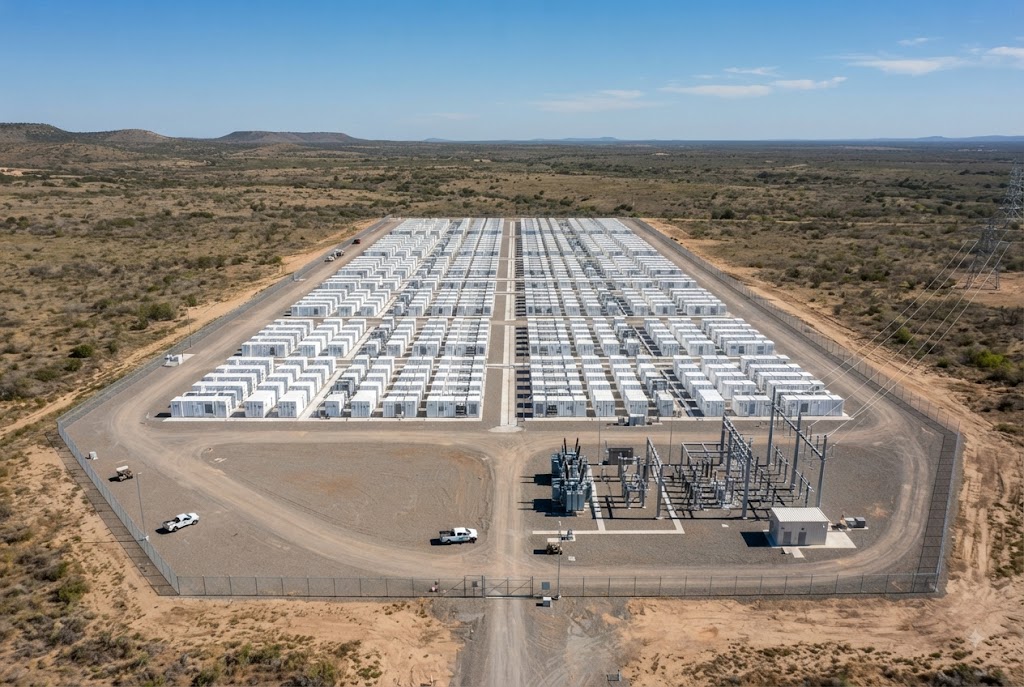
Grid-scale energy storage deployments have become the primary source of forecast variance in lithium demand models. Utility-scale projects commissioned in 2026 reflect investment decisions made during 2024-2025 when economics improved dramatically.
Renewable integration requirements drive storage attachment rates that exceed standalone project economics. Solar and wind developers increasingly bundle battery systems to meet interconnection standards and capture ancillary service revenues.
Behind-the-meter commercial and industrial storage adoption accelerates as electricity tariff structures favor self-consumption and peak shaving. Distributed storage units collectively represent significant lithium consumption despite smaller individual capacities.
Long-duration storage technologies using lithium iron phosphate chemistry benefit from cost reductions and safety perceptions relative to alternative chemistries. LFP’s dominance in stationary applications expands total addressable market beyond high-nickel cathode supply chains.
Project pipeline visibility extends multiyear into the future, providing demand certainty that contrasts with consumer discretionary segments. This visibility supports long-term contracting but also locks in volume commitments that constrain spot market availability.
Supply Addition Timelines Versus Consumption Curves
New lithium supply requires five to seven years from discovery to commercial production for greenfield hard-rock projects. Brine developments often extend beyond seven years due to evaporation pond construction and regulatory approval processes.
Existing operations face geological and operational constraints limiting near-term expansion beyond nameplate debottlenecking. Brownfield capacity additions typically deliver 10-20% incremental output rather than step-change volume increases.
Refining and conversion capacity presents additional bottlenecks distinct from mine production. Battery-grade chemical specifications require specialized processing that cannot be substituted with technical-grade intermediates without extensive requalification.
Recycled supply from end-of-life batteries remains nascent relative to primary production volumes. Collection infrastructure, sorting technology and hydrometallurgical recovery yields limit near-term contribution to less than 5% of total supply.
The temporal mismatch between demand acceleration and supply response creates sustained tightness through at least 2027. Market balance depends on demand destruction or delayed project completions rather than rapid supply elasticity.
Implications for Contract Coverage and Pricing Strategy
Consumption growth exceeding forecasts invalidates volume assumptions embedded in existing supply agreements. Buyers with fixed-volume contracts face allocation risk as sellers prioritize customers offering price adjustments or longer commitment horizons.
Spot market premiums widen when contracted volumes prove insufficient. Purchasing uncovered requirements at prevailing spot prices erodes margin and introduces budget variance that complicates financial planning.
Index-linked contract mechanisms transmit demand strength directly to realized costs. Buyers without collar provisions or ceiling caps face uncapped upside exposure during periods of forecast-beating consumption growth.
Supplier relationship capital gains importance during tight markets. Partners demonstrating flexibility during surplus periods receive preferential allocation when conditions reverse, rewarding long-term collaboration over transactional optimization.
Multiyear contracting provides suppliers confidence to invest in capacity expansion aligned with buyer needs. Volume commitments backed by credible demand forecasts unlock dedicated supply that spot-oriented buyers cannot access.
Regional Demand Variations and Sourcing Implications
China accounts for approximately 60% of global lithium consumption with domestic supply covering only partial requirements. Import dependency creates competition between Chinese buyers and international purchasers for non-Chinese origin material.
European demand growth benefits from localized refining investments and battery gigafactory commissioning. Regional supply chain development reduces but does not eliminate reliance on Asian conversion capacity for battery-grade chemicals.
North American consumption accelerates under Inflation Reduction Act incentives favoring domestically sourced or free-trade-agreement-compliant material. Qualification requirements create bifurcated markets where compliant material commands premiums over unrestricted alternatives.
Emerging markets including India and Southeast Asia enter volume consumption phases as local EV manufacturing scales. These regions add incremental demand that global models historically underrepresented due to data limitations and informal distribution channels.
Geographic diversification of supply sources hedges against regional policy shifts and trade restrictions. Overconcentration in any single origin exposes buyers to regulatory risk independent of physical availability.
Strategic Procurement Responses to Demand Acceleration
The 45% consumption surge confirms that lithium market modeling requires fundamental recalibration. Historical relationships between macroeconomic indicators and material demand no longer predict outcomes accurately in structurally transforming sectors.
Revise 2026 and 2027 demand forecasts upward using actual consumption data rather than outdated consensus estimates to avoid repeating coverage shortfalls.
Engage suppliers proactively about capacity expansion plans and allocation methodologies to understand positioning within priority customer tiers.
Evaluate vertical integration opportunities including direct mine offtake, refining joint ventures or recycling partnerships to secure supply outside traditional merchant channels.
Structure contracts with volume flexibility bands allowing upward adjustment without renegotiation when demand exceeds baseline assumptions.
Invest in demand sensing capabilities including real-time EV registration data, storage project commissioning trackers and battery production telemetry to improve forecast accuracy.
Organizations adapting procurement strategies to accelerated demand curves build sustainable competitive advantage. Those clinging to obsolete models face recurring supply crises and cost penalties.
Positioning for Sustained Structural Tightness
The 45% growth rate through May 2026 represents structural demand acceleration rather than cyclical overshoot. Underlying drivers including vehicle electrification mandates, renewable integration requirements and battery cost reductions persist independently of near-term economic conditions.
Supply response lags ensure that tightness extends beyond current inventory cycles. Even aggressive capital deployment today cannot deliver meaningful new production before 2028 at earliest.
Price formation increasingly reflects long-term scarcity value rather than short-term marginal cost. Buyers should calibrate expectations to sustained elevation above historical averages with volatility layered atop higher floors.
Procurement excellence in this environment requires treating lithium as strategic input rather than commodity purchase. Cross-functional alignment between sourcing, engineering, finance and executive leadership enables coherent responses to structural market transformation.
Ready to source lithium carbonate from verified global suppliers? Explore competitive offers on our platform today.