Heidelberg Materials to Close Its Ranville Cement Plant
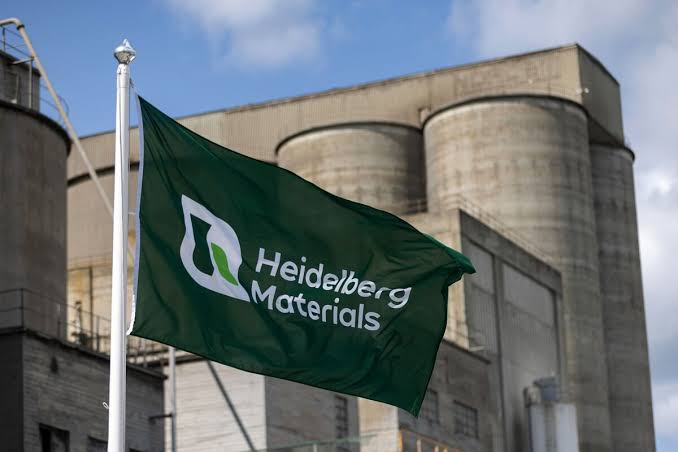
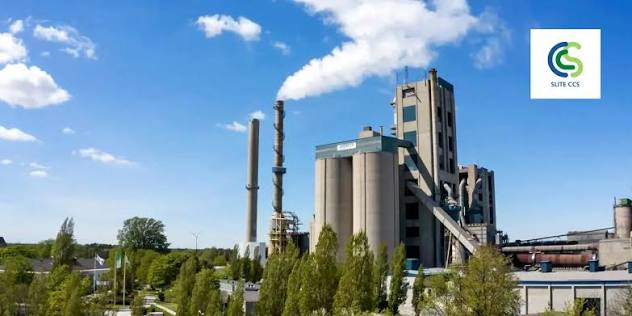
Heidelberg Materials France has announced a restructuring plan that would result in the closure of its Ranville cement plant in Normandy, France, as the company continues to optimize its European production network.
The decision reflects two connected pressures facing the European cement industry: weak construction demand and the need to transition toward lower-carbon cement products.
The Ranville closure is therefore more than a single-site shutdown. It provides another example of how European building-material producers are adjusting capacity while redirecting investment toward more efficient and lower-clinker production.
Why the Ranville Closure Matters
Heidelberg Materials said the restructuring follows a significant decline in cement volumes caused by weak construction demand in France.
The Ranville site has approximately 450,000 tonnes per year of cement capacity and around 340,000 tonnes per year of clinker capacity, according to S&P Global. The proposed closure would affect 87 employees. (S&P Global)
The company has not announced a final closure date, and the site remains in operation while the restructuring process proceeds. (Heidelberg Materials)
European Capacity Rationalization
Ranville fits into a broader pattern of European cement-network optimization.
Heidelberg Materials has previously announced the closure of cement plants in Paderborn, Germany, as well as French sites at Beffes and Villiers-au-Bouin. These measures have been linked to weak construction demand, production-network optimization, and the company's shift toward lower-clinker cement. (Heidelberg Materials)
The result is a gradual restructuring of the European cement footprint rather than simply an expansion of total capacity.
For producers, maintaining older or less strategically positioned assets can become harder to justify when demand is weak and decarbonization requires substantial capital investment.
Decarbonization Is Changing the Capacity Equation
The Ranville announcement also illustrates an important distinction between capacity reduction and industrial investment.
Heidelberg Materials said it has already invested €650 million in modernizing its French sites at Airvault, Beaucaire, Bussac-Forêt, and Couvrot. These investments are part of its decarbonization strategy and focus on adapting production toward higher-value, lower-clinker cement products. (Heidelberg Materials)
Clinker is the most emissions-intensive component of conventional cement, so reducing clinker content can lower the carbon intensity of cement.
This suggests that European producers are increasingly reallocating capital from maintaining broad legacy capacity toward fewer, more efficient, lower-carbon production assets.
Market Implications
The closure could have several implications for the French and wider European cement market.
Potential effects include:
Lower regional cement production capacity
Greater utilization of remaining plants
Changes in regional supply flows
Increased importance of efficient logistics
Greater investment in lower-clinker products
Continued consolidation of production networks
S&P Global notes that Heidelberg's European cement sales volumes declined in the first half of 2026 amid adverse weather and challenging economic conditions. (S&P Global)
Competitive Intelligence
For cement and construction-materials companies, several indicators are worth monitoring.
1. Plant Closures
Additional shutdowns can indicate persistent regional overcapacity.
2. Clinker Capacity
Changes in clinker production can be more strategically significant than changes in finished-cement capacity.
3. Low-Carbon Cement Investment
Track investments in lower-clinker formulations, alternative fuels, and carbon-capture technologies.
4. Regional Logistics
As production becomes more concentrated, transportation distances and distribution networks become increasingly important.
5. Construction Demand
Residential, infrastructure, and commercial construction activity will remain a major determinant of future capacity requirements.
Procurement Considerations
Cement buyers and construction companies should increasingly evaluate suppliers based on both availability and carbon performance.
Important considerations include:
Regional production capacity
Plant utilization
Delivery distance
Alternative supply sources
Cement formulation
Clinker content
Carbon intensity
Long-term supply agreements
Logistics reliability
As European production networks become more concentrated, maintaining alternative sourcing options could become increasingly important for large construction and infrastructure projects.
Looking Ahead
The proposed Ranville closure reinforces a broader transformation underway in Europe's cement industry.
The market is not simply reducing capacity. Producers are attempting to reshape their production networks around weaker demand, lower-carbon products, and more efficient assets.
Heidelberg Materials' €650 million modernization program in France alongside the proposed Ranville closure illustrates this dual strategy: rationalize selected capacity while directing capital toward plants better positioned for the next phase of cement production. (Heidelberg Materials)
For procurement teams, the resulting market will likely place greater importance on plant location, logistics, product formulation, and carbon performance alongside traditional price considerations.
Key Takeaways
Heidelberg Materials France plans to close its Ranville cement plant as part of European production-network optimization.
The site has approximately 450,000 tonnes/year of cement capacity and 340,000 tonnes/year of clinker capacity. (S&P Global)
The proposed closure affects 87 employees and follows weak French construction demand.
Heidelberg Materials is simultaneously investing heavily in modernization and lower-carbon cement production.
The development reflects a wider European shift toward capacity rationalization and lower-clinker products.
Procurement teams should monitor regional capacity, logistics, alternative suppliers, and carbon performance.
Sources
https://chemxplore.com/news/heidelberg-materials-ranville-cement-plant-closure
Calcium Carbonate (Feed Grade)
Found this useful?