Heparin: Understanding the Porcine Supply Chain for Procurement Planning

Heparin: Understanding the Porcine Supply Chain for Procurement Planning
Introduction
Heparin remains one of the world's most essential anticoagulant medications, widely used in surgeries, dialysis, cardiovascular procedures, and critical care. Despite decades of medical use, the global supply chain for heparin is highly specialized and heavily dependent on porcine (pig-derived) raw materials. This unique sourcing model makes procurement planning particularly important for pharmaceutical manufacturers and healthcare suppliers.
For procurement professionals, understanding how porcine-derived heparin moves from livestock production to pharmaceutical manufacturing is essential for managing supply risks, ensuring regulatory compliance, and maintaining uninterrupted production. As demand for anticoagulants continues to grow, organizations must strengthen supply chain visibility and develop resilient sourcing strategies.
Why Heparin Depends on Porcine Sources
Commercial pharmaceutical heparin is primarily extracted from the mucosal tissue of porcine intestines. The extraction process produces crude heparin, which is then purified and refined into pharmaceutical-grade active pharmaceutical ingredients (APIs).
The availability of heparin is directly linked to the global pork industry. Factors affecting pig farming, slaughterhouse operations, animal health, and meat production can all influence the supply of crude heparin.
Because of this dependence, heparin procurement is influenced by both pharmaceutical manufacturing trends and agricultural market conditions.
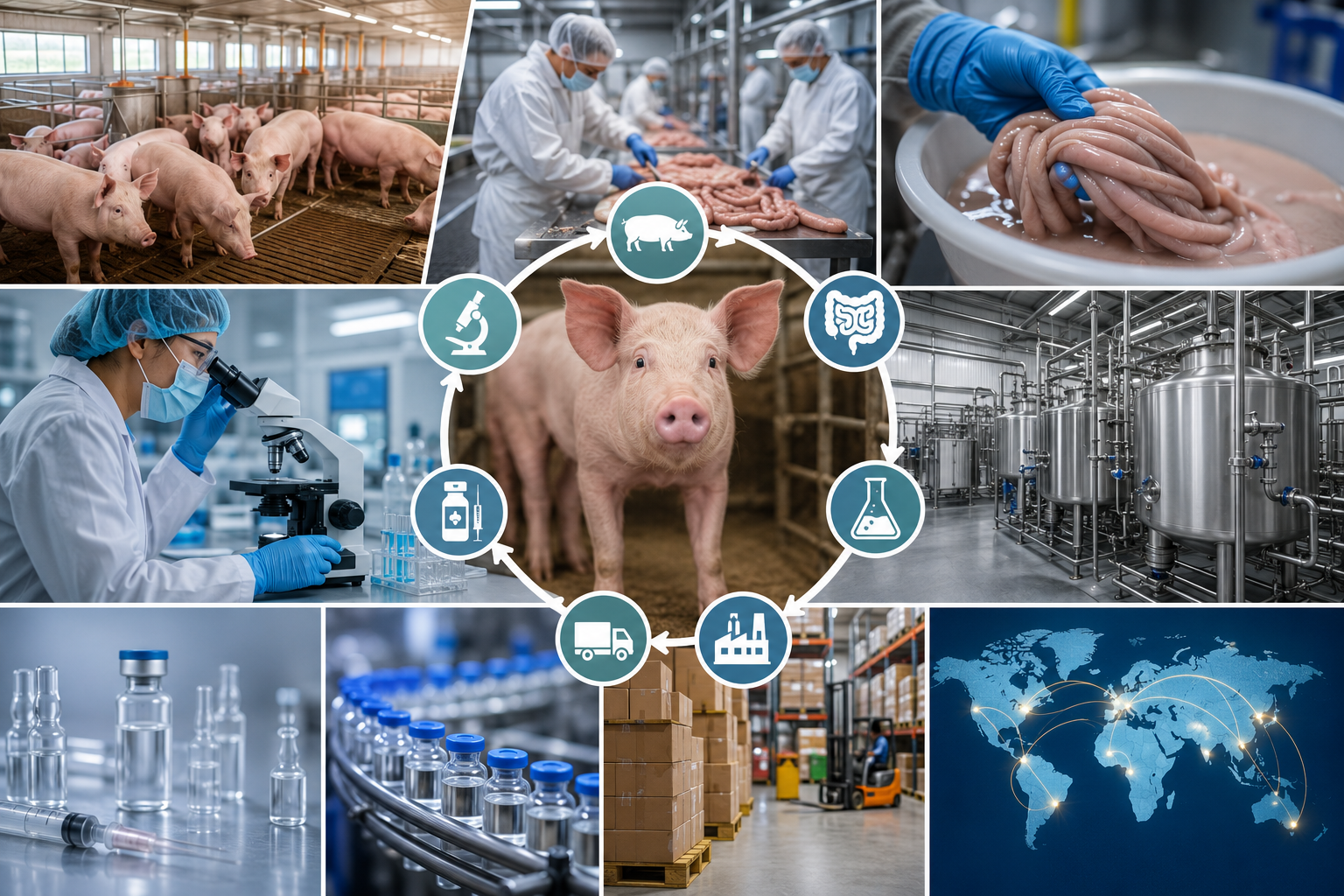
The Porcine Heparin Supply Chain
The production of pharmaceutical-grade heparin involves several interconnected stages.
1. Livestock Production
Healthy pig populations are the foundation of the global heparin supply chain. Animal diseases, changes in livestock production, and biosecurity issues can significantly affect raw material availability.
2. Collection of Porcine Intestinal Mucosa
Following meat processing, intestinal mucosa is collected and preserved before being transported to specialized processing facilities. Proper handling at this stage is critical to maintaining raw material quality.
3. Crude Heparin Extraction
Manufacturers extract crude heparin from the collected mucosa using controlled biochemical processes. This crude material serves as the starting point for pharmaceutical production.
4. Purification and API Manufacturing
The crude product undergoes multiple purification, filtration, and quality control steps before being converted into pharmaceutical-grade heparin API that complies with international regulatory standards.
5. Drug Manufacturing
Pharmaceutical manufacturers formulate the purified API into injectable heparin products and other anticoagulant medicines used by healthcare providers worldwide.
Key Procurement Risks
Because the supply chain relies on biological raw materials, procurement teams face several unique risks.
Animal Disease Outbreaks
Diseases affecting pig populations can reduce the availability of porcine raw materials and create supply shortages.
Geographic Supply Concentration
A significant portion of the world's crude heparin supply originates from a limited number of regions. Geographic concentration increases exposure to regional disruptions, trade restrictions, and transportation challenges.
Quality and Traceability
Maintaining full traceability throughout the supply chain is essential to ensure product quality, patient safety, and regulatory compliance.
Regulatory Requirements
Manufacturers must comply with stringent Good Manufacturing Practice (GMP) requirements and pharmacopoeial standards governing pharmaceutical-grade heparin production.
Strengthening Procurement Strategies
To improve supply chain resilience, procurement professionals should adopt proactive sourcing practices.
Recommended strategies include:
Diversify Qualified Suppliers
Working with multiple approved suppliers helps reduce dependence on a single source and improves supply continuity.
Strengthen Supplier Audits
Regular supplier audits and quality assessments ensure that manufacturing partners continue to meet regulatory and quality expectations.
Improve Supply Chain Visibility
Digital tracking systems provide greater transparency across sourcing, production, logistics, and inventory management.
Maintain Strategic Inventory
Appropriate safety stock levels can help manufacturers manage temporary supply disruptions without interrupting production.
Monitor Agricultural and Market Trends
Procurement teams should monitor developments in livestock production, animal health, international trade, and transportation markets that could affect raw material availability.
Sustainability and Ethical Sourcing
As environmental, social, and governance (ESG) expectations continue to grow, pharmaceutical companies are placing greater emphasis on responsible sourcing practices.
Organizations increasingly evaluate suppliers based on:
Animal welfare practices
Environmental management
Supply chain transparency
Ethical procurement policies
Regulatory compliance
Product traceability
Strong ESG performance supports both regulatory readiness and long-term supplier relationships.
Future Outlook
Although research into synthetic and alternative anticoagulants continues, porcine-derived heparin remains the global standard for many clinical applications. Demand is expected to remain strong as healthcare systems continue to perform increasing numbers of surgical procedures and treat patients requiring anticoagulant therapy.
At the same time, supply chain resilience, digital procurement, and supplier diversification will become even more important. Companies that invest in stronger sourcing strategies today will be better prepared to respond to future market fluctuations.
Conclusion
The global heparin supply chain demonstrates how pharmaceutical manufacturing can depend on industries beyond traditional chemical production. Because heparin originates from porcine biological materials, procurement planning must account for agricultural trends, animal health, regulatory compliance, supplier quality, and international logistics.
Organizations that strengthen supplier partnerships, improve supply chain visibility, diversify sourcing, and adopt data-driven procurement practices will be better positioned to maintain a reliable supply of this essential medicine. As demand continues to grow, resilient procurement strategies will remain a key competitive advantage for pharmaceutical manufacturers and healthcare suppliers.

Magnesium Sulfate Heptahydrate
Found this useful?