High-Purity Chemicals in Pharmaceutical Manufacturing
High-Purity Chemicals in Pharmaceutical Manufacturing: Quality and Safety Requirements
Why Purity Is Non-Negotiable in Pharmaceutical Manufacturing
The pharmaceutical industry is governed by stringent regulatory bodies, such as the FDA, EMA, and other global agencies, and specific purity standards are set that pharmaceutical companies must meet for approval of their products, because even a trace impurity in a raw material can alter the stability, efficacy, or safety of a finished medicine. High-purity chemicals are defined as substances with a purity level of 99% or higher, and high-purity chemicals are substances that have been refined to contain minimal levels of impurities, often exceeding 99.9% purity, which is why they are used in critical applications where consistency is essential. Pharmaceutical grade pure substances must comply with stringent quality criteria defined by pharmacopeias such as USP, EP, or ICH guidelines, and batch consistency is enforced through Good Manufacturing Practices (GMP), requiring documentation of synthesis pathways, purification steps, and storage conditions, so that every batch behaves identically in formulation.
Quality Requirements: Pharmacopeial Standards and ICH Guidelines
Pharmacopeial Compliance – USP, EP, BP and IP
When learning how to choose pharmaceutical chemicals, prioritize high purity (≥98%), verified analytical documentation like COA, and suppliers compliant with cGMP and ISO standards, because only pharmaceutical-grade substances meeting cGMP and pharmacopeial standards should be used in medicines intended for human use. Products labeled as high purity chemicals often adhere to strict quality standards such as ISO 9001 and GMP, and grades include ACS (American Chemical Society) grade, USP (United States Pharmacopeia), EP (European Pharmacopoeia), and food grade, with pharmaceutical use requiring the highest of these. For example, EXCiQ products are produced under cGMP, ensuring consistent quality and purity, and they offer IPA which complies with United States Pharmacopoeia (USP), British Pharmacopoeia (BP), Indian Pharmacopoeia (IP), and European Pharmacopoeia (EP), produced in a cGMP-compliant, FDA-registered facility, showing how a single excipient must meet multiple pharmacopeias to be sold globally.
ICH Q3 Impurities and Analytical Control
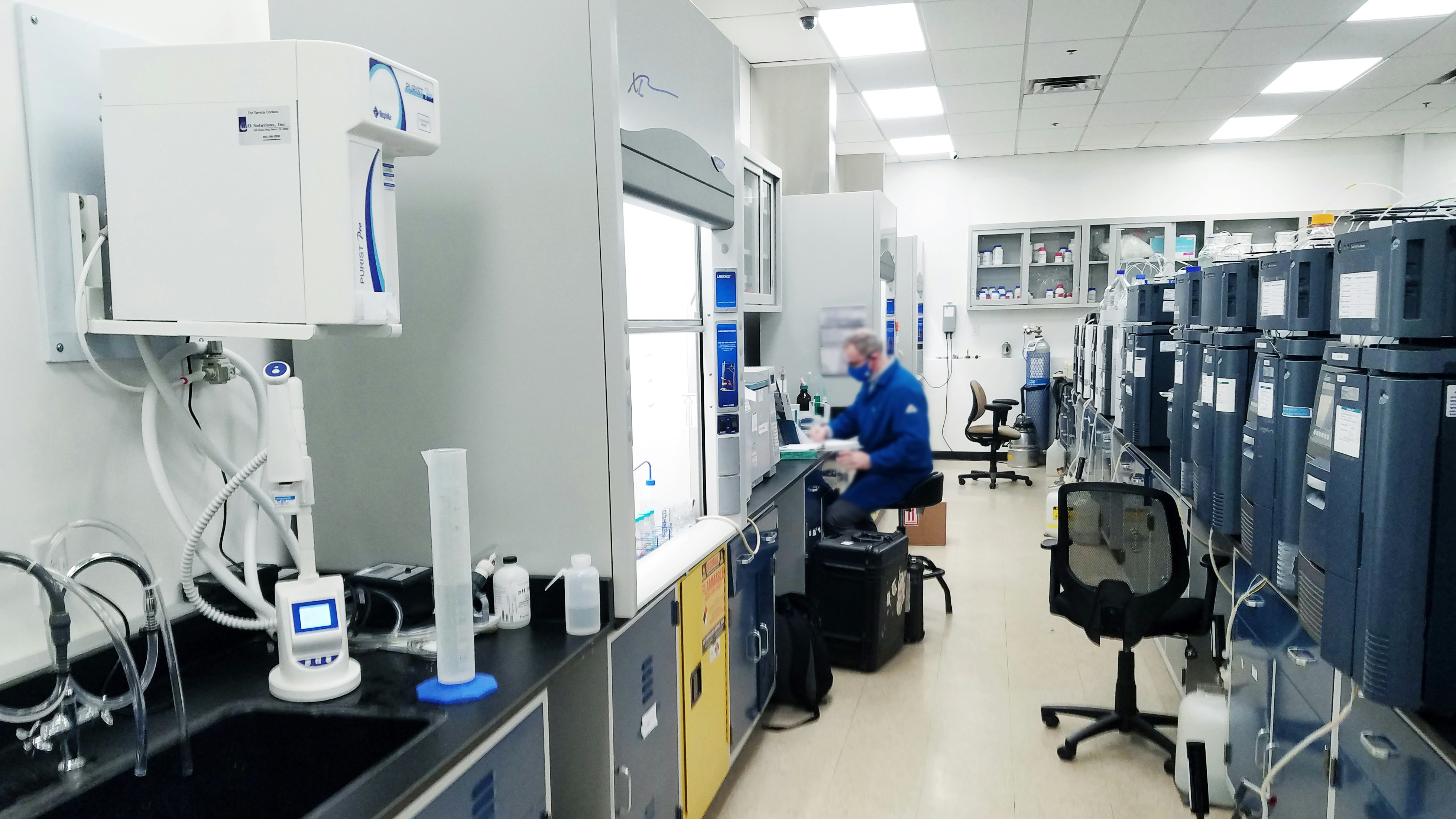
Acceptable impurity levels follow ICH Q3 guidelines, ensuring patient safety and therapeutic efficacy, and these guidelines set limits for organic impurities, inorganic impurities, residual solvents, and elemental impurities like heavy metals, which must be tested using validated methods such as HPLC, GC, ICP-MS, and Karl Fischer titration. Our pharma-grade colloidal silica meets stringent purity and particle size requirements, ensuring no interference with APIs or excipients, and it must meet the USP-NF Colloidal Silicon Dioxide monograph, which is a good example of how particle size, loss on drying, and assay are all critical quality attributes, not just purity percentage. Process Analytical Technology (PAT) is real-time quality control of chemical manufacturing, and it allows manufacturers to monitor purity during production rather than only testing the final batch, reducing the risk of out-of-spec material reaching the market.
Safety Requirements: cGMP, Documentation and Traceability
Current Good Manufacturing Practice (cGMP)
Regulators such as FDA in the US and EMA in Europe impose strict quality requirements on products destined for the public, including pharmaceuticals, cosmetics and toiletries, and to document proof of safety, regulatory bodies require that manufacturers follow current Good Manufacturing Practice (cGMP), which ensures the identity, strength, quality and purity of a drug is appropriate, which includes sourcing and using high-purity raw materials. Good Manufacturing Practice (GMP) refers to a system of guidelines and regulations that ensure products are consistently produced and controlled according to quality standards, and GMP chemical manufacturing involves adhering to these rigorous standards to produce high-quality chemicals that meet the stringent requirements of various industries. In practice, cGMP means documented synthesis, validated cleaning, controlled environment, trained personnel, change control, and deviation management, and any change in supplier, solvent, or purification step must be assessed for impact on impurity profile before it is approved.
Supplier Qualification and COA Verification
High-purity chemicals are substances that meet rigorous quality standards, containing minimal impurities to ensure consistent performance and safety in critical applications, and buyers should verify this by checking the COA against the pharmacopeial monograph, confirming that the test methods are validated, and conducting independent testing on receipt for critical attributes. ICL produces a wide range of Good Manufacturing Practice (cGMP) compliant materials that meet the requirements of global pharmaceutical, intermediate, and nutraceutical industries, and their production processes adhere to strict GMP, FDA, KOSHER, HALAL, and HSSC regulations, ensuring safety of pharmaceutical-grade ingredients. Buyers should also verify that the supplier's manufacturing site is FDA-registered or EMA-inspected, that the DMF or CEP is available where required, and that the supplier provides full traceability from raw material to finished batch, including residual solvent certificates and elemental impurity statements.
Applications and Risk of Low-Purity Materials
Where High-Purity Chemicals Are Used
ICL produces highly pure pharmaceutical grade ingredients including Mg, KCl, and Ca, and purity of the Dead Sea combined with high-quality manufacturing allows them to produce a product range that complies with strict international regulatory authority criteria and specifications, including US and EU Pharmacopoeia and FCC, while positioning them for global supply. High-purity chemicals are used as APIs, excipients, solvents, reagents, and cleaning agents in pharmaceutical manufacturing, where even a 0.1% impurity can cause a failed stability test, a discolored tablet, or a toxic degradant that forces a recall. For example, a low-purity citric acid with high heavy metals could destabilise a biologic, a low-purity sorbitol with high reducing sugars could cause browning in a syrup, and a low-purity isopropanol with high water content could affect cleaning validation for sterile manufacturing.
Building a Resilient Quality System
Strict regulatory agencies such as the FDA and EMA enforce rules for the manufacture of pharma chemicals, and the most successful manufacturers treat high-purity sourcing as a quality system, not as a purchasing decision, by qualifying two suppliers for each critical chemical, conducting annual audits, and maintaining a risk register for impurities, supply disruptions, and regulatory changes. By investing in high-purity chemicals, cGMP compliance, and robust analytical testing, pharmaceutical manufacturers can reduce batch failures, accelerate regulatory approval, and protect patient safety, which is ultimately the most important measure of quality in drug manufacturing.
Sources with Links:
Understand pharmaceutical grade pure substances – StudyRaid – https://app.studyraid.com/en/read/15366/533461/pharmaceutical-grade-pure-substances
How to Choose Pharmaceutical Chemicals: A Complete Buyer's Guide – Alibaba Plantin – https://plantin.alibaba.com/buyingguides/pharmaceutical-chemicals
Pure Chemicals in Pharmaceuticals – Why Important – Elchemy – https://elchemy.[STRIPPED 77 bytes] Making quality the priority for fine and specialty chemicals suppliers – Chemistry World – https://www.chemistryworld.com/industry/making-quality-the-priority-for-fine-and-specialty-chemicals-suppliers/4015817.article
High-Purity Chemicals for Product Safety in Food and Medicines – DecaChem – https://www.decachem.com/high-purity-chemicals-product-safety-food-pharma-industry
Acid Casein
Found this useful?