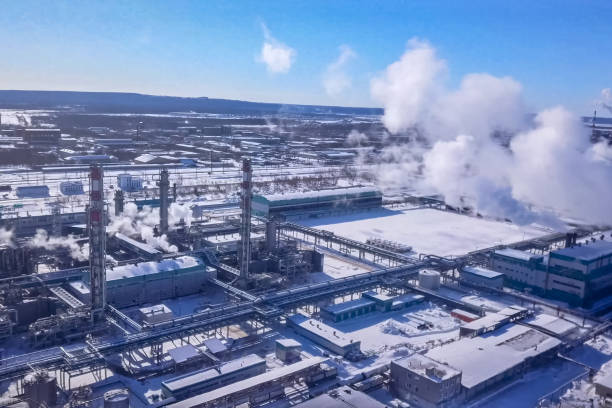
Honeywell's Historic Restructuring: Redefining Automation, Materials, and Manufacturing
Honeywell has announced a sweeping corporate restructuring that will transform its operations across automation, specialty materials, and manufacturing technology. The initiative is designed to streamline decision‑making, unlock capital, and create a more agile organization that can accelerate innovation in high‑growth markets.
Strategic Priorities of the New Structure
Focused Automation Business Unit
At the core of the overhaul is a dedicated industrial automation unit that will consolidate Honeywell’s motion control, sensing, and control‑system offerings. This focused unit will be responsible for delivering end‑to‑end automation solutions to sectors such as oil & gas, chemicals, and packaging.
Specialty Materials Division
Separating the specialty materials segment allows Honeywell to pursue advanced composites, high‑performance polymers, and electronic materials with a clearer growth strategy. The new division can invest in research‑driven material innovations that support energy efficiency and sustainability.
Manufacturing Technology & Digital Twin
The restructuring also introduces a manufacturing technology arm that will champion digital twins, artificial intelligence, and edge computing. This unit will help customers replace legacy machinery with smart, connected factories that reduce downtime and improve yield.
Financial Implications
Honeywell plans to unlock an estimated $1.5 billion in value by selling non‑core assets and reducing operating costs. The company will also streamline its capital allocation framework, allowing faster deployment of funds to high‑return projects.
Impact on Global Manufacturing

Accelerated Digital Transformation
By aligning its automation and manufacturing tech divisions, Honeywell will accelerate the adoption of Industry 4.0 solutions worldwide. The company’s digital twin platform can simulate plant performance, reducing gauges, and shortening time‑to‑market for new products.
Enhanced Sustainability
The specialty materials unit will focus on low‑carbon materials, helping customers meet stricter environmental regulations. Honeywell’s new integrated approach supports the circular economy by enabling recyclability and material reuse.
Competitive Advantage
With a clearer corporate focus, Honeywell can compete more effectively against smaller, niche automation firms. The company’s new structure provides a stronger platform for strategic acquisitions and joint ventures in emerging markets.
Key Challenges and Risks
Like any major reorganization, the transition poses operational risks. Integration of legacy systems, potential talent attrition, and market uncertainty could slow progress. Honeywell’s leadership has outlined a phased implementation plan to mitigate these risks.
Copper Sulphate Anhydrous
Found this useful?