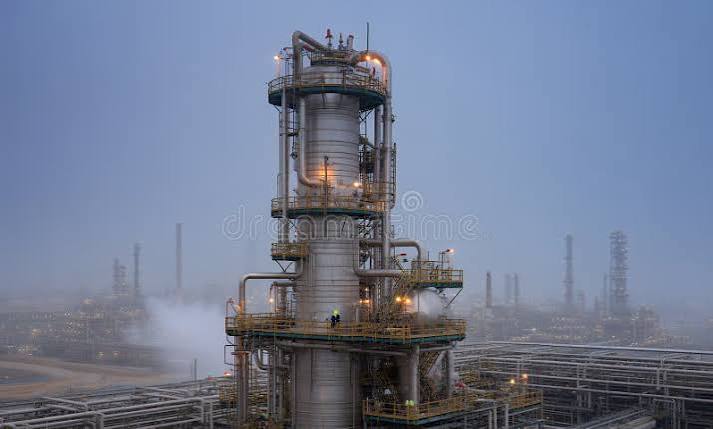
Hungary: MOL Completes Reconstruction of Fire-Damaged AV3 Unit at Danube Refinery
MOL has completed the reconstruction of the AV3 crude oil distillation unit at its Danube Refinery in Százhalombatta, Hungary, marking a major step toward restoring the site’s full operating capacity. The unit suffered extensive damage in a fire in October 2025, forcing MOL to undertake a large-scale rebuilding programme.
The repair programme carried an 18 billion-forint budget and included major structural, mechanical, piping, electrical and control-system work. MOL now plans a phased restart in October after completing pressure testing, system checks and operational safety inspections.
AV3 Reconstruction Restores a Critical Crude Processing Unit
The AV3 unit forms part of the crude processing system at the Danube Refinery. Crude distillation represents an essential first-stage operation in refining because it separates crude oil into fractions that feed downstream processing units and ultimately support the production of fuels and other petroleum products.
The October 2025 fire caused significant damage to the AV3 installation. MOL spent almost a year rebuilding affected infrastructure and restoring equipment before completing the construction phase in September 2026.
The scale of the work extended well beyond routine maintenance. MOL rebuilt damaged reinforced-concrete structures, restored affected equipment and renewed control and electrical systems as part of the reconstruction programme.
The company also installed 27 new high-capacity pumps, replaced approximately 8 kilometres of piping and laid around 100 kilometres of electrical cables. These upgrades form part of the broader effort to return AV3 to safe and reliable operation.
What the 18 Billion-Forint Repair Programme Covered
The size of the investment reflects the complexity of rebuilding a major refinery processing unit after extensive fire damage. MOL's work addressed several interconnected areas of the facility rather than focusing on one isolated piece of equipment.
Key elements included:
Structural reconstruction: Damaged reinforced-concrete structures were demolished and rebuilt to restore the physical integrity of the unit.
New pumping equipment: Twenty-seven high-capacity pumps were installed to support the unit's processing systems.
Pipeline replacement: Approximately 8 kilometres of piping were replaced during the reconstruction.
Electrical infrastructure: Around 100 kilometres of electrical cables were laid as part of the restoration.
Control and safety systems: Affected process-control and electrical equipment underwent restoration and testing before restart.
For industrial buyers and traders, the project demonstrates how a major refinery outage can create requirements across multiple industrial supply categories. Refinery reconstruction can involve mechanical equipment, process materials, electrical infrastructure and maintenance services simultaneously.
October Restart Will Happen in Stages
Completing construction does not mean that AV3 immediately returns to commercial production. MOL will first carry out a series of commissioning activities designed to verify the integrity and functionality of the rebuilt systems.
The planned sequence includes:
System flushing to prepare process systems for operation.
Pressure testing to assess the integrity of relevant equipment and piping.
Process-control testing to confirm that operating systems function correctly.
Safety equipment testing before crude oil enters the unit.
Auxiliary power connections to support the operating systems.
Integration testing with associated facilities across the Danube Refinery.
Gradual crude introduction and production restart following the required inspections.
MOL expects petroleum product production to resume step by step during October. The staged approach means the return of capacity will occur progressively rather than through an immediate switch from shutdown to full production.
Why Danube Refinery Capacity Matters to Regional Buyers
The Danube Refinery in Százhalombatta is a major refining facility serving Hungary and surrounding Central European markets. Its return toward full operation therefore has significance beyond the refinery's physical site.
MOL has described the restored AV3 capacity as an important addition to its ability to respond to domestic and regional fuel requirements. The company has also highlighted diversified procurement and import options as part of its broader supply strategy.
For traders and procurement teams, restored refinery capacity can influence regional availability and purchasing decisions in several ways:
Fuel supply flexibility: Greater domestic refining capability can provide an additional source of refined products for regional markets.
Import requirements: As local production capacity improves, purchasing patterns can change across neighbouring markets.
Logistics planning: Buyers can reassess the balance between regional refinery supply, imports and alternative delivery routes.
Inventory management: A staged production restart may encourage buyers to monitor availability rather than assume immediate full-capacity supply.
Supplier diversification: Regional buyers may continue maintaining alternative supply channels while refinery operations transition back to normal levels.
The practical impact will depend on the speed of the restart, operating performance and wider regional market conditions.
What Refinery Buyers Should Watch During the Restart
The October restart creates a period where market participants may pay close attention to operational progress. Construction completion removes the main rebuilding phase, but commissioning still needs to progress through several technical stages.
Production availability remains the most immediate consideration. Buyers should distinguish between the completion of reconstruction and the return of sustained commercial output.
Regional supply flows also deserve attention. MOL previously used measures including increased transfers from its Bratislava Refinery and additional third-party imports to mitigate the production impact of the Danube outage.
Delivery flexibility can become particularly important while production ramps up. Procurement teams may benefit from maintaining more than one supply route until AV3 reaches stable operating conditions.
Market timing is another consideration. A phased restart means product availability may change during October as different systems move through commissioning and production stages.
The Supply Chain Lessons From a Major Refinery Reconstruction
The AV3 project illustrates the interconnected nature of refinery supply chains. A disruption at one crude-processing unit can affect production planning, logistics, imports and downstream purchasing requirements.
For chemical and industrial traders, the project also highlights the importance of understanding the assets behind regional supply. Refinery operating rates can influence the availability and movement of petroleum-derived feedstocks and products, particularly when a major processing site operates below normal capacity.
MOL's response also shows the value of maintaining alternative procurement channels during a prolonged outage. The company previously increased semi-finished feedstock processing while arranging transfers and regional imports to help offset lost production.
From a procurement perspective, several practices remain relevant:
Maintain alternative suppliers for strategically important materials and energy-related products.
Monitor refinery maintenance and restart announcements that could alter regional availability.
Build logistics flexibility into contracts where supply depends heavily on one production centre.
Track both local production and import flows before making assumptions about future availability.
Keep inventory decisions aligned with actual operating conditions rather than construction milestones alone.
Danube Refinery Return Could Strengthen MOL's Operating Flexibility
Once AV3 completes commissioning and reaches stable operation, MOL expects the Százhalombatta refinery to return to full capacity. The company says this will strengthen fuel supply security in Hungary and across the wider region.
The restoration also gives MOL greater operational flexibility after a year in which the damaged unit constrained crude-processing capability. Returning a major crude distillation unit to service can reduce dependence on compensating supply arrangements and allow refinery operations to move closer to their normal configuration.
For regional buyers, the key point is that capacity restoration does not necessarily translate into identical market conditions overnight. Procurement teams will still need to monitor actual production levels, product availability, transport economics and competing supply sources as October progresses.
The wider European refining market also continues to operate within a complex supply environment. Reliable refining capacity and diversified supply routes can therefore remain important factors for buyers managing exposure to regional disruptions.
What Procurement Teams Should Do Now
The completion of the AV3 reconstruction gives buyers a clearer timeline for the return of an important Hungarian refining asset. However, the immediate focus should remain on the staged commissioning process and the actual recovery of production during October.
Procurement teams tracking Central European supply should consider:
Monitoring restart milestones rather than treating construction completion as the final operating milestone.
Reviewing regional supplier options while AV3 moves through commissioning.
Checking delivery schedules frequently during the initial restart period.
Comparing domestic and imported supply routes as market availability changes.
Preparing flexible purchasing plans that can respond to changes in refinery operating rates.
The 18 billion-forint reconstruction represents a substantial industrial investment, with major structural, mechanical, piping, electrical and control-system work completed over roughly a year. As AV3 moves toward production, the next milestone for the market will be the successful completion of testing and the gradual return of crude-processing capacity.
For chemical traders and industrial buyers, the development reinforces a broader supply-chain principle: major infrastructure recoveries can affect regional purchasing patterns well beyond the facility itself. Tracking refinery operations alongside supplier availability and logistics conditions can help procurement teams respond as capacity returns.

Sulphur
Found this useful?