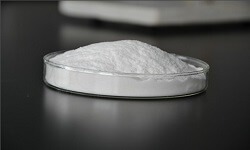
Hydrocolloids play a critical role in food manufacturing, where relatively small quantities can control viscosity, texture, suspension, gel formation and stability. When a key stabilizer becomes difficult to source, replacing it is rarely as simple as selecting another ingredient from a supplier catalogue.
Supply disruptions can arise from crop shortages, geopolitical events, export restrictions, processing interruptions, freight problems or sudden demand increases. For procurement teams, these risks make hydrocolloid substitution an important part of business continuity planning.
Manufacturers that qualify alternative stabilizers before a disruption occurs can respond faster when their preferred material becomes unavailable. The objective is not always to find an identical chemical replacement, but to identify another ingredient or blend that delivers the required functionality at an acceptable total cost.
Why Hydrocolloid Supply Chains Are Vulnerable
Many hydrocolloids originate from agricultural crops, marine resources or fermentation processes. This creates different forms of supply exposure depending on the ingredient.
Guar gum and locust bean gum depend on agricultural production, while carrageenan relies on seaweed supply. Xanthan gum depends on fermentation inputs and industrial processing capacity, and cellulose-based stabilizers depend on chemical processing and cellulose feedstocks.
This diversity means procurement teams need ingredient-specific risk assessments rather than one universal contingency plan.
A supply disruption can affect manufacturers through several channels:
Raw material shortages: Crop, seaweed or cellulose availability can reduce production capacity.
Weather events: Drought, excessive rainfall and changing growing conditions can affect agricultural inputs.
Geopolitical disruptions: Trade restrictions or instability can interrupt established sourcing routes.
Energy costs: Processing and drying costs can increase when energy markets tighten.
Freight constraints: Port congestion, container shortages or route disruptions can extend delivery times.
Demand spikes: Strong demand from food, beverage or industrial sectors can quickly tighten availability.
Understanding the source of the risk is the first step toward selecting an appropriate substitute.
Matching Hydrocolloid Function to the Replacement
The most common procurement mistake is treating hydrocolloids as interchangeable products. They are not.
A substitute should match the primary function required by the formulation. A stabilizer used to suspend particles in a beverage may require very different characteristics from a thickener used in a sauce or a gelling agent used in confectionery.
Before evaluating alternatives, manufacturers should identify the exact function of the incumbent ingredient:
Viscosity control: The replacement needs to deliver the required thickness at a practical dosage.
Suspension: Beverage and emulsion applications may require strong particle stabilization and controlled flow behavior.
Gel formation: Confectionery and fruit applications often depend on specific gel strength and setting characteristics.
Emulsification: Some hydrocolloids contribute to emulsion stability, although their performance varies significantly by application.
Water management: Bakery, frozen food and processed food formulations may use hydrocolloids to control moisture migration and improve texture.
Once the primary function is defined, procurement teams can evaluate potential alternatives more systematically.
Guar Gum and Xanthan Gum Substitution
Guar gum and xanthan gum frequently appear in formulations that require viscosity and stabilization, but their functional behavior differs.
Guar gum is a galactomannan derived from guar seeds and provides strong thickening properties. Xanthan gum comes from fermentation and offers useful viscosity control across a broad range of food-processing conditions.
Manufacturers sometimes use the two ingredients together because their functional interaction can provide useful texture and rheological performance.
When guar gum becomes difficult to source, xanthan gum may provide an alternative in selected applications. The reverse can also apply, but the replacement ratio cannot be assumed from one formulation to another.
Procurement teams should evaluate:
Required viscosity at the finished-product concentration
Hydration speed
Temperature and pH conditions
Salt tolerance
Shear conditions during processing
Sensory impact
Required dosage
Laboratory trials should determine the appropriate substitution level before a production change takes place.
Pectin Can Replace Some Stabilizer Functions
Pectin provides another option for manufacturers working with fruit-based products, beverages and selected dairy or plant-based formulations.
Its performance depends strongly on the pectin type and formulation environment. High-methoxyl pectin, low-methoxyl pectin and amidated low-methoxyl pectin provide different functional behavior.
Pectin should therefore be viewed as an application-specific substitute rather than a universal replacement for gums.
For procurement teams, its main advantage comes from having another plant-derived stabilizer category available when a particular gum faces supply pressure.
Cellulose-Based Stabilizers Provide Another Sourcing Route
Cellulose derivatives can offer useful alternatives in formulations where manufacturers require thickening, water retention, suspension or texture control.
Sodium carboxymethyl cellulose, commonly known as CMC, is one example available to food manufacturers. Its functionality can make it useful in beverages, sauces, bakery products and other processed foods depending on the grade and formulation.
Cellulose-based ingredients can be particularly valuable in a diversification strategy because their upstream supply chain differs from agricultural gums such as guar.
However, buyers should not make a direct substitution without technical testing. Differences in hydration, viscosity development and mouthfeel can affect the finished product even when both ingredients serve the same broad function.
Carrageenan Substitution Requires Careful Application Testing
Carrageenan plays an important role in selected dairy, dairy-alternative and processed food applications because of its ability to interact with proteins and create specific texture and stabilization effects.
Replacing carrageenan can therefore be more complicated than replacing a general-purpose thickener. A manufacturer may need to evaluate combinations of other hydrocolloids rather than rely on one substitute.
Potential strategies include using blends involving gums, pectin or cellulose derivatives, depending on the desired texture and processing environment.
The correct solution depends on the product's protein system, pH, mineral content, heating process and target texture. Procurement and R&D teams should establish these parameters before approving a replacement.
Hydrocolloid Blends Can Reduce Single-Ingredient Dependence
A blend strategy can provide greater flexibility than searching for one ingredient that exactly replicates another.
Different hydrocolloids can contribute complementary functions. One may provide viscosity while another improves suspension or gel structure, allowing the manufacturer to reach the required performance through a combination.
This approach can also diversify the supply chain. Instead of depending on a single vulnerable raw material, manufacturers can source several ingredients from different supplier networks.
However, blends require stronger specification control. Small changes in the ratio can affect viscosity, texture and processing behavior, so manufacturers should establish acceptable formulation ranges.
How Procurement Teams Should Build a Substitution Matrix
A substitution matrix can help buyers organize alternatives before a supply disruption occurs. The objective is to connect each critical hydrocolloid with prequalified options based on function, technical suitability and commercial availability.
A useful internal process starts with the most supply-critical ingredients.
For each material, procurement teams should record:
Current supplier and country of origin.
Annual consumption and average monthly demand.
Typical supplier lead time.
Minimum stock level.
Primary formulation functions.
Approved alternative ingredients.
Qualified alternative suppliers.
Required technical testing.
Regulatory requirements.
Estimated replacement cost.
This information allows purchasing teams to move quickly when a supplier announces a delay or when market prices increase sharply.
Cost-in-Use Matters More Than Unit Price
A substitute with a lower price per kilogram may not reduce the manufacturer's actual production cost. If it requires a higher dosage or creates additional processing requirements, the apparent saving can disappear.
Procurement teams should calculate cost in use rather than comparing supplier quotations alone.
For example, if an alternative hydrocolloid costs more per kilogram but delivers the same viscosity at a lower dosage, its finished-product cost may remain competitive. Conversely, a cheap material that requires additional processing or creates quality losses can become significantly more expensive.
The evaluation should include ingredient cost, dosage, processing time, quality impact, waste and potential reformulation expenses.
Supplier Qualification Should Start Before a Crisis
Emergency sourcing leaves little time for technical testing. Manufacturers that wait until their primary hydrocolloid becomes unavailable may face a difficult choice between purchasing expensive spot material or accepting an unqualified substitute.
Prequalification provides more control.
Procurement teams should maintain relationships with alternative suppliers and periodically request samples or updated technical information. Quality teams can then complete much of the approval process before an actual shortage occurs.
A strong backup supplier should demonstrate:
Consistent batch quality
Appropriate food-grade documentation
Reliable production capacity
Export experience where relevant
Transparent specifications
Reasonable lead times
Clear communication during supply disruptions
Supplier diversification becomes most valuable when alternatives are already approved.
Regional Diversification Can Reduce Logistics Risk
A company can have several suppliers and still remain exposed if all of them depend on the same production region.
Geographic diversification provides another layer of resilience. Buyers should evaluate supplier locations, raw material origins and major export routes when assessing risk.
This is particularly important for agricultural hydrocolloids. A weather event affecting a major production region can create simultaneous pressure across multiple suppliers that purchase from the same local market.
Procurement teams should ask suppliers where their raw materials originate and whether they maintain alternative sourcing arrangements.
Supplier count alone is not a measure of supply security. Supply-chain independence matters too.
Regional Diversification Can Reduce Logistics Risk
A company can have several suppliers and still remain exposed if all of them depend on the same production region.
Geographic diversification provides another layer of resilience. Buyers should evaluate supplier locations, raw material origins and major export routes when assessing risk.
This is particularly important for agricultural hydrocolloids. A weather event affecting a major production region can create simultaneous pressure across multiple suppliers that purchase from the same local market.
Procurement teams should ask suppliers where their raw materials originate and whether they maintain alternative sourcing arrangements.
Supplier count alone is not a measure of supply security. Supply-chain independence matters too.
Regulatory and Quality Requirements Cannot Be Compromised
A substitute ingredient must meet the regulatory and quality requirements of the target market and finished product.
Changing hydrocolloids can also affect product labeling, specifications and customer approvals. Manufacturers should involve regulatory and quality teams before implementing a commercial substitution.
For export-oriented businesses, requirements can differ between destination markets. Buyers should confirm applicable food additive permissions and documentation before placing a large order.
Technical equivalence and regulatory suitability should therefore form part of the same approval process.
A Practical Emergency Substitution Workflow
When a disruption occurs, procurement teams need a structured response rather than an improvised search for replacement material.
A practical workflow can follow five stages:
1. Identify the supply gap. Determine the expected shortage, affected quantities and likely duration.
2. Prioritize critical products. Allocate available inventory to products where the hydrocolloid is essential.
3. Review prequalified alternatives. Start with materials already tested and approved by technical teams.
4. Run focused trials. Test viscosity, texture, stability, processing behavior and sensory performance.
5. Validate the commercial route. Confirm supplier capacity, documentation, lead time and landed cost before switching.
This process reduces the chance that a rushed substitution creates a second problem inside the manufacturing operation.
What Procurement Teams Should Do Now
Hydrocolloid substitution should form part of routine supply-chain planning rather than remain an emergency response. Manufacturers can improve resilience by identifying critical stabilizers, qualifying alternatives and monitoring the risks behind each ingredient.
The most effective strategy combines technical and commercial planning:
Map critical hydrocolloids: Identify ingredients where a shortage could stop or restrict production.
Understand functionality: Define exactly what each ingredient contributes to the formulation.
Prequalify substitutes: Test alternative gums, pectin and cellulose-based stabilizers before they are urgently needed.
Diversify suppliers: Maintain qualified sources across different manufacturers and regions.
Track cost in use: Compare dosage and total formulation economics rather than unit price.
Maintain strategic inventory: Use safety stock according to lead time, criticality and supply risk.
Review alternatives regularly: Supplier capacity and market conditions can change, so contingency plans should remain current.
For food manufacturers, the strongest hydrocolloid procurement strategy is not to eliminate every supply risk. It is to ensure that a disruption affecting one ingredient does not automatically become a production crisis.
By combining formulation flexibility with supplier diversification, manufacturers can respond faster to shortages while protecting product quality and margins. Hydrocolloid substitution can therefore become a strategic procurement capability, helping businesses manage both short-term disruptions and longer-term changes in ingredient supply.