
Importing and Exporting Industrial Chemicals: A Complete Guide to Documentation
International trade in industrial chemicals involves more than negotiating prices and arranging transportation. Importers and exporters must prepare accurate commercial, shipping, safety and regulatory documents to move chemicals across borders. These documents help customs authorities identify products, assess duties, verify shipment details and confirm that applicable trade requirements have been met.
Industrial chemicals include solvents, acids, alkalis, petrochemical feedstocks, polymers, additives and specialty chemical products. Their documentation requirements vary according to chemical classification, intended use, transport method, country of origin and destination-country regulations. Some products require additional permits, inspection certificates or dangerous goods declarations before a carrier can accept the shipment.
For manufacturers, distributors, importers and procurement teams, understanding these requirements helps prevent customs delays, unexpected costs and shipment rejections. A well-organized documentation process also improves communication between suppliers, freight forwarders, customs brokers, carriers and buyers.
Essential Commercial Documents for International Chemical Trade
Commercial documents establish the terms of a transaction and provide customs authorities with information about the goods being traded. Importers and exporters should prepare these documents carefully and ensure that product descriptions, quantities, prices and shipment details remain consistent.
1. Proforma invoice
A proforma invoice is a preliminary document that an exporter sends to a prospective buyer before confirming the final shipment. It outlines the proposed transaction and helps the buyer review pricing, quantities and delivery conditions.
For industrial chemical transactions, it commonly includes:
Exporter and buyer details
Chemical name and product grade
Quantity and unit of measurement
Unit price and total estimated value
Proposed shipment date
Payment terms and delivery conditions
Applicable Incoterm and named location
Importers may use this document to arrange internal approvals, financing or import authorization where required. However, a proforma invoice is not a substitute for the final commercial invoice.
2. Commercial invoice
The commercial invoice is one of the most important documents in an international shipment. It records the actual sale between the exporter and importer and provides customs authorities with information used to assess the declared value of goods.
A chemical shipment invoice should contain an accurate product description, quantity, unit price, total value, currency, country of origin, buyer details and seller details. It should also identify the relevant purchase order or contract where applicable.
The product description deserves particular attention. General descriptions such as "industrial chemical" may not provide sufficient information for customs classification. Exporters should use the appropriate product name, grade and other identifying details required by the destination country.
3. Packing list
A packing list explains how the goods have been packed for transportation. It helps customs officials, warehouse operators and logistics providers verify the physical shipment against the commercial invoice.
For chemical products, the packing list may identify:
Product name and package description
Number of drums, bags, IBCs or containers
Net and gross weight
Package dimensions where relevant
Container and seal numbers
Batch or lot identification
Shipping marks and package references
For bulk chemicals transported in tank containers or ISO tanks, the documentation should reflect the actual cargo arrangement and relevant transport details. The packing list should agree with the invoice and shipping instructions.
The US International Trade Administration identifies commercial invoices and packing lists among the common export documents and explains their role in customs processing and cargo verification.
Transport, Origin and Chemical Safety Documents
Transport and safety documents help move chemicals through international logistics networks. They also provide information about where goods originated and how carriers should handle them.
4. Bill of lading or airway bill
A bill of lading (B/L) is a key transport document used for ocean freight. It records shipment details and serves as evidence of the contract of carriage. Depending on its form and terms, it may also function as a document of title.
An airway bill (AWB) performs a similar transport-document role for air cargo, although it is generally not a document of title.
A bill of lading commonly identifies the shipper, consignee, carrier, vessel, loading port, destination port, cargo description, package count and shipment weight. The details should match the commercial invoice and packing list.
Other transport modes use their own documents, such as road consignment notes and rail transport documents.
5. Certificate of origin
A certificate of origin confirms the country in which goods qualify as originating under the applicable origin rules. It may be required by customs authorities to establish origin or support a preferential tariff claim under a trade agreement.
For chemical products, buyers should confirm whether the importing country requires a certificate of origin and which issuing authority it recognizes. Preferential origin documents must meet the specific rules of the relevant trade agreement. Simply shipping a chemical from a particular country does not automatically make it eligible for preferential origin treatment.
6. Safety Data Sheet
A Safety Data Sheet (SDS), historically called a Material Safety Data Sheet (MSDS), provides information about a chemical's hazards, safe handling, storage, emergency response and other safety considerations.
An SDS is particularly important when a chemical presents physical, health or environmental hazards. It helps importers, warehouse operators, transport providers and end users understand the risks associated with the product.
Under the UN Globally Harmonized System of Classification and Labelling of Chemicals (GHS), SDS and hazard labels form part of a harmonized approach to communicating chemical hazards. The GHS includes guidance on classification and hazard communication, although individual countries implement its requirements through their own regulations.
UNECE+1
7. Certificate of analysis
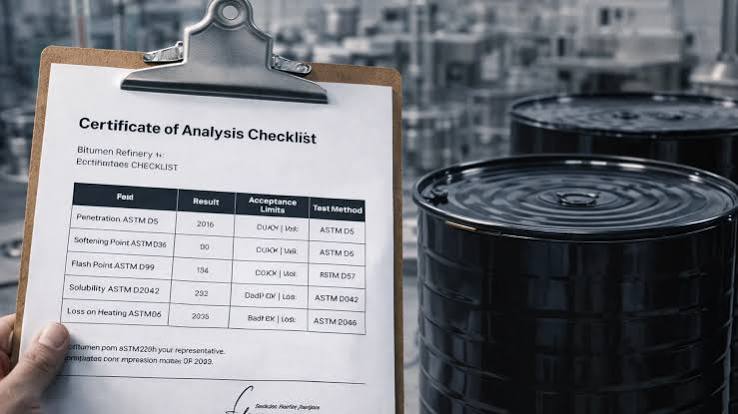
A Certificate of Analysis (COA) provides test results for a particular product batch. Chemical buyers use it to verify whether the supplied material meets agreed quality specifications.
Depending on the chemical, a COA may include purity, concentration, moisture, density, colour, pH and other relevant test parameters. It should identify the product, batch number, test methods where applicable and issuing manufacturer or laboratory.
A COA is not universally required for every chemical import or export. However, buyers may require it under the sales contract, quality agreement or destination-country regulations.
Customs Clearance, Permits and Dangerous Goods Requirements
Customs clearance involves submitting the required information to the relevant authority so that goods can be assessed and released for import or export. Chemical shipments may need additional checks because some substances are controlled, hazardous or subject to product-specific restrictions.
8. Customs import and export declarations
A customs declaration provides official information about the goods, their classification, value, origin and movement across the border. Importers and exporters generally submit declarations through the customs systems or procedures applicable in their jurisdictions.
Correct Harmonized System (HS) classification is particularly important. The HS code helps customs authorities identify the product category and determine applicable duty rates, restrictions and statistical reporting requirements.
Chemical traders should not select an HS code based only on a commercial product name. Classification may depend on chemical composition, concentration, grade, intended use and the explanatory rules applied by the importing country.
9. Import permits and regulatory approvals
Some industrial chemicals require prior authorization, registration or permits before importation. Requirements may depend on the chemical's hazard classification, controlled-substance status, intended use or applicable environmental and industrial regulations.
Before confirming a purchase, importers should check:
Whether the chemical is permitted for import
Whether an import licence or product registration is required
Whether the destination country requires specific testing or inspection
Whether restrictions apply to hazardous or controlled substances
Whether local-language labels or documentation are necessary
Whether additional environmental or safety approvals apply
Exporters should also check whether their own country restricts the export of the relevant substance or requires an export licence.
10. Dangerous goods declaration
Certain chemicals qualify as dangerous goods under transport regulations. Their classification determines the applicable packaging, marking, labelling and documentation requirements.
For sea transport, the International Maritime Dangerous Goods (IMDG) Code establishes requirements for the carriage of dangerous goods. Depending on the classification, the shipper may need to provide a dangerous goods transport document containing details such as the UN number, proper shipping name, hazard class, packing group and quantity.
The consignor must also provide the applicable hazard information and declarations to the carrier. Requirements depend on the substance, transport mode and any applicable exemptions. The IMDG Code's documentation provisions also recognize electronic data exchange where the carrier agrees and the required information remains available.
Incoterms, Insurance and Payment Documentation
The commercial agreement determines how the buyer and seller divide costs, responsibilities and risks during an international shipment. Clear contractual terms help prevent disagreements when cargo is delayed, damaged or held for customs inspection.
Understanding Incoterms
Incoterms are internationally recognized trade rules published by the International Chamber of Commerce (ICC). Incoterms 2020 contains 11 rules that explain the responsibilities of buyers and sellers for delivery, transport arrangements, risk transfer, insurance obligations under certain rules and customs formalities.
Common examples include:
EXW (Ex Works): The seller makes the goods available at the agreed location, while the buyer takes on most transport responsibilities.
FOB (Free On Board): Used for sea and inland waterway transport, with delivery and risk transfer linked to loading the goods on board the vessel.
CIF (Cost, Insurance and Freight): The seller arranges and pays for carriage and the required insurance to the named destination port, while risk transfers when the goods are on board at the port of shipment.
DAP (Delivered at Place): The seller arranges delivery to the named destination, with the buyer generally responsible for import clearance and duties.
Businesses should state the selected rule together with the named place or port and the version, such as "CIF Port of Rotterdam, Incoterms 2020." Incoterms do not replace the sales contract or determine every aspect of payment, ownership or product quality.
International Chamber of Commerce+1
Insurance certificate
An insurance certificate provides evidence of cargo insurance when coverage is arranged for the shipment. It may be required under the agreed Incoterm, sales contract, financing arrangement or buyer's internal policy.
Chemical cargo insurance should reflect the actual product, packaging, transport route and potential risks. Businesses should check exclusions and conditions, particularly for hazardous materials, leakage, contamination and handling incidents.
Payment and banking documents
International chemical transactions may involve advance payment, documentary collection or letters of credit. Depending on the agreed payment method, banks may require documents such as commercial invoices, bills of lading, insurance certificates, certificates of origin and inspection documents.
The documents presented under a letter of credit must comply with its stated conditions. Even small differences in names, dates, quantities or shipment details can create discrepancies and delay payment.
A Practical Documentation Checklist for Chemical Importers and Exporters
A documentation checklist helps businesses identify missing paperwork before cargo leaves the supplier's facility. The exact requirements should be confirmed with the customs authority, freight forwarder, carrier and relevant regulatory agencies.
Document | Main purpose |
|---|---|
Proforma invoice | Preliminary transaction details |
Commercial invoice | Sale value and customs assessment |
Packing list | Package count, weight and cargo details |
Bill of lading or AWB | Evidence and details of transportation |
Certificate of origin | Establishes origin for customs purposes |
Safety Data Sheet | Communicates chemical hazards and safe handling |
Certificate of analysis | Confirms batch quality and specifications |
Customs declaration | Official import or export information |
Import/export permit | Provides required regulatory authorization |
Dangerous goods declaration | Communicates regulated transport hazards |
Insurance certificate | Evidence of cargo insurance where applicable |
Additional considerations for Pakistan-based traders
Businesses importing chemicals into Pakistan should check the applicable requirements through the Federal Board of Revenue (FBR), Pakistan Single Window (PSW) and relevant regulatory authorities. Pakistan's Trade Information Portal lists commercial invoices, transport documents, packing lists, permits and certificates of origin among documents that may be required for commercial imports, depending on the goods and circumstances.
TIPP+1
Exporters should also confirm the current export declaration process, banking requirements and any product-specific approvals before dispatch. Requirements can change, so traders should verify the latest rules rather than rely on an old shipment checklist.
Key Considerations for Smooth International Chemical Shipments
Accurate trade documentation is essential for moving industrial chemicals across international markets. A missing permit, incorrect HS code or inconsistent product description can lead to customs queries, storage charges, shipment delays or rejection.
Importers and exporters can reduce these risks by preparing documents early, checking product classification, confirming destination-country requirements and coordinating with experienced freight forwarders and customs brokers. They should also maintain consistent product names, quantities, weights, batch references and consignee details across the entire document set.
For chemical buyers, reviewing documentation before shipment helps confirm that the supplier can provide the necessary commercial, quality and safety information. For exporters, a structured document-control process supports smoother customs clearance and stronger relationships with international customers.
Ready to source Xylene from verified global suppliers? Explore competitive offers on our platform today.
Sources:

Xylene
Found this useful?