India and the EU's New Steel-and-Chemicals Safeguards: A Quiet Trade War Escalation
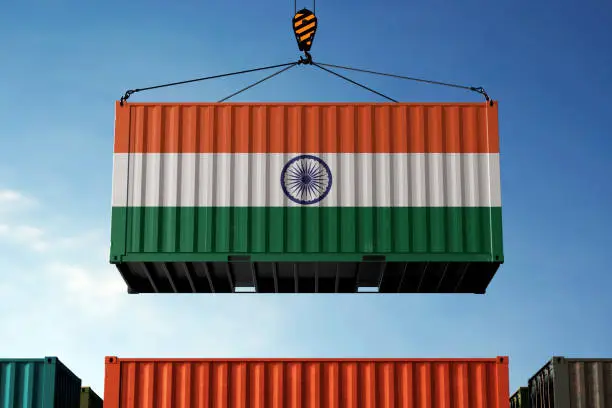
India and the EU's New Steel-and-Chemicals Safeguards: A Quiet Trade War Escalation
India and the European Union are moving in opposite directions on trade policy.
On one side, the two economies concluded negotiations for a landmark EU-India Free Trade Agreement (FTA) in January 2026, promising significant tariff reductions and deeper market access. On the other, both sides are retaining and expanding trade-defence tools designed to protect domestic industries from import surges, dumping and excess global capacity. (Trade and Economic Security)
That apparent contradiction is becoming increasingly important for steel and chemical markets.
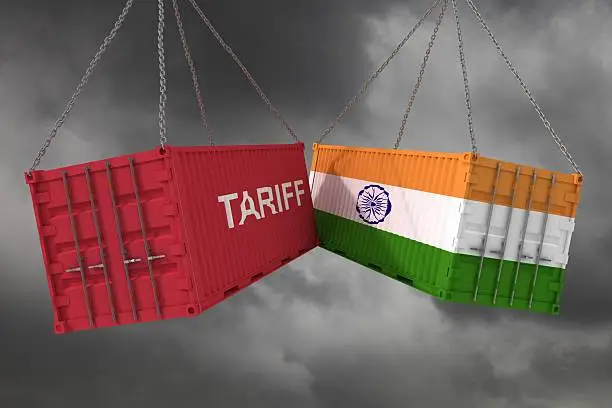
The emerging picture is not a conventional tariff war between India and Europe. It is something quieter: greater market opening at the headline level, combined with stronger safeguards and trade-defence mechanisms underneath.
For chemical traders, distributors and manufacturers, this means that an FTA does not necessarily translate into unrestricted market access.
The Bigger Trade Picture
The EU and India concluded negotiations for their FTA on 27 January 2026. The agreement would eliminate or reduce tariffs across more than 96% of goods trade, with the EU removing tariffs on more than 90% of tariff lines and India on 86%. (Trade and Economic Security)
Chemicals are one of the sectors expected to benefit.
The European Commission estimates that EU chemical exports to India currently face tariffs of up to 22%, with tariffs on almost all chemical products expected to be eliminated, mostly when the agreement enters into force. (Trade and Economic Security)
But the FTA is not yet fully binding. The published agreement text remains subject to legal revision, signature and each side's internal approval procedures. (Trade and Economic Security)
That creates an unusual situation:
Trade liberalisation is being negotiated at the same time that trade protection is becoming more sophisticated.
Why Steel Is the Warning Signal
Steel provides the clearest example of where the EU's trade policy is heading.
In June 2026, the EU adopted a new permanent steel safeguard framework, with the regulation applying from 1 July 2026. (research.hktdc.com)
The new regime significantly tightens access to the European market. Industry reporting indicates that tariff-free steel import quotas were reduced to approximately 18.3 million tonnes annually, while the out-of-quota tariff increased to 50%. (Industrial Info Resources)
The underlying concern is global overcapacity.
European steelmakers are facing:
High energy costs
Weak demand
Competition from lower-cost imports
Excess global production capacity
Pressure from U.S. tariffs
Decarbonisation costs
The EU is therefore trying to prevent Europe from becoming the destination for steel that cannot find profitable markets elsewhere.
This matters to chemicals because the same overcapacity problem is increasingly visible in chemical manufacturing.
Chemicals Are Moving Into the Same Trade-Defence Framework
The European Commission has explicitly identified chemical overcapacity as a strategic concern.
In its chemicals industry action plan, the Commission said it would strengthen the EU's trade-defence toolbox and accelerate the use of anti-dumping, anti-subsidy and safeguard instruments when warranted.
Between January 2024 and June 2025, the Commission initiated 18 trade-defence investigations involving chemical imports, while 46 chemical-related trade-defence measures were in force as of June 30, 2025. The Commission said the majority involved Chinese imports and linked the trend to significant global overcapacity. (Eur-Lex)
This is a critical signal for Indian chemical exporters.
India is increasingly positioning itself as an alternative manufacturing base to China. But as Indian chemical exports expand into Europe, they will increasingly encounter a market that is becoming more sensitive to import surges, price undercutting and excess capacity.
The Important Distinction: Safeguards vs. Anti-Dumping
Not every trade restriction means the EU believes a country is behaving unfairly.
Under EU rules, a safeguard is designed to protect an industry from a significant increase in imports that causes or threatens serious injury. It does not require proof of dumping or government subsidisation. (Trade and Economic Security)
Anti-dumping and anti-subsidy measures are different.
They focus on specific unfair trade practices.
This distinction matters because a chemical exporter could face trade restrictions even without being accused of dumping, if a broader surge in imports causes serious injury to EU producers and the legal conditions for a safeguard are met.
Why Indian Chemical Exporters Should Pay Attention
India's chemical industry stands to gain significantly from the EU-India FTA.
The EU already imports substantial quantities of chemicals from India, and chemicals are among India's important exports to Europe. The EU says its imports from India include chemicals, machinery, mineral products, textiles and base metals. (Trade and Economic Security)
Lower tariffs could therefore accelerate Indian chemical exports.
But that success could eventually create its own regulatory response if imports rise sharply in sensitive product categories.
The potential sequence is:
FTA tariff reduction
↓
Lower Indian export costs
↓
Higher Indian shipments to Europe
↓
Greater market share for Indian suppliers
↓
Pressure on European producers
↓
Trade-defence investigations
The FTA therefore creates opportunity—but also increases the importance of demonstrating that growth is commercially sustainable and compliant with EU trade rules.
The EU-India FTA Already Contains a Safety Valve
This possibility is not being ignored.
The FTA includes a bilateral safeguard mechanism allowing either side to temporarily impose measures if a significant increase in preferential imports caused by the agreement causes or threatens serious injury to domestic industry. (Trade and Economic Security)
India's government has similarly explained that such safeguards can raise duties back toward MFN levels when tariff liberalisation produces damaging import surges. The mechanism can initially operate for two years and be extended following review, subject to the agreement's limits. (Press Information Bureau)
In other words, the FTA itself contains a mechanism for managing the political consequences of successful trade liberalisation.
Steel and Chemicals Are Connected
The steel story matters to chemicals because both sectors face similar structural pressures.
European producers face:
Higher energy costs
Carbon-related costs
Slower industrial demand
Global overcapacity
Aggressive pricing from lower-cost producers
Increasing capital requirements for decarbonisation
Asian producers face:
New capacity additions
Lower production costs
Large domestic markets
Export pressure when domestic demand weakens
This creates a classic trade-defence problem:
When global capacity grows faster than global demand, surplus production looks for an export market.
Europe is increasingly signalling that it does not want to absorb unlimited surplus.
India's Opportunity—and Risk
For India, this creates both an opportunity and a warning.
The opportunity is straightforward.
If European buyers want to diversify away from China, Indian chemical producers can become alternative suppliers.
The FTA could make that transition even easier by reducing tariffs and improving customs procedures.
The risk is that India could eventually become a target of the same trade-defence mechanisms being used against other major exporters.
That does not mean India is automatically at risk of restrictions.
It means exporters need to pay greater attention to:
Export growth rates
EU market share
Product-level pricing
Capacity additions
Cost structures
Rules of origin
Subsidies
Transfer pricing
Customs declarations
Product-specific trade-defence cases
Rules of Origin Become More Important
Lower tariffs under the FTA will only benefit products that satisfy the agreement's rules.
This becomes particularly important for chemical companies operating complex supply chains.
A product may be manufactured in India but contain substantial imported inputs from China or another country.
The question then becomes:
Does the product qualify as Indian-origin under the FTA?
For chemical traders, this means origin documentation is becoming a commercial asset rather than simply a customs requirement.
The FTA includes detailed rules-of-origin provisions intended to determine which goods qualify for preferential treatment. (Trade and Economic Security)
Chemicals Could See a New Sourcing Race
If the agreement enters into force as negotiated, European buyers could have a stronger incentive to source chemicals from India.
Consider a simplified example:
Supplier | Product Price | EU Tariff | Delivered Cost |
|---|---|---|---|
China | $1,000/MT | 8% | $1,080 |
India | $1,030/MT | 0% | $1,030 |
Middle East | $980/MT | 5% | $1,029 |
In this example, India could become competitive despite having the highest factory price.
That is the commercial power of tariff liberalisation.
But if Indian volumes rise sharply, European producers could begin monitoring the market more closely.
Chemical Buyers Need More Than a Tariff Comparison
European chemical buyers should therefore avoid looking at the FTA as simply:
India = lower tariff.
The more complete calculation is:
Chemical price + freight + insurance + tariff + compliance + origin verification + supply reliability + trade-defence risk
That final component is becoming increasingly important.
A supplier with a low tariff today could face a future anti-dumping or safeguard investigation if market conditions change.
India Is Also Becoming More Active on Trade Defence
The trend is not one-way.
India's Directorate General of Trade Remedies (DGTR) continues to initiate anti-dumping, countervailing and safeguard investigations.
For example, in June 2026 India initiated an anti-dumping investigation into cyanuric chloride from China and the European Union. It has also pursued cases involving other chemicals and industrial products. (Directorate General of Trade Remedies)
That shows that India itself is increasingly willing to use trade-defence instruments to protect domestic industries.
The relationship is therefore not simply:
EU protects → India exports.
It is becoming:
EU and India both liberalise trade while simultaneously protecting sensitive industries.
Is This Really a Trade War?
Calling it a "trade war" requires some qualification.
India and the EU are not currently engaged in a broad tariff confrontation.
In fact, the two sides have just negotiated a major FTA and continue to deepen strategic cooperation. The EU and India also held their third Trade and Technology Council meeting in July 2026. (Trade and Economic Security)
So the better description is managed trade friction.
The relationship is becoming more open in aggregate but more defensive at the product level.
That is a very different model from traditional free trade.
What Chemical Companies Should Monitor
For companies trading between India and Europe, five indicators deserve particular attention.
1. FTA Ratification
The agreement is not yet fully in force. Companies should not assume preferential tariffs are already available.
2. Product-Level Tariff Schedules
Chemical tariff reductions vary by product and implementation period. Some are immediate while others phase down over several years. (Trade and Economic Security)
3. EU Trade-Defence Investigations
A rise in Indian exports into a particular chemical category could attract greater scrutiny if European producers claim serious injury or unfair pricing.
4. Rules of Origin
Companies using imported intermediates need robust documentation proving preferential origin.
5. Global Capacity Trends
The biggest long-term risk may not come from India-EU politics at all.
It may come from global chemical overcapacity.
If global supply continues growing faster than demand, trade-defence measures are likely to become more common across major importing markets.
What This Means for Chemical Marketplaces
For B2B chemical marketplaces, this environment creates an opportunity to move beyond simple supplier-price comparisons.
A modern platform could track:
Supplier → Country of origin → HS code → FTA eligibility → Tariff → Trade-defence measures → Production capacity → Export volumes → Landed cost
This would allow buyers to identify not only the cheapest supplier but also the most sustainable sourcing option under changing trade rules.
For example, a marketplace could flag:
India: FTA eligible — low tariff — rising EU import exposure — monitor trade-defence risk
That type of intelligence could become increasingly valuable as chemical trade becomes more regulated.
Outlook
The EU and India are moving toward greater economic integration, but the era of assuming that free-trade agreements automatically mean unrestricted trade is disappearing.
The EU-India FTA promises major tariff reductions, including the elimination of tariffs on almost all chemical products over the agreed implementation periods. (Trade and Economic Security)
At the same time, Europe is strengthening its ability to respond to import surges and global industrial overcapacity, while India is also actively using anti-dumping and other trade-defence instruments. (Trade and Economic Security)
For steel, the direction is already visible: lower import access, tighter quotas and stronger protection against global oversupply.
Chemicals could increasingly follow a similar path—not necessarily through blanket tariffs, but through targeted anti-dumping cases, safeguards, origin requirements and closer monitoring.
The real shift is therefore not a conventional India-EU trade war.
It is the emergence of a more defensive version of free trade, where markets are opened broadly but governments retain increasingly powerful tools to intervene when domestic industries come under pressure.
For chemical companies, that means one thing: tariff liberalisation may open the door, but trade-defence risk will determine how wide that door ultimately stays.
Ammonia Anhydrous
Found this useful?