India's petrochemical demand growth versus the import influx
India’s Petrochemical Demand Growth vs. the Import Influx
India’s petrochemical industry is facing a familiar industrial dilemma: demand is growing quickly, but imports are growing alongside it.
Domestic consumption of major petrochemicals is expected to remain strong, with CareEdge forecasting 6–7% annual growth over the medium term. Yet limited domestic capacity additions and a wave of new global production—particularly from China—have allowed cheaper imported products to capture part of India's expanding market.
The result is a race between India’s demand growth and its ability to build competitive domestic capacity quickly enough to satisfy that demand.


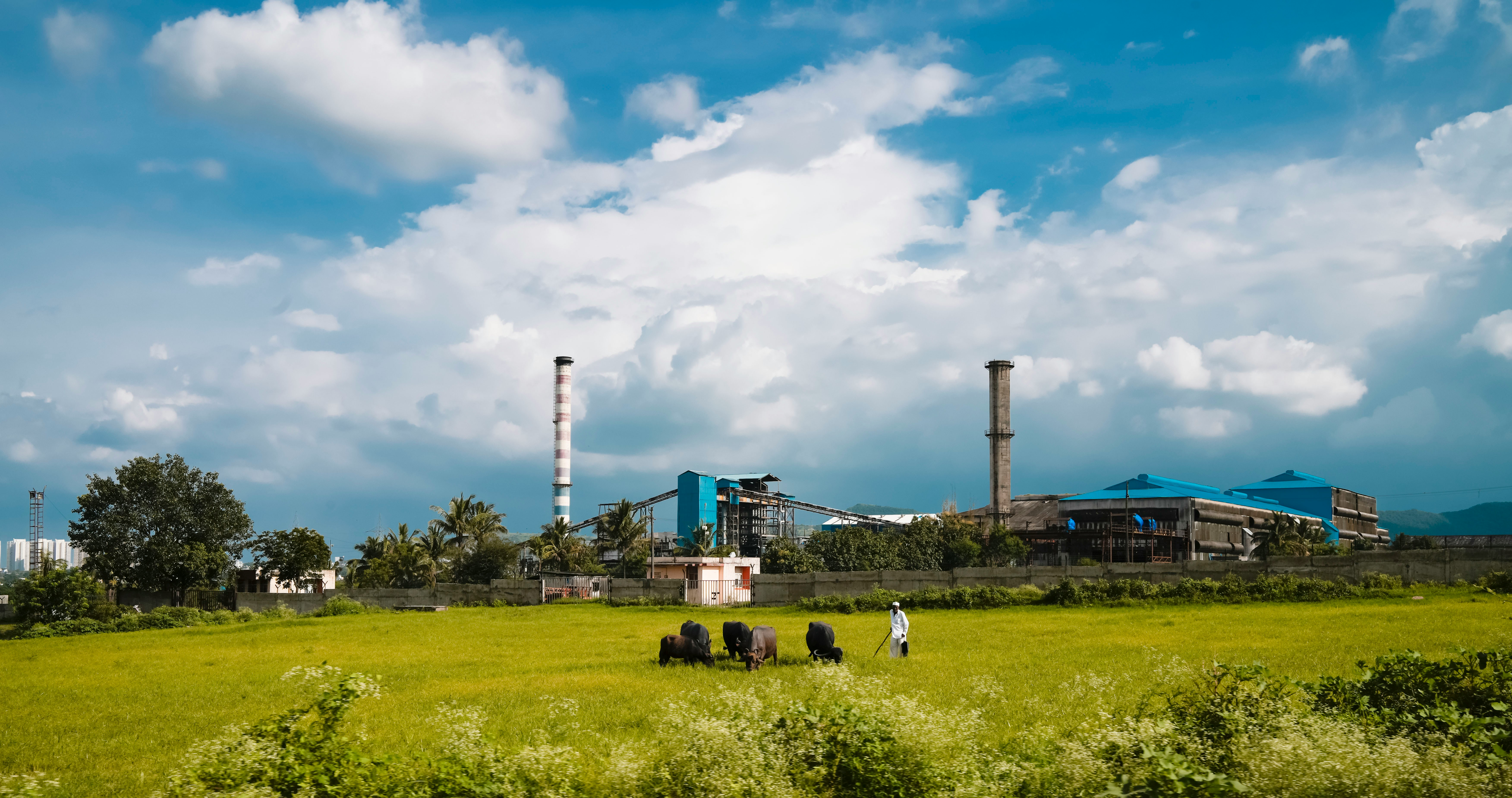
Image: India’s expanding petrochemical manufacturing infrastructure.
Demand Is Moving Higher
India's petrochemical consumption has been expanding alongside economic growth, urbanisation, manufacturing and downstream industries.
Products such as:
Polypropylene (PP)
High-density polyethylene (HDPE)
Low-density polyethylene (LDPE)
Linear low-density polyethylene (LLDPE)
PVC
Aromatics
Elastomers
are used across packaging, automotive components, construction, consumer products, textiles and industrial applications.
CareEdge estimates that consumption of major petrochemicals could reach around 29 million tonnes in FY26, with overall consumption expected to grow by roughly 5% in FY26.
The longer-term outlook is even stronger. CareEdge expects India's petrochemical consumption to grow by 6–7% annually over the medium term.
The Import Problem
The challenge is that India's domestic production capacity has not expanded at the same pace as consumption.
During FY23 and FY24, strong domestic demand combined with limited capacity additions resulted in a sharp increase in imports. At the same time, large new petrochemical plants—particularly in Asia—created additional international supply.
This created a difficult environment for Indian producers.
Instead of simply competing against other domestic companies, Indian petrochemical producers increasingly have to compete with low-cost imported material.
China Is Changing the Supply Equation
China's massive petrochemical capacity expansion is one of the most important factors behind the import pressure.
Large additions to Chinese production capacity have contributed to global oversupply, putting pressure on petrochemical prices and margins.
Reliance Industries has previously warned that India's petrochemical industry needs to increase production capacity as China's expansion reshapes the global market. The company has argued that India needs to capture more of its own growing demand rather than allowing overseas producers to dominate the supply chain.
This creates an unusual situation for India.
India has strong demand growth, while the global market has excess production capacity.
For downstream manufacturers, cheaper imports can be beneficial because they provide competitively priced raw materials. For domestic petrochemical producers, however, the same imports can reduce operating rates and squeeze margins.
Polypropylene Shows the Scale of the Opportunity
Polypropylene is one of the clearest examples.
CareEdge expects India's PP capacity to increase by about 1.8 times between FY25 and FY30, while demand is projected to increase by around 1.4 times over the same period. If these projects are completed, the capacity increase could substantially reduce India's dependence on imported polypropylene.
CareEdge believes India could potentially largely eliminate PP import dependence by FY30.
But capacity alone will not guarantee success.
New plants must produce at competitive costs. Otherwise, imported material can remain attractive even when domestic capacity is technically sufficient.
The Cost Competitiveness Test
This is where India's petrochemical strategy becomes more complicated.
Building a large cracker or polymer plant does not automatically create a competitive producer.
The economics depend on:
Feedstock costs → Energy costs → Plant efficiency → Scale → Logistics → Product quality → Global prices
Indian producers can face higher feedstock costs than some competitors, while new mega-projects elsewhere in Asia benefit from large-scale integrated refining and petrochemical systems.
CareEdge warns that cost competitiveness will remain a key factor determining whether India's new capacity can generate acceptable returns.
Global Overcapacity Is Making It Harder
The timing of India's capacity expansion is important.
The global petrochemical industry has experienced significant capacity additions in recent years, while demand has not increased at the same pace.
ICRA reported in July 2026 that global overcapacity and low-cost imports were continuing to limit margin recovery for Indian petrochemical producers. It expects new capacity additions and low-cost imports to continue putting pressure on margins in the near to medium term.
That means Indian companies are trying to build capacity at exactly the time when the global market has excess supply.
But Imports Aren’t Always the Enemy
There is another side to the equation.
Imports can help Indian downstream manufacturers access raw materials when domestic production is insufficient.
The Indian government temporarily removed customs duties on 40 critical petrochemical products in April 2026 after disruptions linked to the West Asia conflict reduced domestic availability. The measure was intended to maintain supplies for industries including plastics, packaging, textiles, pharmaceuticals, chemicals and automotive components.
The government later extended the exemption until July 15, 2026 as supply conditions gradually normalised
This illustrates the balancing act policymakers face:
Protect domestic producers — but keep essential feedstocks affordable for downstream manufacturers.
India Is Building More Capacity
Indian refiners and petrochemical companies are responding with major investments.
The objective is not simply to produce more polymers. Companies are increasingly looking at integrated refinery-petrochemical complexes that can convert crude oil and other feedstocks into higher-value chemicals and polymers.
This approach can improve economics because refineries and petrochemical units can share feedstocks, utilities, logistics and infrastructure.
India's petrochemical market is therefore entering a major investment cycle.
KPMG estimates the Indian petrochemical market could reach approximately INR 89 trillion by FY40, highlighting the scale of the long-term opportunity.
A Race Between Demand and Capacity
The central issue can be reduced to a simple equation:
If demand grows faster than domestic capacity → imports rise.
If domestic capacity grows faster than demand → utilisation and margins come under pressure.
India is currently trying to find the middle ground.
The country needs enough new capacity to reduce import dependence, but not so much that domestic producers face another wave of oversupply.
This becomes particularly important because the global petrochemical industry is itself expanding rapidly.
What Could Change by 2030?
The next few years could significantly reshape India's petrochemical balance.
Several major capacity projects are expected to come online or progress through development, while existing producers are looking to increase petrochemical intensity.
The PP market provides an indication of what could happen. If planned capacity increases materialise as expected, India could move substantially closer to self-sufficiency in polypropylene by 2030.
Other petrochemical products may follow a similar trajectory, although the outcome will vary depending on feedstock availability, project economics and global competition.
The Bigger Picture
India's petrochemical story is no longer simply about rising demand.
It is about whether domestic industry can convert that demand into domestic production and investment before global suppliers capture the market.
The opportunity is enormous. India has a growing population, expanding manufacturing base and increasing demand for plastics, packaging, automobiles, consumer goods and infrastructure.
But the competitive pressure is equally significant.
China and other Asian producers have added substantial new capacity, creating a global supply surplus and putting pressure on prices.
For India, the next phase will therefore depend on more than building plants. Producers will need scale, integration, efficient feedstocks and globally competitive operating costs.
The race is already underway:
India's petrochemical demand is growing.
Imports are filling part of the gap.
New domestic capacity is coming.
And the question for the industry is whether India's new plants can come online fast enough—and cheaply enough—to turn a growing import market into a stronger domestic manufacturing base.
Sources
Benzoic Acid (E210)
Found this useful?