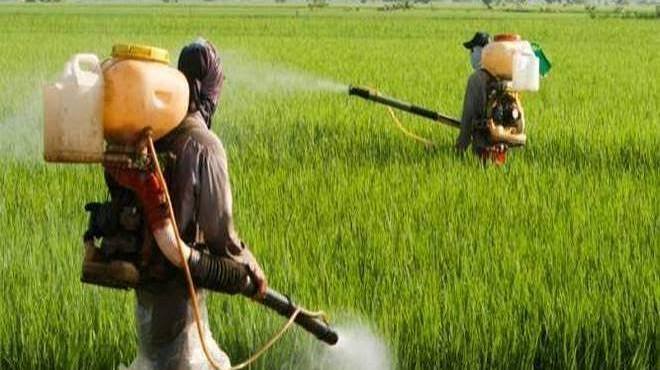
India’s crop protection market is entering a phase where herbicide demand is increasingly tied to labor availability, not just crop yields or pest pressure. Commercial farming initiatives drove a 15% increase in Indian chemical usage in 2024 as larger fields required season-long pest control programs, while India is projected to lead global crop protection chemical growth at a 6.0% CAGR through 2036.
The labor factor deserves particular attention. As fewer agricultural workers remain available for repetitive manual weeding, farmers are increasingly treating herbicides as a labor-saving input alongside tractors, power weeders and other farm machinery.
That shift has important implications for chemical traders, importers, exporters and procurement managers. It can influence product selection, seasonal inventory planning and demand for active ingredients and formulated crop protection products.
Labor Shortages Are Changing the Economics of Weed Control
Manual weeding requires substantial time and physical effort, while the availability of agricultural workers can fluctuate sharply during peak farming periods. Recent reporting on India’s pesticide market identifies labor scarcity as a major reason herbicides have become the fastest-growing crop protection segment.
The economic calculation goes beyond daily wages. Farmers need workers at the right point in the crop cycle, and delays in weed removal can reduce the effectiveness of crop management practices.
This creates a strong incentive to use chemical weed control when it can reduce repeated field operations. Herbicides therefore increasingly function as a substitute for labor-intensive weeding, rather than simply another crop protection expense.
The effect becomes more pronounced as farms become larger. A commercial operator managing extensive acreage cannot easily depend on a large temporary workforce arriving precisely when weeds reach a critical growth stage.
Mechanization and Herbicides Are Becoming Complementary
India’s agricultural mechanization strategy is also changing the operating environment. Government data indicates that overall mechanization varies significantly by farm operation, with weeding and interculture showing lower mechanization levels than several other activities.
This gap creates room for herbicides to complement machinery. A farmer may mechanize land preparation and harvesting while using chemical weed control where mechanical equipment cannot deliver sufficiently fast or precise results.
The combination can reduce the number of labor-intensive field passes.
Several factors reinforce this trend:
Large field areas: Bigger commercial operations increase the cost and logistical difficulty of manual weed removal.
Narrow application windows: Weeds often need control at specific crop stages, making labor availability particularly important.
Equipment limitations: Mechanical weeders can struggle between densely planted crops or around plants where physical access is difficult.
Seasonal labor competition: Peak agricultural periods can create intense competition for available workers.
Operational efficiency: Herbicides can help farmers cover large areas without organizing a similarly large manual workforce.
Government initiatives also support wider farm mechanization through equipment access and Custom Hiring Centres, which allow farmers to use machinery without purchasing every piece of equipment themselves.
Why Herbicides Are Outpacing Other Crop Protection Segments
India’s crop protection market contains three major categories, insecticides, fungicides and herbicides, but their demand drivers differ.
Insecticides and fungicides often respond to pest populations, disease incidence and crop-specific biological conditions. Herbicide demand has an additional structural driver because farmers can use chemical weed control to reduce dependence on scarce manual labor.
That difference helps explain why herbicides have become the fastest-growing segment in India’s organized crop protection market. Recent market reporting places the organized domestic crop protection chemicals market at roughly Rs 24,500 crore, with herbicides accounting for a substantial portion and growing faster than insecticides and fungicides.
The trend also changes the timing of purchasing decisions. Farmers may increasingly favor weed management products that allow them to control weeds early, reducing the need for later manual intervention.
This makes pre-emergence and early post-emergence herbicides particularly relevant to procurement planning. Timely application can help farmers manage weed pressure before it becomes a larger labor problem.
Commercial Farming Is Expanding the Addressable Market
Larger-scale commercial farming changes how agricultural inputs are purchased and used. When acreage expands, farmers and agricultural businesses need predictable crop protection programs that can cover entire production cycles.
The 15% increase in Indian chemical usage in 2024 reflects this broader shift toward more intensive crop management. Season-long programs can require coordinated use of herbicides, insecticides and fungicides according to crop stage and local conditions.
For suppliers, this creates opportunities to move beyond spot sales. Customers managing larger farms may seek consistent supply contracts, technical documentation, standardized formulations and reliable delivery schedules.
Procurement teams should therefore consider both immediate demand and the operational model behind that demand.
A growing commercial farming customer may value:
Consistent product specifications across batches.
Reliable availability during critical spraying periods.
Packaging suitable for efficient storage and distribution.
Competitive landed costs for recurring purchases.
Documentation supporting registration and regulatory compliance.
Flexible shipment schedules that align with planting and application cycles.
The result is a market where supplier reliability can matter almost as much as the headline product price.
Procurement Risks Are Moving Beyond Price
Herbicide buyers face several risks that can affect the economics of sourcing. Regulatory requirements, product quality, counterfeit materials and supply disruptions can all undermine the advantage of a low purchase price.
Registration requirements deserve particular attention. Products and active ingredients must meet the applicable requirements of the target market, while importers also need appropriate documentation and product specifications.
Quality consistency is equally important. Differences in formulation performance can affect application efficiency, field results and customer confidence.
Procurement teams should assess suppliers against several criteria:
Manufacturing consistency: Review specifications and quality-control practices before placing large orders.
Regulatory documentation: Confirm that the product has the documentation required for the intended market.
Production capacity: Check whether suppliers can maintain volumes during India's peak agricultural seasons.
Lead times: Build procurement schedules around planting and spraying windows rather than generic shipping timelines.
Supply diversification: Avoid excessive dependence on a single producer or origin where alternative sources are available.
A structured supplier evaluation can reduce the risk of turning strong market demand into avoidable inventory problems.
India's Growth Outlook Supports Longer-Term Demand
The projected 6.0% CAGR for Indian crop protection chemical growth through 2036 points to a market with substantial long-term expansion potential. Labor shortages add another layer to that outlook because they represent a structural change in farm operations rather than a temporary response to one crop season.
India’s agricultural workforce remains significant, but the composition of employment is changing as workers move toward non-agricultural sectors. Government data for July 2023 to June 2024 placed agriculture's share of India's workforce at 46.1%, highlighting both the sector's continuing importance and the scale of the workforce transition underway.
Mechanization can help fill part of this labor gap. Herbicides can fill another part by reducing the need for manual weed removal.
This creates a reinforcing cycle. Larger farms encourage mechanization, labor scarcity increases the value of labor-saving inputs and stronger demand for efficient crop management can support broader adoption of chemical weed control.
What Chemical Traders Should Watch Through 2036
The strongest opportunities may emerge where several trends overlap rather than from crop protection demand alone.
Traders should monitor the relationship between farm size, mechanization, labor costs and herbicide adoption. These factors can provide a better indication of purchasing requirements than yield expectations alone.
Four market signals deserve particular attention:
Expansion of commercial acreage: Larger operational units can generate more consistent demand for crop protection programs.
Mechanization investment: Greater use of machinery can accelerate the shift away from manual field operations.
Herbicide application timing: Growth in pre-emergence and early post-emergence use can alter seasonal demand patterns.
Supplier consolidation and diversification: Buyers may seek dependable suppliers capable of supporting larger recurring orders.
The opportunity is not limited to manufacturers. Distributors, importers and exporters that understand application cycles can position inventory more effectively and build stronger relationships with agricultural customers.
The Bottom Line for Procurement Teams
India’s herbicide growth reflects a fundamental change in how farmers manage labor, time and field operations. The market is not expanding only because growers want higher yields. It is also responding to a practical shortage of workers available for repetitive manual weed control.
That makes labor-saving chemistry an increasingly important part of agricultural procurement. As commercial farming expands and mechanization progresses, herbicides can become integrated into standard production programs rather than treated as optional inputs.
For chemical traders, the key opportunity lies in anticipating this shift. Suppliers that combine dependable quality, competitive pricing, regulatory readiness and seasonal availability will be better positioned to serve India's expanding crop protection market.