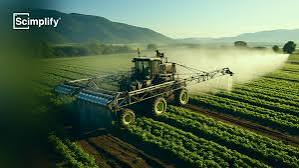
India's fertilizer and agrochemical industries are entering a period of stronger strategic importance as the country balances rising agricultural input requirements with supply-chain security, domestic manufacturing and export opportunities.
The fertilizer story is already substantial. India's total fertilizer requirement was assessed at 677.18 lakh metric tonnes in FY2025-26, up from 649.43 lakh tonnes the previous year, an increase of roughly 4%. At the same time, the government has been expanding domestic production and securing long-term overseas supply agreements to reduce exposure to global disruptions.
The agrochemical side is also significant. India produced 261,099 tonnes of agrochemicals through February 2026, substantially above the government's estimated domestic demand of 74,266 tonnes, highlighting the country's position as an important production and export base.
Together, these trends point to something bigger than a simple agricultural-input cycle.
India is increasingly becoming a strategic manufacturing and supply-chain hub for fertilizers, agrochemicals and related chemical intermediates.
Why India's Fertilizer Market Matters
India is one of the world's largest agricultural economies, which creates enormous structural demand for fertilizer.
The country's fertilizer system is built around several major product categories:
The scale is enormous.
During Kharif 2026 through July 14, fertilizer consumption included 88.04 lakh tonnes of urea, 21.39 lakh tonnes of DAP, 4.94 lakh tonnes of MOP and 37.37 lakh tonnes of NPKS.
This makes fertilizer one of the most strategically important parts of India's chemical economy.
Domestic Production Is Expanding
India is increasingly trying to strengthen domestic fertilizer manufacturing rather than relying entirely on imports.
The government says six new urea plants have added 76.2 lakh tonnes per year of capacity, taking indigenous urea capacity to approximately 269.42 lakh tonnes annually.
That expansion matters for two reasons.
First, it improves fertilizer security.
Second, it creates additional demand for domestic chemical infrastructure, logistics, engineering services and feedstock supply.
The broader strategy is therefore about building an integrated agricultural-input ecosystem rather than simply increasing fertilizer output.
But India Still Needs Imports
Domestic production does not eliminate India's dependence on international markets.
India continues to import critical nutrients and raw materials, particularly for products such as:
DAP
MOP
Phosphoric acid
Ammonia
Sulphur
The government has responded by diversifying suppliers and signing longer-term agreements.
For 2025-26, Indian fertilizer companies secured agreements for 31 lakh tonnes of DAP from Saudi Arabia, 2.5 lakh tonnes of MOP from Jordan, 25 lakh tonnes of DAP/TSP from Morocco and 30.1 lakh tonnes of DAP/NPKs from Russia.
That creates an important distinction:
India's fertilizer boom is not purely about self-sufficiency.
It is about greater supply security through a combination of domestic production and diversified imports.
Geopolitics Is Accelerating the Strategy
The fertilizer supply chain has become increasingly vulnerable to geopolitical disruption.
West Asia-related disruptions in 2026 affected fertilizer and raw-material logistics, increasing:
Freight costs
Insurance costs
Shipment delays
Import prices
Supply uncertainty
India's imports of ammonia, phosphoric acid and sulphur were particularly affected, while potash also faced higher landed costs.
This makes domestic manufacturing more strategically valuable.
It also makes diversified sourcing increasingly important.
Agrochemicals Tell a Different Story
The agrochemical market has a different structure from fertilizers.
India is already a significant producer of:
Government data show that agrochemical production reached 261,099 tonnes through February 2026, while estimated domestic demand was only 74,266 tonnes.
That difference highlights an important characteristic of India's agrochemical industry:
Exports are a major part of the business model.
Export Recovery Is Becoming Important
India's agrochemical industry experienced a difficult period following global inventory destocking and weak demand.
But the outlook has been improving.
Industry estimates entering FY2026 pointed to roughly 6–7% sector growth, with exports expected to recover as global inventories normalized and agricultural demand improved.
This gives Indian producers a potential second growth engine beyond domestic agriculture.
Instead of relying exclusively on Indian farm demand, manufacturers can increasingly serve customers across:
Latin America
North America
Europe
Asia
Africa
That export orientation makes India's agrochemical industry more globally connected than the fertilizer market.
One of the most interesting parts of India's chemical opportunity is upstream.
Agrochemical manufacturers require numerous intermediates and building blocks.
These can include:
As Indian agrochemical production expands, demand for these inputs can also increase.
That creates opportunities for chemical suppliers positioned between basic chemicals and finished crop-protection products.
Chlor-Alkali Chemistry Is Strategically Important
A number of agricultural chemicals depend indirectly on basic industrial chemistry.
Chlorine, caustic soda, hydrochloric acid and related products can feed into numerous downstream chemical processes.
This creates a broader chain:
Basic chemicals → Intermediates → Agrochemical active ingredients → Crop-protection formulations → Agriculture
As the downstream industry expands, demand can move backward through the value chain.
That is why India's agrochemical growth could benefit a much wider group of chemical producers.
Fertilizer and Agrochemical Supply Chains Are Different
It is important not to treat the two industries as identical.
Fertilizer demand is strongly linked to:
Crop cycles
Government policy
Subsidies
Nutrient requirements
Import availability
Global commodity prices
Agrochemicals are more closely connected to:
Pest pressure
Crop economics
Export demand
Product innovation
Formulation technology
Regulatory approvals
The result is that the two sectors can experience very different earnings cycles.
Government Policy Is a Major Driver
Indian fertilizer markets are heavily influenced by government policy.
The government coordinates fertilizer requirements, domestic production, imports and distribution to maintain availability for farmers.
For phosphatic and potassic fertilizers, India operates the Nutrient Based Subsidy system, while companies have flexibility to import or manufacture products under the relevant framework.
This policy structure reduces the extent to which fertilizer economics behave like a completely free commodity market.
Supply Security Is Becoming a Competitive Advantage
The biggest lesson from recent disruptions is that availability can be just as important as price.
Indian companies are increasingly focusing on:
The government reported that fertilizer stocks ahead of Kharif 2026 reached nearly 200 lakh tonnes, equivalent to more than half of assessed seasonal requirements before the season began.
That represents a major shift toward proactive supply management.
Logistics Is Part of the Fertilizer Strategy
Fertilizer economics are highly sensitive to logistics.
Products and raw materials may travel across:
Mining region → Processing facility → Port → India → Regional warehouse → Farmer
Disruption at any point can increase landed costs.
This makes ports, storage facilities, rail connections and domestic distribution networks strategically important components of India's fertilizer industry.
India's Agrochemical Advantage Is Different
India's competitive advantage in agrochemicals comes less from domestic mineral resources and more from its chemical-manufacturing ecosystem.
The country has developed capabilities in:
Process chemistry
Generic manufacturing
Chemical intermediates
Contract manufacturing
Formulation
Export logistics
Regulatory compliance
These capabilities can make India competitive in global crop-protection supply chains.
China Plus One Supports the Opportunity
Global customers increasingly want alternatives to excessive dependence on a single manufacturing geography.
India is one of the most obvious beneficiaries.
For agrochemicals, this can mean:
China + India
rather than China alone.
Indian producers that can match global customers on quality, cost, reliability and regulatory standards could capture additional international business.
But India Faces Its Own Challenges
The opportunity is not risk-free.
Major challenges include:
Raw-material price volatility
Dependence on imported intermediates
Energy costs
Environmental compliance
Regulatory approvals
Competition from China
Freight volatility
Currency movements
Agricultural demand fluctuations
The strongest companies will therefore be those that control more of their supply chains and maintain diversified sourcing.
Regulation Will Shape Agrochemical Growth
Agrochemicals are highly regulated products.
Manufacturers must navigate requirements around:
This creates a barrier to entry.
It also means companies with strong regulatory capabilities can develop a competitive advantage.
Biopesticides Add Another Growth Layer
India is also encouraging integrated pest management and greater use of biopesticides and sustainable agricultural practices.
This creates a new growth segment alongside conventional crop protection.
Potential areas include:
The long-term opportunity may therefore extend beyond conventional agrochemicals.
Precision Agriculture Could Change Fertilizer Demand
Another important development is the increasing use of data and precision agriculture.
Technology can help farmers optimize:
Nitrogen application
Irrigation
Crop health
Pest management
Nutrient timing
Recent research using UAV and machine-learning data has demonstrated applications for estimating crop biomass and nitrogen status to support precision nitrogen management.
This could eventually change the industry's economics.
The goal would shift from:
More fertilizer
toward:
More crop output per unit of fertilizer.
Specialty Fertilizers Could Benefit
As agriculture becomes more data-driven, demand could increasingly move toward higher-value products.
Potential growth areas include:
Micronutrients
Water-soluble fertilizers
Controlled-release fertilizers
Customized NPK formulations
Biostimulants
Biological inputs
These products can offer better margins than basic commodity nutrients.
The Fertilizer Industry Is Moving Toward Resilience
India's strategy increasingly resembles a portfolio approach.
Instead of choosing between domestic manufacturing and imports, the country is building both.
That means:
Domestic production + strategic imports + diversified suppliers + inventory buffers
This is expensive, but it can reduce vulnerability to international shocks.
The Agrochemical Industry Is Moving Toward Globalization
Agrochemicals have the opposite strategic direction.
Indian producers are increasingly integrated into global supply chains.
The opportunity is to become a major alternative manufacturing base for international customers.
That makes India's chemical industry increasingly relevant to global agricultural supply security.
What This Means for Chemical Companies
The India opportunity extends well beyond fertilizer producers.
Potential beneficiaries can include companies involved in:
As agricultural-input production expands, demand can ripple through the wider chemical ecosystem.
What This Means for Investors
Investors evaluating India's fertilizer and agrochemical opportunity should distinguish between structural growth and cyclical gains.
Important indicators include:
Domestic fertilizer production
Is new capacity actually reducing import dependence?
Agrochemical exports
Are Indian manufacturers gaining global market share?
Raw-material security
Can companies secure critical intermediates competitively?
Margins
Is higher production translating into better profitability?
Regulatory positioning
Can companies meet increasingly demanding international requirements?
Product mix
Are producers moving toward higher-value specialty and biological products?
What This Means for Procurement Teams
For global chemical buyers, India's expansion creates another sourcing option.
Procurement teams should evaluate:
Indian supplier capacity
Quality consistency
Regulatory credentials
Export experience
Raw-material integration
Lead times
Freight economics
Backup suppliers
India may become particularly attractive for buyers looking to diversify away from concentrated sourcing networks.
The Bigger Strategic Picture
India's fertilizer and agrochemical opportunity is actually two different stories developing at the same time.
Fertilizers: India is strengthening domestic supply security while maintaining diversified imports.
Agrochemicals: India is expanding its role as a globally competitive manufacturing and export base.
Together, they create a broader agricultural-chemicals ecosystem.
And that ecosystem could increasingly support demand for the intermediates, solvents, acids and specialty chemicals required throughout the value chain.
Looking Ahead
India's fertilizer and agrochemical sectors are entering a more strategically important phase.
Fertilizer demand is rising gradually, domestic capacity is expanding, and the government is building larger inventories and more diversified international supply relationships.
At the same time, India's agrochemical manufacturing base is already much larger than domestic demand alone would require, reinforcing the country's export-oriented position.
The opportunity is therefore not simply an agricultural boom.
It is a chemical manufacturing and supply-chain opportunity.
For international chemical buyers, India increasingly represents an alternative source of agricultural inputs and chemical intermediates.
For Indian producers, the next stage will be about moving from volume toward higher-value products, deeper integration and greater global market share.
The companies that combine competitive manufacturing, reliable raw-material access, regulatory capability and strong export networks will be best positioned to benefit.
Key Takeaways
India's fertilizer requirement increased roughly 4% in FY2025-26.
Six new urea plants have added 76.2 lakh tonnes of annual capacity, strengthening domestic supply.
India continues to rely on strategic imports of DAP, MOP and key fertilizer raw materials.
Long-term overseas agreements are becoming an important part of India's fertilizer-security strategy.
India's agrochemical production reached 261,099 tonnes through February 2026.
Agrochemical exports provide an important growth opportunity as global inventories normalize.
Geopolitical disruptions are increasing the importance of diversified fertilizer supply chains.
Biopesticides and precision agriculture could create additional growth opportunities.
India's expansion can benefit a wider network of chemical-intermediate and specialty-chemical suppliers.
For global buyers, India is becoming an increasingly important alternative sourcing hub for agricultural chemicals.