Indorama Secures $358M to Double Its Henan Fertilizer Capacity
Indorama Secures $358M to Double Its Henan Fertilizer Capacity
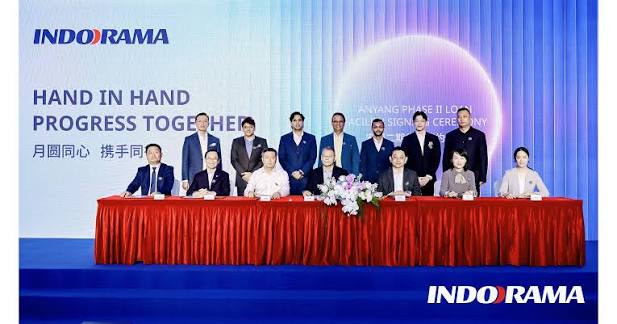
Anyang Indorama Gases Co., Ltd., a wholly owned subsidiary of Singapore-based Indorama Corporation, has signed an RMB 2.4 billion (approximately US$358 million) long-term loan facility with a consortium of five banks to fund the Phase II expansion of its fertilizer operations in Anyang City, Henan Province. The brownfield project is expected to double the site’s urea capacity—produced from syngas and ammonia—to around 2 million tonnes per year by 2029. The financing follows Indorama’s acquisition of the Anyang nitrogen fertilizer business earlier in 2026 and underscores the group’s commitment to scaling competitive, more energy-efficient fertilizer capacity in China.
Financing Structure
The long-term facility was provided by OCBC Bank Limited, Bank of China Limited, Bank of Communications Co., Ltd., Bangkok Bank (China) Company Limited and China CITIC Bank Co., Ltd. OCBC acted as Coordinator and Facility Agent; Sumitomo Mitsui Banking Corporation (China) Limited served as Security Agent. Securing multi-bank Chinese and regional bank support for a brownfield fertilizer expansion signals lender confidence in the project’s offtake and cost position within the domestic market.
Capacity Target and Timeline
Phase II is designed to lift urea output at Anyang to approximately 2 million tonnes per annum by 2029, effectively doubling current capacity. The expansion will increase ammonia and urea production capabilities while incorporating more energy-efficient processes across the site. Starting from syngas and ammonia, the integrated configuration is intended to improve reliability of domestic fertilizer supply and contribute to China’s food-security objectives.
Strategic Context After the Anyang Acquisition
Indorama acquired the Anyang nitrogen fertilizer business earlier in 2026. The Phase II financing converts that platform into a growth asset rather than a static holding. Brownfield expansion typically offers lower capital intensity and faster execution than a greenfield complex, especially when existing utilities, permits and logistics can be leveraged. For Indorama, the Henan project forms part of a broader international fertilizer strategy that already includes major capacity in Africa and other regions.
Energy Efficiency and Domestic Supply
Indorama has emphasised that the expansion will introduce more energy-efficient production processes. In China’s fertilizer sector, efficiency gains matter both for cost competitiveness and for alignment with national energy and emissions priorities. Higher domestic urea output also reduces reliance on imports in periods of tight global supply and supports agricultural demand in a major consuming province and surrounding markets.
Implications for the Regional Fertilizer Market
An additional roughly 1 million tonnes per year of urea capacity at Anyang by 2029 is material at the provincial and regional level. It can ease local supply tightness, influence domestic trade flows and affect the import requirement into northern and central China. Competitors and traders will factor the ramp-up into medium-term balance forecasts once construction milestones and commissioning dates firm up.
Outlook
The $358 million financing package gives Indorama a clear funding path to double urea capacity at its Henan site to about 2 million tonnes per year by 2029. Successful execution will depend on construction progress, energy and feedstock costs, and the ability to place the incremental volume into domestic channels at sustainable margins. For Indorama the project deepens its China fertilizer footprint after the Anyang acquisition; for the Chinese nitrogen market it adds another significant brownfield expansion in a sector still balancing food-security needs with efficiency and environmental constraints.
Sources
2-Ethyl Hexanol
Found this useful?