INEOS Idles Its Last World-Scale Acetyls Plants in Hull as European Gas Hits 12× US Prices
INEOS Idles Its Last World-Scale Acetyls Plants in Hull as European Gas Hits 12× US Prices
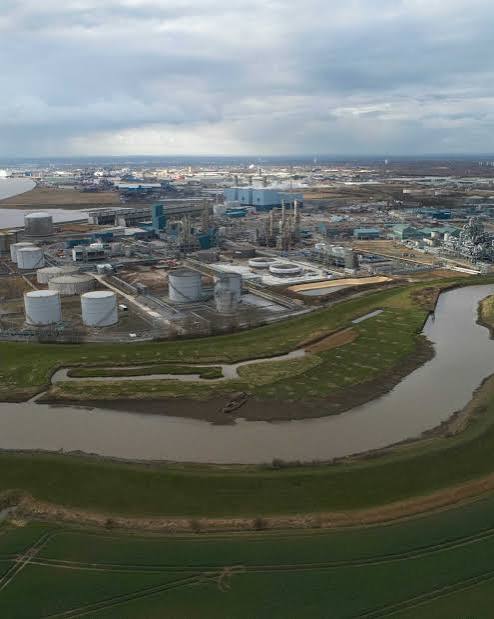
INEOS has mothballed all three acetyls production units at its Hull site in the United Kingdom, bringing Europe’s last remaining world-scale acetyls plants offline until further notice. Two units have already ceased production; the third was scheduled to follow within days of the announcement. The company attributes the decision to European gas prices that have reached approximately 12 times US levels and about eight times the effective energy cost of coal-based production in China. Despite repeated investment that left the Hull plants among the most efficient and lowest-CO₂ acetyls units globally, INEOS states that the cost gap has made continued operation unsustainable.
What Hull Produces and Why It Matters
The Hull complex manufactures acetic acid, acetic anhydride and ethyl acetate—building-block chemicals used across pharmaceuticals, food, textiles, cosmetics, detergents, construction materials and other industrial applications. INEOS has described these as the last world-scale acetyls units left in Europe after earlier closures elsewhere on the continent driven by the same energy-cost pressures. Losing domestic production shifts European customers toward imports, primarily from the United States and Asia, and removes a locally controlled source of these intermediates.
The Energy Cost Gap
Natural gas serves both as energy and as a feedstock in acetyls production. With European (and UK) gas prices trading at a large multiple of US Henry Hub levels, variable costs at Hull have moved far above those of US gas-advantaged plants and of Chinese producers that rely more heavily on coal. INEOS Chairman Sir Jim Ratcliffe has framed the situation bluntly: even highly efficient European assets cannot compete when energy costs are an order of magnitude higher than in the main competing regions. Carbon pricing and related policy costs add a further layer of disadvantage relative to jurisdictions with lower or differently structured carbon regimes.
Carbon Footprint Paradox
INEOS emphasises that material produced at Hull carries a carbon footprint roughly half that of equivalent US production and about one-eighth that of Chinese material. Mothballing the site therefore replaces lower-emission European output with higher-emission imports. The company has used this point to argue that high regional energy and carbon costs are not only destroying manufacturing jobs but also increasing the global environmental burden associated with the same chemical products.
Jobs and Continuity Measures
The site supports hundreds of direct jobs and a larger number of indirect roles in the Humberside supply chain. INEOS has indicated that it is exploring options such as securing lower-priced US LNG and has kept open the possibility of restarting if energy costs moderate or policy support improves. In the near term, however, the plants are offline and European supply will depend on imports and any remaining smaller or specialised capacity elsewhere.
Policy and Trade Implications
INEOS has called on UK and EU authorities to consider tariff or other protective measures against high-carbon imports and to address the structural energy-cost disadvantage facing European process industries. The Hull decision sits alongside other European chemical and fertiliser curtailments driven by the same gas-price and carbon-cost environment. For downstream users in coatings, pharmaceuticals, food and construction, the immediate concern is security and cost of acetyls supply; for policymakers the broader question is whether Europe can retain energy-intensive manufacturing under current relative prices.
Outlook
The indefinite mothballing of INEOS’s Hull acetyls complex removes Europe’s last world-scale domestic source of these intermediates and crystallises the competitive impact of gas prices at roughly 12 times US levels. Restart will depend on a material narrowing of the energy-cost gap, alternative feedstock or power arrangements, or policy measures that change the relative economics of local production versus imports. Until then, European customers will rely on higher-carbon overseas supply, and the Hull site will stand as a high-profile example of how regional energy costs are reshaping the map of global chemical production.
Sources

Ferrous Sulphate Heptahydrate (99.5%) - India
Found this useful?