How Many Major Divestitures Has Ineos Completed in 2026? | ChemicalsBlog.com
Rankings & Industry Intelligence
schedule8 Min Read
Intelligence Check: How Many Major Divestitures Has Ineos Completed in 2026?
terminal
prodchem
Aug 11, 2026
Ineos' planned Italian divestiture to Esseco Industrial adds another important transaction to the group's 2026 portfolio activity, providing a useful benchmark for tracking how aggressively one of Europe's largest privately held chemical groups is reshaping its asset base.
Rather than viewing the Italian transaction in isolation, the more useful intelligence question is how many significant businesses Ineos has completed or agreed to sell during 2026, and what those transactions reveal about the group's changing strategic priorities.
The cumulative tally can help distinguish between routine portfolio optimization and a broader shift toward divesting non-core or less competitive assets.
Why Ineos' Divestiture Tally Matters
Ineos has historically expanded through acquisitions, building a highly diversified portfolio spanning polymers, specialty chemicals, industrial chemicals, and energy-related businesses.
That makes divestitures particularly informative.
When a group of Ineos' scale sells individual businesses, the transactions can indicate where management sees:
Limited long-term strategic fit
Lower returns on capital
Excess capacity
Challenging regional economics
Greater value under another owner
Opportunities to simplify the portfolio
Tracking the number of transactions therefore provides a useful window into the group's broader strategy.
The Italian Transaction Adds a New Data Point
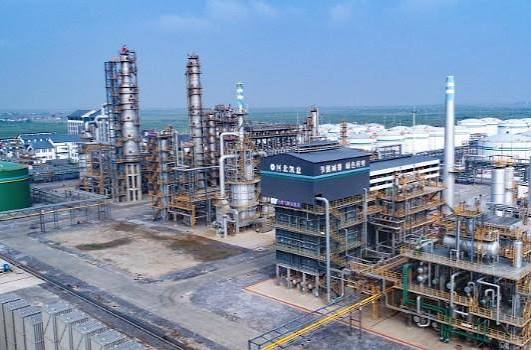
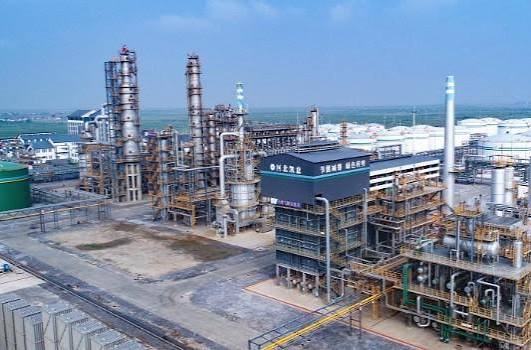
The planned sale of Ineos Inovyn's Italian business to Esseco Industrial is one of the more notable 2026 portfolio moves.
The transaction involves Ineos' Italian chlor-alkali operations, with the Rosignano site producing caustic soda and chlorine and the Tavazzano facility producing sodium hypochlorite.
While the transaction is sometimes described more broadly in relation to Ineos' PVC activities, the specific assets being sold are part of the group's chlor-alkali operations.
That distinction matters when assessing the strategic significance of the deal.
A Growing Portfolio-Management Pattern
The Esseco transaction should be viewed alongside other Ineos portfolio moves rather than as a standalone event.
The company has continued to evaluate individual businesses across its portfolio as market conditions evolve.
This creates an important competitive-intelligence question:
Is Ineos simply recycling assets as part of normal portfolio management, or is the company entering a more active divestiture cycle?
The answer will become clearer as additional transactions emerge during 2026.
European Chemical Economics Add Pressure
The timing is also significant because European chemical producers continue to face structural challenges.
These include:
High energy costs
Weak industrial demand
Global overcapacity
Competitive imports
Carbon costs
Regulatory complexity
Uneven regional manufacturing economics
Energy-intensive businesses are particularly exposed.
A facility can remain technologically sound while becoming less competitive because its production costs are structurally higher than those of overseas competitors.
That makes asset ownership increasingly important.
Relevant downstream chemical categories include Phosphoric Acid, Potassium Hydroxide, Hydrogen Peroxide, Sodium Metabisulfite, Calcium Chloride, and Sodium Silicate, all of which connect to broader industrial processing, sanitation, water-treatment, and specialty manufacturing supply chains.
One of the most important points for procurement teams is that a divestiture does not automatically mean capacity disappears.
A plant can simply move from:
Ineos ownership → New strategic owner
while continuing to produce the same products.
This can actually preserve regional supply while changing:
Investment priorities
Pricing strategy
Customer relationships
Procurement practices
Capacity allocation
Logistics arrangements
The supply-chain implications therefore depend heavily on what the new owner does after closing.
Why Esseco Industrial Is Relevant
For Esseco Industrial, the transaction creates an opportunity to expand its position in industrial chemicals and strengthen its manufacturing footprint.
For Ineos, the sale can allow the group to concentrate resources elsewhere.
That makes the deal strategically interesting for both sides.
The buyer gains assets that can complement its existing operations.
The seller gains greater portfolio focus.
The Chemical Supply-Chain Angle
The Italian assets are connected to several important chemical value chains.
Caustic soda is used across industries including chemicals, pulp and paper, water treatment, and industrial processing.
Chlorine is a critical intermediate for numerous downstream chemical products.
Sodium hypochlorite is widely used in sanitation and water-treatment applications.
These products therefore have relevance well beyond Ineos itself.
Any change in ownership can have downstream implications for customers and distributors across multiple sectors.
What Procurement Teams Should Monitor
After a chemical divestiture, buyers should watch for changes in:
Production Capacity
Will the new owner maintain existing output?
Capital Investment
Will the facilities receive additional investment?
Product Grades
Will all existing grades and specifications remain available?
Customer Allocation
Will strategic customers receive preferential treatment?
Pricing
Could the new owner pursue higher margins?
Logistics
Will distribution routes or warehouse arrangements change?
These questions can be more important than the transaction headline itself.
The Importance of the Cumulative Tally
A single divestiture can easily be dismissed as ordinary portfolio management.
Several major transactions in the same year are different.
If Ineos continues selling businesses across multiple chemical segments, the cumulative activity could indicate a deliberate shift toward a more focused portfolio.
That would represent an important change for a group historically known for aggressive acquisition and expansion.
How to Benchmark Ineos Against Peers
The divestiture tally can also be compared with other major chemical producers.
Companies such as BASF, Dow, Evonik, Solvay, and Covestro have all pursued portfolio restructuring, acquisitions, or asset sales in response to changing market conditions.
Comparing Ineos' activity against these peers can reveal whether its divestiture pace is:
Normal
Above average
Concentrated in Europe
Focused on commodity chemicals
Driven by financial considerations
Part of a broader strategic repositioning
That makes the tally useful beyond the Ineos story itself.
Food Ingredient and Specialty Chemical Read-Through
Although Ineos' Italian transaction is centered on industrial chemicals, its broader portfolio strategy has relevance for food and specialty ingredient buyers.
Many food manufacturers rely on upstream chemical products for:
Sanitation
Water treatment
Processing
Packaging
Cleaning
Manufacturing infrastructure
For example, caustic soda, sodium hypochlorite, phosphoric acid, potassium hydroxide, and hydrogen peroxide can all play important roles across industrial and food-manufacturing environments.
Changes in ownership or production economics can therefore affect supply conditions beyond the immediate chemical market.
Supplier Diversification Becomes More Important
As major chemical groups restructure their portfolios, procurement teams should avoid relying too heavily on a single producer.
For products such as phosphoric acid, potassium hydroxide, hydrogen peroxide, sodium metabisulfite, and calcium chloride, buyers should maintain qualified alternative suppliers wherever practical.
This becomes particularly important when a producer announces:
Asset sales
Plant closures
Capacity reductions
Ownership changes
Production rationalization
The goal is to identify potential supply disruption before it becomes a commercial problem.
A Useful Intelligence Scorecard
To track Ineos' 2026 divestiture activity, monitor:
1. Number of Transactions
How many major businesses are sold or placed under agreement?
2. Transaction Value
What is the cumulative value of the assets involved?
3. Chemical Category
Are the divestitures concentrated in polymers, industrial chemicals, or specialties?
4. Geography
Are European facilities disproportionately represented?
5. Buyer Type
Are assets going to strategic chemical companies, private equity, or industrial groups?
6. Capacity Outcome
Is production continuing after ownership changes?
7. Strategic Rationale
Is Ineos emphasizing simplification, competitiveness, or capital allocation?
What Would Constitute a Major Shift?
If Ineos completes several additional divestitures during 2026, the pattern could become more significant than any individual deal.
A sustained increase would suggest that Ineos is moving toward:
Portfolio simplification → capital reallocation → stronger strategic focus
rather than continuing its historically acquisition-heavy expansion model.
Conversely, if only a small number of non-core assets change hands, the activity may simply represent normal portfolio maintenance.
Looking Ahead
Ineos' planned Italian transaction with Esseco Industrial provides an important 2026 data point for monitoring the group's broader divestiture strategy.
The most useful intelligence will come from the cumulative tally.
If additional businesses are sold during the year, analysts will be able to determine whether Ineos is simply optimizing its portfolio or undertaking a more substantial restructuring of its chemical operations.
For procurement teams, the practical question is equally important:
Will Ineos' divestitures reduce available chemical supply, or will they simply move strategically important assets into the hands of new operators?
That distinction will determine the real impact on pricing, capacity, supplier concentration, and regional chemical supply chains.
Key Takeaways
Ineos' planned Italian transaction with Esseco Industrial adds another important 2026 portfolio move.
The assets involved are primarily part of Ineos Inovyn's Italian chlor-alkali operations, rather than simply a standalone PVC divestiture.
The Rosignano site produces caustic soda and chlorine, while Tavazzano produces sodium hypochlorite.
The cumulative number of Ineos divestitures will be more informative than any single transaction.
Additional sales could indicate a broader move toward portfolio simplification.
European energy costs, weak demand, overcapacity, and regulatory pressure provide important background to the restructuring trend.
Divestitures do not necessarily remove chemical capacity; ownership may simply transfer to another operator.
Procurement teams should monitor ownership changes alongside capacity, pricing, product availability, and investment decisions.
Chemical products such as phosphoric acid, potassium hydroxide, hydrogen peroxide, sodium metabisulfite, and calcium chloride provide relevant downstream supply-chain links.
The key intelligence question for 2026 is whether Ineos' divestiture activity remains selective or develops into a broader portfolio restructuring cycle.