Japan Approves a One-Minute Version of the World's Top Cancer Drug
Japan Approves a One-Minute Version of the World's Top Cancer Drug
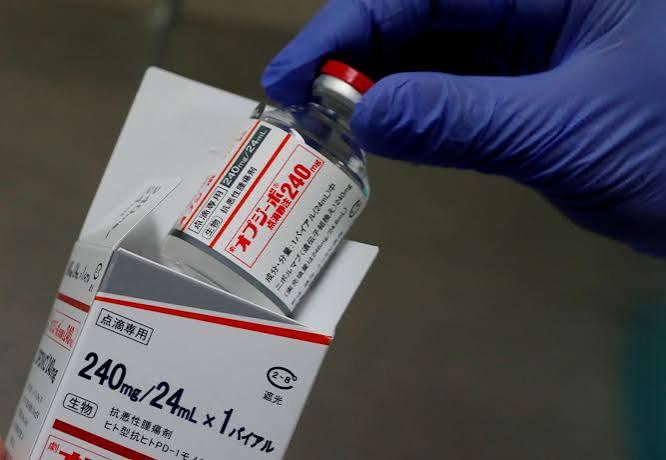
Japan’s Ministry of Health, Labour and Welfare has approved a subcutaneous formulation of pembrolizumab that can be given in as little as one minute. Marketed in Japan under the planned trademark Keyject (and known globally as Keytruda Qlex), the product combines pembrolizumab with berahyaluronidase alfa, an enzyme that enables rapid dispersion under the skin. The approval covers every indication already held by intravenous Keytruda in Japan, making it the first and only subcutaneous immune checkpoint inhibitor available in the country that a healthcare provider can administer in one minute every three weeks or two minutes every six weeks.
Why a Faster Formulation Matters
Intravenous pembrolizumab has typically required an infusion lasting around 30 minutes, plus chair time and clinic resources. A one- to two-minute subcutaneous injection reduces treatment burden for patients, frees infusion-suite capacity, and can simplify scheduling in busy oncology centres. For a drug used across a wide range of solid tumours, even modest gains in administration efficiency translate into meaningful operational impact.
The Supporting Trial
Approval rests primarily on the Phase 3 MK-3475A-D77 study, which randomised patients with treatment-naïve metastatic non-small cell lung cancer to subcutaneous pembrolizumab or intravenous pembrolizumab, each given every six weeks with platinum-doublet chemotherapy. The primary endpoint was pharmacokinetic exposure; the two formulations were comparable. Descriptive efficacy analyses showed similar objective response rates (approximately 45% subcutaneous versus 42% intravenous) with no notable differences in progression-free or overall survival. Safety was consistent with the established profile of pembrolizumab.
How the Subcutaneous Version Works
Berahyaluronidase alfa is a recombinant hyaluronidase variant that transiently degrades hyaluronan in the subcutaneous tissue, allowing a larger volume of monoclonal antibody to be absorbed quickly and comfortably. The fixed-combination product is injected into the thigh or abdomen. The same companion and complementary diagnostics that apply to intravenous Keytruda continue to apply.
Global Context
The subcutaneous formulation had already received approval in the United States (as Keytruda Qlex) and in Europe (as Keytruda SC) before the Japanese decision. Japan’s broad label—extending to all existing Keytruda indications on the strength of a single pivotal pharmacokinetic and clinical bridging trial in lung cancer—demonstrates regulatory willingness to extrapolate when exposure and efficacy are shown to be comparable.
Implications for Patients and Providers
Patients gain a substantially shorter administration time and potentially greater convenience. Clinics gain throughput capacity and reduced demand on infusion chairs. For Merck/MSD, the formulation helps defend the pembrolizumab franchise against competitive pressure and biosimilar erosion by offering a differentiated delivery option that is difficult for later entrants to match quickly.
Outlook
Japan’s approval of a one-minute subcutaneous version of the world’s top-selling cancer immunotherapy marks a practical advance in how checkpoint inhibitors can be delivered. As the product rolls out under the Keyject trademark, real-world uptake will depend on pricing, reimbursement, and how quickly centres adapt their workflows. For a drug already central to oncology practice, the ability to move from a half-hour infusion to a one-minute injection is a meaningful evolution in both patient experience and health-system efficiency.
Sources
Found this useful?