Japanese Program Achieves 85% Ammonia Co-Firing in a Naphtha Cracking Furnace
Japan has achieved a major milestone in ammonia co-firing in a naphtha cracking furnace, reaching an 85% ammonia share on a heat-input basis across an entire test furnace. The result came from a NEDO-backed programme involving Mitsui Chemicals, Maruzen Petrochemical, Toyo Engineering and Sojitz Machinery.
The September 17, 2026 announcement also confirmed that NOx emissions remained comparable with those from existing commercial furnaces. The programme now aims to progress from high-percentage co-firing toward 100% ammonia firing across the entire furnace, creating a potential pathway for reducing combustion-related CO₂ emissions in petrochemical production.
Why Naphtha Cracking Furnaces Matter for Petrochemical Decarbonisation
Naphtha cracking furnaces play a central role in producing basic chemicals such as ethylene and propylene. These materials feed large downstream markets for plastics, synthetic fibres, synthetic rubber and other chemical products.
The furnace itself also represents a significant source of CO₂ emissions within petrochemical complexes because high-temperature heat is required to crack naphtha. Conventional furnaces commonly use off-gas containing methane as a fuel, creating combustion-related carbon emissions.
Replacing part or all of that fossil fuel with ammonia could change the emissions profile of the heating process. Ammonia contains no carbon, so its combustion does not directly produce CO₂ from the fuel itself.
The 85% Ammonia Co-Firing Achievement
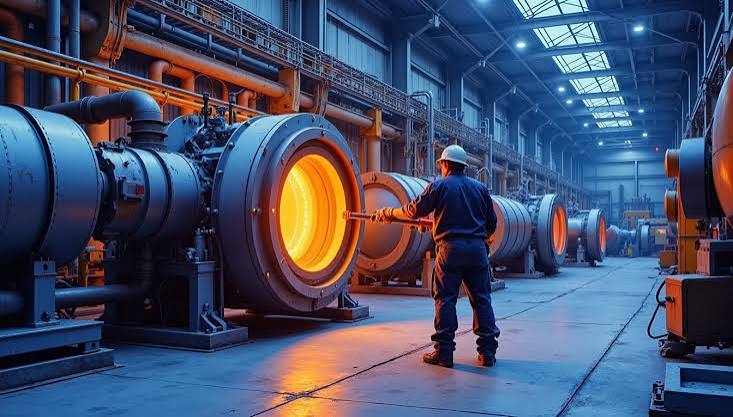
The latest demonstration used newly developed ammonia-fired burners in a test naphtha cracking furnace. The consortium gradually increased the ammonia share and ultimately reached 85% co-firing on a heat-input basis across the entire furnace.
A particularly important part of the test involved the hearth burners, which provide the main heat input to the furnace. These burners achieved 100% ammonia firing during the demonstration, while the wall burners continued to use naphtha cracking furnace off-gas containing methane.
That configuration produced the overall 85% ammonia result. The next development step will apply ammonia to the wall burners as well, with the programme targeting 100% ammonia firing across the complete furnace.
Why Burning Ammonia in a Cracking Furnace Is Difficult
Ammonia offers an attractive route for reducing carbon emissions from industrial heat, but it creates combustion challenges that conventional methane-based systems do not face.
Ammonia has a lower combustion speed than methane and can generate fuel-derived NOx during combustion. A successful cracking-furnace application therefore has to manage several requirements simultaneously:
Flame stability: The burner must maintain stable combustion despite ammonia's different combustion characteristics.
Heat transfer: The furnace must deliver appropriate heat to the cracking tubes so the naphtha conversion process remains effective.
NOx control: The combustion system needs to prevent increased nitrogen oxide emissions from undermining the environmental benefits of ammonia fuel.
Furnace operation: Burner performance must remain compatible with the temperature distribution and operating conditions required by the cracking process.
The 85% demonstration is significant because the consortium addressed these requirements together rather than testing ammonia simply as a standalone fuel.
NOx Performance Strengthens the Demonstration
NOx control represents one of the central technical challenges for ammonia combustion. Unlike conventional hydrocarbon fuels, ammonia contains nitrogen, which can contribute to nitrogen oxide formation during combustion.
The Japanese consortium reported that NOx emissions from the test furnace were comparable with those of existing commercial furnaces. This result is important because reducing carbon emissions through ammonia would have limited value if the alternative fuel created substantially higher local air-pollution emissions.
The result also demonstrates the role of burner engineering in ammonia fuel adoption. The programme specifically developed burners for naphtha cracking furnace applications rather than relying on conventional fuel-burning equipment.
A New Role for Ammonia in Industrial Heat
Ammonia has traditionally been associated with fertiliser production and chemical manufacturing. Its potential role as an energy carrier and combustion fuel is now expanding into sectors where electrification can be difficult because processes require very high temperatures.
Naphtha cracking is one such application. The process requires intense heat, while the furnace must maintain precise operating conditions to protect productivity and product quality.
Using ammonia as a furnace fuel could therefore create a new industrial demand category for ammonia beyond conventional chemical applications. For chemical traders and procurement teams, that could eventually influence regional ammonia demand, storage requirements and supply-chain planning.
The Project Connects Ammonia Supply With Petrochemical Demand
The technology development also highlights a potential connection between ammonia producers and petrochemical manufacturers. If commercial-scale naphtha furnaces adopt ammonia, petrochemical complexes would require reliable supplies of fuel-grade ammonia alongside their existing chemical feedstocks.
This could create additional procurement considerations around:
Ammonia availability: Large industrial furnaces would require dependable fuel supply throughout their operating schedules.
Storage infrastructure: Sites would need appropriate ammonia storage and handling systems to support continuous furnace operation.
Fuel quality: Consistent ammonia specifications would become important for reliable burner performance.
Transportation: Ammonia suppliers would need logistics systems capable of delivering the required volumes to petrochemical sites.
Safety systems: Increased ammonia handling would require suitable containment, monitoring and emergency-response infrastructure.
For chemical buyers, the development therefore extends beyond furnace technology. It potentially creates a new downstream market for ammonia within petrochemical operations.
NEDO's Programme Targets Commercial-Scale Application
The development forms part of NEDO's Green Innovation Fund project focused on advanced naphtha cracking furnace technology using carbon-free heat sources. NEDO began the programme in fiscal 2021, with the current project scheduled through fiscal 2030.
The consortium includes NEDO, Mitsui Chemicals, Maruzen Petrochemical, Toyo Engineering and Sojitz Machinery. Their work covers burner development, furnace testing and the progression toward commercial-scale application.
The current achievement represents an intermediate step rather than the final target. The consortium plans to introduce ammonia firing to the wall burners and pursue 100% ammonia firing throughout the furnace.
What 100% Ammonia Firing Could Mean for Petrochemicals
Moving from 85% co-firing to complete ammonia firing would remove the remaining methane-based furnace fuel from the demonstrated configuration. Achieving that target would require the wall burners to operate effectively with ammonia while maintaining furnace performance and emissions control.
The commercial-scale challenge will also involve integrating the technology into larger operating environments. A commercial naphtha cracking furnace must deliver consistent heat, reliable production and safe operation over extended periods, not simply demonstrate performance during a controlled test.
The programme therefore provides an important technology bridge between laboratory or pilot development and industrial deployment. NEDO and its partners have stated that they will continue technology development and demonstration toward commercial-scale naphtha cracking furnace applications.
Implications for Chemical Procurement Teams
The development gives procurement professionals several areas to monitor as ammonia-based industrial heating moves toward commercialisation.
Ammonia demand: Wider adoption of ammonia-fired furnaces could create additional industrial demand beyond fertiliser and conventional chemical applications.
Fuel infrastructure: Petrochemical sites may need new ammonia storage, transfer and safety systems before switching from conventional furnace fuels.
Equipment sourcing: Specialised ammonia burners and combustion-control systems could become new procurement categories for refinery and petrochemical operators.
Operating specifications: Buyers will need to consider ammonia quality, supply reliability and storage requirements alongside price.
Decarbonisation planning: Petrochemical producers could evaluate ammonia firing alongside electrification, hydrogen and other lower-carbon heat technologies.
For traders, the most important commercial signal is that ammonia could move further into the industrial fuel market if high-temperature applications can achieve reliable operation at scale.
The Next Step Is 100% Ammonia Firing
The Japanese programme has established 85% ammonia co-firing across an entire naphtha cracking test furnace while maintaining NOx emissions at levels comparable with existing commercial furnaces. The achievement provides a technical foundation for the next stage, which involves applying ammonia to the wall burners and pursuing full-furnace ammonia firing.
The wider significance lies in the potential to decarbonise furnace heat without changing the fundamental role of naphtha cracking in the petrochemical value chain. If commercial-scale demonstrations confirm the technology's performance, ammonia could become an additional fuel option for high-temperature chemical processing.
For chemical buyers, the development is a signal to monitor ammonia supply capacity, specialised combustion equipment and future commercial projects as Japan's technology programme progresses toward its 2030 target.
Ready to source Ammonia Anhydrous from verified global suppliers? Explore competitive offers on our platform today.
Ammonia Anhydrous
Found this useful?