For decades, just-in-time (JIT) manufacturing became one of the defining principles of modern industrial supply chains.
By minimising inventories and synchronising deliveries with production schedules, companies reduced storage costs and improved working capital efficiency.
However, repeated global supply disruptions have exposed an important limitation:
Highly efficient supply chains are not always highly resilient.
For organisations investing in circular economy business models, this lesson has particular significance.
Why Circular Supply Chains Are Different
Traditional manufacturing often relies on predictable supplies of virgin raw materials.
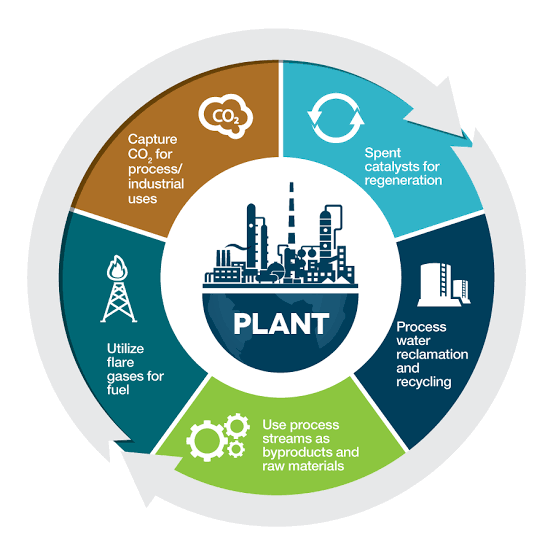
Circular economy systems operate differently.
Secondary materials may originate from:
Unlike conventional feedstocks, these material streams frequently arrive in irregular quantities and at variable intervals.
Inventory Can Become a Strategic Asset
Within a circular economy, inventory is not simply a storage cost.
It can become an enabler of resource efficiency.
Strategic buffer inventories may help organisations:
Capture irregular recycled material supplies.
Reduce dependence on virgin feedstocks.
Improve production continuity.
Increase feedstock flexibility.
Strengthen supply resilience.
Support long-term sustainability objectives.
In this context, buffer stock represents an operational capability rather than operational waste.
Procurement Must Balance Efficiency and Resilience
The objective is not to abandon efficiency.
Instead, procurement professionals increasingly seek an appropriate balance between:
Lean inventory management.
Supply continuity.
Cost optimisation.
Sustainability performance.
Circular material utilisation.
Business resilience.
Finding this balance requires understanding both operational risk and material availability.
Secondary Materials Require Different Planning
Procurement teams sourcing recycled materials should monitor:
These variables often fluctuate more than traditional commodity supply, making flexible inventory planning increasingly valuable.
Circular Economy and Risk Management Are Becoming Aligned
Historically, inventory reduction and sustainability were sometimes viewed as separate objectives.
Today, organisations increasingly recognise that carefully managed inventories of strategic recycled materials can simultaneously support:
This convergence strengthens the business case for circular procurement strategies.
Buffer Stock Should Be Strategic, Not Excessive
The lessons from recent supply chain disruptions do not suggest that organisations should simply accumulate more inventory.
Instead, the emphasis is on strategic buffering for materials that are both operationally critical and inherently variable in availability.
Examples include:
For these materials, carefully planned inventory can increase supply reliability while reducing dependence on virgin resources.
Traditional procurement often measures success through:
Circular procurement introduces additional performance indicators such as:
Recycled content utilisation.
Secondary feedstock availability.
Material recovery rates.
Supply chain resilience.
Carbon footprint reduction.
Diversification of feedstock sources.
These broader metrics better reflect the objectives of a circular economy.
Industrial Symbiosis Benefits From Storage Capacity
Industrial symbiosis depends on matching one company's by-products with another company's raw material requirements.
Because these material flows rarely occur at identical times or volumes, intermediate storage can:
Improve material utilisation.
Reduce waste generation.
Increase supply flexibility.
Support regional circular economy networks.
Improve manufacturing continuity.
Strategic storage therefore becomes an enabling infrastructure for circular business models rather than simply an operational expense.
Procurement Priorities for H2 2026
Companies expanding circular sourcing strategies should consider:
Identifying critical secondary materials.
Assessing supply variability.
Determining appropriate buffer inventory levels.
Diversifying recycling and recovery partners.
Investing in material traceability.
Integrating resilience into procurement KPIs.
These actions support both operational continuity and long-term sustainability objectives.
Looking Ahead to H2 2026
The recent debate surrounding just-in-time manufacturing has highlighted an important reality: maximum efficiency does not always produce maximum resilience. For organisations embracing circular economy principles, this lesson is particularly relevant because secondary raw materials are naturally more variable than traditional virgin feedstocks. Recycled materials, industrial by-products and renewable feedstocks rarely become available according to perfectly synchronised production schedules.
For procurement professionals, strategic buffer inventories should therefore be viewed as an enabler of circularity rather than a departure from operational excellence. Carefully managed inventories of critical secondary materials can improve manufacturing continuity, increase recycled material utilisation and reduce dependence on virgin resources without abandoning disciplined inventory management. The objective is not larger inventories—it is smarter inventories.
The key lesson for H2 2026 is that circular procurement requires balancing efficiency with adaptability. Organisations that integrate strategic buffer stock, supplier diversification, material traceability and circular sourcing into procurement strategy will be better positioned to build resilient supply chains while accelerating resource efficiency and supporting long-term sustainability goals.
Ready to source recycled feedstocks, sustainable chemical intermediates and circular economy materials from verified global suppliers? Explore competitive offers on our platform today.