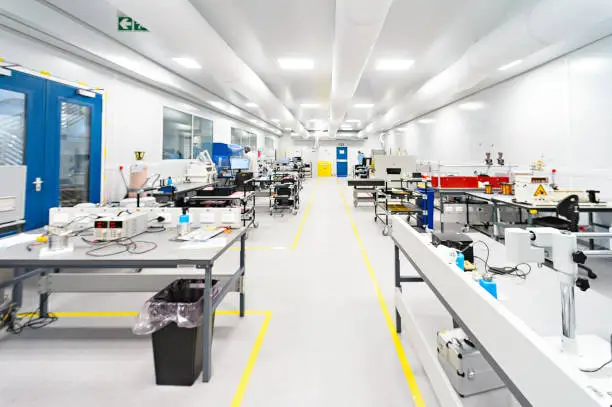
Khartis Was Originally Incubated Within Foresite Labs Before Its Public Launch
Khartis Was Originally Incubated Within Foresite Labs Before Its Public Launch
Introduction
Khartis Therapeutics has emerged publicly from stealth with a development strategy built around oral small-molecule medicines for immunological and chronic diseases. While the company is now operating as an independent biotechnology venture, its origins trace back to Foresite Labs, where the initial concept was incubated before Khartis was formally established.
The company recently announced a $50 million Series B financing, bringing its total funding to approximately $95 million. The financing is intended to advance Khartis' lead program toward the clinic and expand its broader pipeline of oral medicines targeting clinically validated immunology pathways.
From Foresite Labs Incubation to an Independent Biotech
Khartis was originally incubated within Foresite Labs around an opportunity to develop medicines against clinically validated biological targets while improving the treatment experience for patients. Foresite Labs itself describes Khartis as a company that began as an idea within its incubation platform before developing into a venture-backed biotechnology company.
Khartis was subsequently founded in 2024 by Robert Hoffman, Craig Murphy and Chris LeMasters. The founding team previously worked together at XinThera, a small-molecule drug discovery company acquired by Gilead Sciences in 2023. Their previous experience provided Khartis with an established drug-discovery foundation as the company moved toward independent operations.
This incubation-to-company model is increasingly relevant in biotechnology, where venture studios and specialized life-science platforms can provide early scientific validation, company formation support and access to capital before a program becomes a standalone business.
Khartis' Lead Program Targets Thyroid Eye Disease
The company's lead program is an oral, selective insulin-like growth factor 1 receptor (IGF-1R) inhibitor being developed specifically for thyroid eye disease (TED).
IGF-1R is already a clinically validated target in TED. Existing treatment options include teprotumumab, an intravenous antibody targeting IGF-1R. Khartis is pursuing a different approach: a selective oral small molecule that could potentially offer greater convenience and a different treatment profile.
The program remains preclinical and is advancing toward the clinic. Importantly, Khartis has not yet publicly disclosed detailed clinical data for the lead molecule, meaning its potential advantages will ultimately need to be demonstrated through further development and clinical testing.
$95 Million Funding Provides Development Runway
Khartis' latest financing represents a significant increase in its ability to advance its pipeline.
The $50 million Series B was led by Forge Life Science Partners, with Longwood Fund and Alexandria Venture Investments joining existing investors including Foresite Capital, Lilly Asia Ventures and Nextech Invest. The new financing takes Khartis' total capital raised to approximately $95 million.
For an early-stage biotechnology company, this level of financing can support several important activities:
Advancement of the lead program toward clinical development
Preclinical safety and efficacy studies
Drug-development and formulation work
Expansion of the small-molecule pipeline
Preparation for regulatory interactions
Recruitment of specialized scientific and development personnel
Development of additional programs around validated biological targets
The investment also illustrates how institutional investors can continue supporting a company after its transition from an incubation environment into an independent biotech.
Why the Foresite Labs Model Matters
Khartis provides an example of how venture-backed biotechnology companies can be built through an incubation-first model.
Instead of starting as a fully independent company and then searching for an investment thesis, the process can begin with a scientific opportunity identified inside a venture platform. The platform can help evaluate the biology, assemble an initial team and determine whether the opportunity has sufficient commercial and therapeutic potential.
Once the concept has matured, it can transition into a standalone company capable of raising institutional financing.
This model can reduce some of the early risks associated with biotechnology company formation. It can also give new ventures access to experienced drug-discovery professionals and investors at an earlier stage.
For investors, the model provides another pathway to identify opportunities before they become widely visible in the biotechnology market.
Implications for the Small-Molecule Drug Market
Khartis' strategy also highlights continuing interest in oral small-molecule approaches within therapeutic areas dominated by biologics.
Biologics have transformed many immunological diseases, but they can involve intravenous or other administration requirements, complex manufacturing processes and significant development costs. Oral small molecules can potentially offer advantages in administration, manufacturing and patient convenience.
However, developing an oral molecule against a clinically validated target does not automatically guarantee therapeutic or commercial success. Selectivity, pharmacokinetics, safety, efficacy and durability will determine whether Khartis can establish meaningful differentiation.
The company is therefore entering a competitive environment in which the ability to translate validated biology into a differentiated medicine will be critical.
Broader Biotechnology Investment Signal
Khartis' emergence also reflects a broader trend in biotechnology financing: investors are increasingly interested in companies that combine validated biological targets with differentiated drug-design strategies.
Rather than relying entirely on discovering unknown disease mechanisms, companies can attempt to improve established therapeutic concepts through better selectivity, dosing, administration or patient-specific design.
Khartis' strategy fits this model. Its lead program builds on the clinical validation of IGF-1R while attempting to create an oral and selective alternative for TED.
For the pharmaceutical supply chain, successful progression of such programs could eventually create demand for specialized APIs, medicinal-chemistry services, analytical testing, formulation development, clinical manufacturing and other outsourced development capabilities.
What to Watch Next
The key milestone for Khartis will be its transition from preclinical development toward the clinic.
Market participants will likely monitor:
IND-enabling development of the lead IGF-1R program.
Regulatory progress toward first-in-human studies.
Clinical trial initiation and design.
Safety and pharmacokinetic data from early clinical studies.
Evidence of differentiation against existing TED therapies.
Expansion of the company's broader immunology pipeline.
Additional partnerships or financing as programs advance.
The company's ability to convert its incubation-stage scientific thesis into clinical evidence will ultimately determine the success of the model.
Conclusion
Khartis Therapeutics' journey from an idea incubated within Foresite Labs to an independently operating, $95 million-backed biotechnology company illustrates how venture incubation can accelerate the formation of specialized drug-development businesses.
Its lead oral selective IGF-1R program provides a focused example of the strategy: take a clinically validated target and attempt to improve the therapeutic proposition through a differentiated small-molecule approach.
With its new Series B financing and experienced founding team, Khartis now enters a more demanding stage of development. The next major test will be whether its preclinical strategy can translate into clinical evidence and ultimately establish a meaningful position in the treatment of thyroid eye disease and other immunological conditions.

2-Ethyl Hexanol
Found this useful?