Ludwigshafen's Contraction Illustrates Long-Term Risk for Co-Located Fertilizer Production
Ludwigshafen's Contraction Illustrates Long-Term Risk for Co-Located Fertilizer Production
Introduction
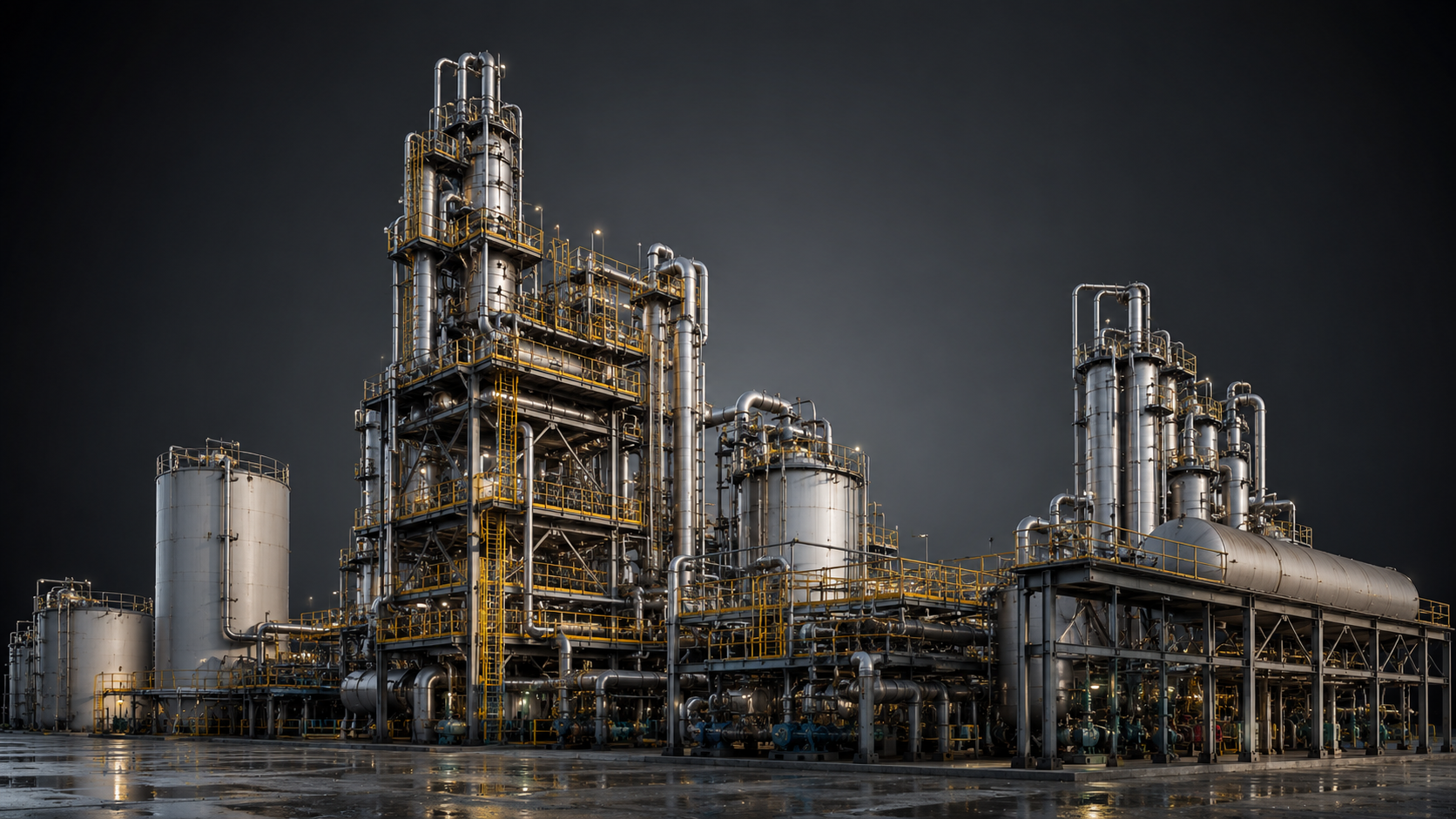
The ongoing contraction of BASF's Ludwigshafen site in Germany illustrates a broader long-term risk for chemical and fertilizer production that depends on highly integrated industrial complexes. As companies reduce costs, close less competitive units, or restructure production networks, facilities that historically benefited from co-location can become more exposed to changes elsewhere in the site.
For fertilizer and fertilizer-related chemicals, this matters because integrated production can connect ammonia, intermediates, utilities, logistics, and downstream products within a single industrial ecosystem. Changes to one part of that system can therefore influence the economics and reliability of other operations.
Ludwigshafen's Changing Industrial Footprint
Ludwigshafen is BASF's largest integrated production site and one of Europe's most important chemical manufacturing locations. The site has traditionally benefited from the Verbund system, in which different production units share raw materials, energy, infrastructure, logistics, and intermediate streams.
However, BASF has been restructuring Ludwigshafen in response to challenging market conditions, high European production costs, and the need to improve the competitiveness of individual production units.
The company has been reducing costs, optimizing capacity, and reviewing businesses that are no longer sufficiently competitive within the European production environment.
Why Co-Location Has Historically Been an Advantage
Co-location can provide significant economic benefits to fertilizer and chemical manufacturers.
A large integrated site can allow companies to:
Share energy and utilities.
Transfer intermediates between production units.
Reduce transportation requirements.
Utilize common storage and logistics infrastructure.
Capture by-products as feedstocks for other processes.
Improve overall plant utilization.
For fertilizer production, these advantages can be particularly important because ammonia and related nitrogen chemicals are energy-intensive and closely connected to upstream feedstock and downstream processing.
The result is a production network in which the economics of one unit can depend partly on the continued operation of neighboring facilities.
The Risk When One Part of the Network Contracts
The same integration that creates efficiencies can also create a vulnerability.
If a major production unit is closed, reduced, or permanently operated below capacity, other facilities may lose access to economically attractive feedstocks, shared utilities, or internal customers.
This can gradually weaken the economic justification for maintaining other co-located operations.
The effect does not necessarily appear immediately. A plant may remain technically capable of operating, but its cost position can deteriorate if the surrounding production ecosystem becomes smaller.
This creates a long-term co-location risk for fertilizer-related manufacturing.
Implications for Fertilizer Production
Fertilizer production is particularly sensitive to changes in industrial integration because many products depend on interconnected chemical processes.
Ammonia is the foundation for several major nitrogen fertilizer products and is also an important feedstock for downstream chemicals.
Production economics are influenced by factors including:
Natural gas or other feedstock costs.
Electricity prices.
Ammonia demand.
Downstream plant utilization.
Carbon costs.
Transportation expenses.
Availability of supporting infrastructure.
When these factors become unfavorable, companies may reassess individual production units.
A contraction in one part of a chemical complex can therefore raise questions about the future competitiveness of neighboring fertilizer or nitrogen-chemical operations.
Europe's Cost Challenge Adds Pressure
The situation at Ludwigshafen also reflects broader challenges facing Europe's energy-intensive chemical industry.
European producers have faced higher energy and operating costs than many competitors in other regions. This has encouraged chemical companies to review whether certain products can be manufactured economically in Europe or whether production should increasingly be sourced from regions with lower structural costs.
For fertilizer producers, the issue is especially important because natural gas and energy represent major components of production economics for conventional ammonia manufacturing.
If European production becomes structurally less competitive, companies may increasingly rely on imports of ammonia, fertilizer products, or related intermediates.
The Importance of Shared Infrastructure
Another potential risk comes from shared infrastructure.
Large chemical complexes typically rely on common systems for:
Steam and electricity.
Water treatment.
Waste management.
Storage.
Rail connections.
Pipeline networks.
Port and road access.
Maintenance and technical services.
When production volumes decline, the fixed costs associated with this infrastructure can become harder to distribute across individual production units.
This can create a feedback effect: lower production reduces utilization, while lower utilization increases the relative cost of maintaining the remaining operations.
Supply-Chain Implications
For fertilizer buyers and agricultural-input companies, the contraction of integrated chemical sites can create longer-term supply-chain implications.
The immediate impact may be limited if alternative production capacity is available. However, repeated restructuring can gradually reduce regional manufacturing capacity.
Procurement teams may therefore need to monitor not only individual fertilizer plants but also the health of the broader industrial ecosystem around them.
Important indicators include:
Plant closures or capacity reductions.
Changes in ammonia production.
Energy-price trends.
Feedstock availability.
Production utilization rates.
Corporate restructuring announcements.
Import dependency.
New capacity in lower-cost regions.
Why Co-Location Risk Matters for Procurement
Traditional supplier-risk analysis often focuses on individual manufacturers and their financial health.
For highly integrated chemical products, this may not be sufficient.
A supplier can remain financially stable while becoming more dependent on a shrinking local production network. If upstream units close or shared infrastructure becomes more expensive, the supplier's long-term cost position can deteriorate.
Procurement teams should therefore evaluate site-level and ecosystem-level risks, particularly when sourcing critical fertilizer intermediates from concentrated European production hubs.
Potential Shift Toward External Sourcing
One possible response to declining co-location economics is greater reliance on external suppliers.
Companies may source ammonia, intermediates, or finished fertilizer products from other regions and use European facilities primarily for downstream processing, formulation, storage, or distribution.
This could create new opportunities for suppliers in regions with competitive energy and feedstock costs.
However, increased import dependence also introduces additional risks, including freight costs, geopolitical disruptions, port congestion, trade restrictions, and currency exposure.
The result is a trade-off between lower production costs and greater external supply-chain exposure.
What Ludwigshafen Signals for the Future
Ludwigshafen's contraction does not automatically mean that all co-located fertilizer production is at risk.
Integrated chemical sites can remain highly competitive when their production networks generate sufficient economic value and when infrastructure utilization remains strong.
The broader lesson is that integration is an advantage only when the underlying production network remains economically viable.
As chemical companies reassess their European footprints, procurement professionals should therefore pay attention to structural changes rather than focusing only on individual production announcements.
Outlook
The restructuring of major European chemical complexes is likely to remain an important market-development theme.
For fertilizer and nitrogen-chemical supply chains, future production decisions will increasingly be influenced by energy economics, carbon policies, feedstock availability, global competition, and the economics of integrated manufacturing.
Ludwigshafen provides an important case study because it demonstrates how changes at a large chemical complex can gradually alter the assumptions that historically supported co-located production.
For buyers, this makes production-footprint monitoring and site-level supply-risk analysis increasingly important.
Conclusion
The contraction of BASF's Ludwigshafen operations illustrates a broader long-term risk for co-located fertilizer and chemical production.
Integrated sites can deliver major advantages through shared feedstocks, utilities, infrastructure, and logistics. However, when production capacity contracts, those same interdependencies can become a source of vulnerability.
For fertilizer procurement teams, the key lesson is to look beyond individual plants and assess the health of the entire production ecosystem. Changes in ammonia capacity, energy economics, shared infrastructure, and downstream demand can all influence the long-term viability of co-located manufacturing.
As Europe's chemical industry continues to adjust to global cost pressures, the resilience of integrated production sites will increasingly depend on whether their entire network remains economically competitive.

Aluminium Stearate

Found this useful?