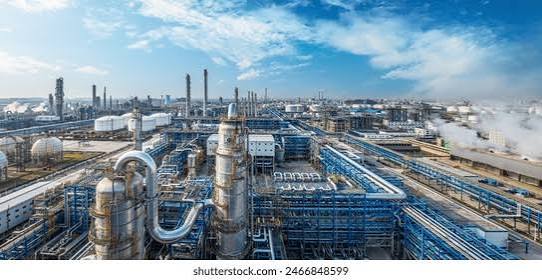
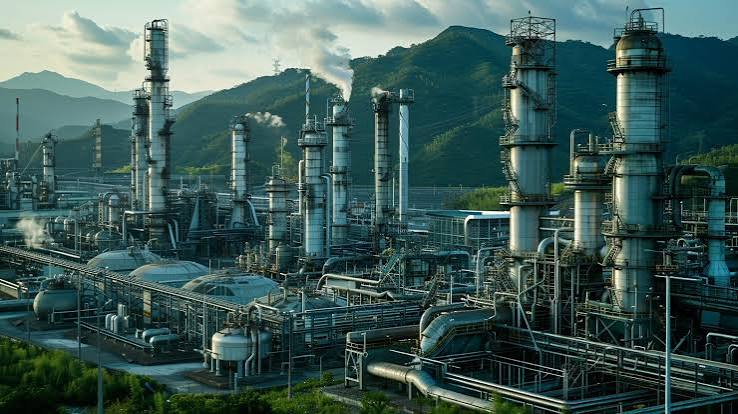
Sichuan Lutianhua confirmed on September 3, 2026 that Ammonia Synthesis Unit 1 at its Luzhou complex had been safely shut down for a major 15-day overhaul, according to ChemNet's industry roundup. The stoppage pulls a meaningful slice of synthetic ammonia feedstock capacity out of China's domestic nitrogen chain for the maintenance window, right as Beijing has reopened the country to urea exports after months of restriction.
Lutianhua is not a marginal player. The Luzhou-based producer runs roughly 1.05 million tonnes per year of synthetic ammonia capacity and 1.5 million tonnes per year of urea capacity, anchored by its long-running "Gongnong" brand. A two-week outage on one synthesis train is not enough to reshape global nitrogen flows on its own, but it lands at a sensitive moment for the market.
Why the Timing Matters
China spent much of early 2026 tightening fertilizer export controls, a response partly tied to the Strait of Hormuz disruption that pushed global urea prices sharply higher through the spring. Beijing began easing that stance in late May, issuing export quotas alongside firm minimum price floors.
Quota allocations for the June-through-August window totalled roughly 1.5 to 1.6 million tonnes, with minimum FOB prices set at $660 per tonne for prilled urea and $670 per tonne for granular urea.
China's full 2026 export allowance has since expanded to an estimated 5 to 5.5 million tonnes, a level that historically represents close to a tenth of global urea trade.
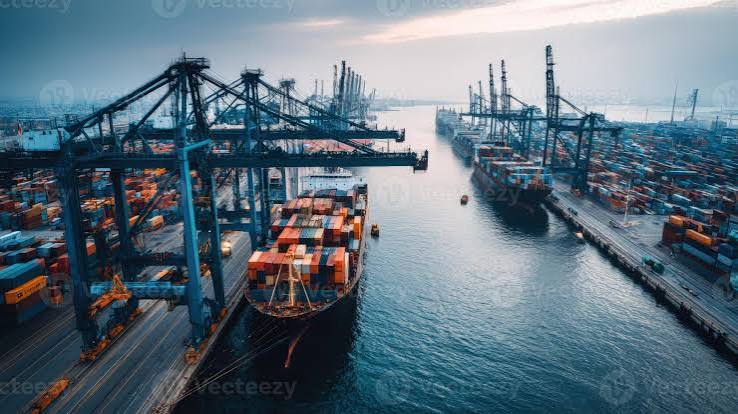
As recently as September 7, 2026, Chinese suppliers offered roughly 1.2 million tonnes into an Indian tender at prices near $390 to $394 per tonne CFR, a steep drop from the $935 to $959 per tonne India paid during April's Hormuz-driven emergency purchase.
Domestic ammonia capacity is the feedstock base for that entire export pipeline. Any unplanned or scheduled reduction in synthesis capacity, even briefly, adds a small variable into a supply chain that Beijing has been actively trying to stabilise after a volatile first half of the year.
What a 15-Day Overhaul Actually Does to Supply
Major overhauls on ammonia synthesis units are routine maintenance events, not emergency shutdowns. They are typically scheduled well in advance to inspect catalyst beds, compressors and high-pressure piping that cannot be serviced while the unit is running.
That said, the timing still matters for buyers tracking near-term nitrogen availability out of China.
The outage temporarily removes ammonia feedstock that would otherwise support Lutianhua's urea, liquid ammonia, methanol and dimethyl ether output lines.
Fifteen days is short enough that it should not materially disrupt Lutianhua's own contracted urea shipments, but it does compress the buffer available if other Chinese producers face unrelated disruptions during the same window.
Because China's export pricing is already governed by a hard price floor, the overhaul is unlikely to move FOB quotes on its own. Its effect, if any, would show up more in domestic Chinese supply tightness than in export offer prices.
A Market Still Digesting a Volatile Year
Context matters here. Global urea prices spiked as high as roughly $684 per tonne earlier in 2026 during the Hormuz crisis, driven by a combination of natural gas cost spikes, restricted Gulf shipping lanes and China's own export tightening at the time. Prices have since retreated substantially as China's exports resumed and broader supply normalised.
Against that backdrop, a single 15-day ammonia unit overhaul is a modest data point rather than a structural shift. But it is a reminder that Chinese domestic production capacity, not just export policy, remains a live variable for anyone pricing nitrogen fertilizer risk into the fourth quarter.
Regional Producers Buyers Are Watching
Lutianhua sits within a broader field of large Chinese nitrogen producers whose scheduled maintenance calendars now carry more weight than usual, given how tightly Beijing has been managing export volumes this year.
Producers with export quota allocations face pressure to keep output steady through the current shipping window to meet committed tonnage.
Buyers with standing supply relationships in China are increasingly asking suppliers for maintenance schedules further in advance, given how sensitive the market has been to any capacity signal in 2026.
Traders tracking the India tender cycle in particular are watching whether any additional Chinese capacity news coincides with the next major procurement round.
What Buyers Should Watch Next
The Lutianhua overhaul itself is a short, scheduled event and should resolve within its stated 15-day window without lasting supply consequences. The more useful signal for procurement teams is what it represents: a market where Chinese domestic ammonia and urea capacity is under closer scrutiny than usual, layered on top of an export system still operating under quotas and price floors rather than open trade.
Buyers sourcing ammonia-linked nitrogen products from China should keep an eye on whether other producers announce overlapping maintenance windows, and should treat the current price floor structure as the operative constraint on cost, not spot market rumours tied to individual plant outages.
Ready to source liquid ammonia from verified global suppliers? Explore competitive offers on our platform today