Mercedes-Benz Solid-State Battery Testing Signals a New Direction for EV Battery Chemistry
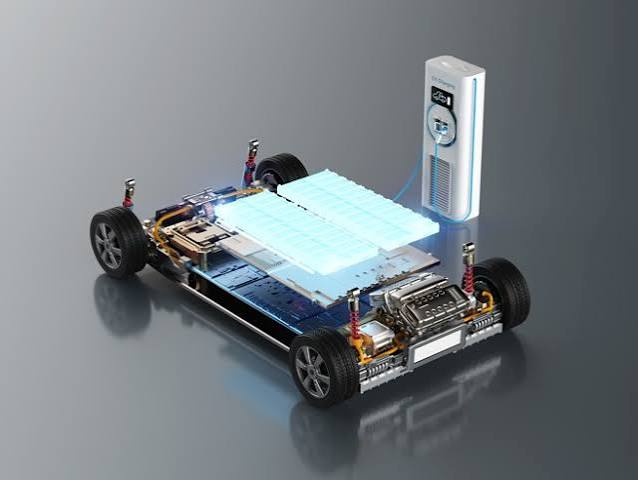
Mercedes-Benz is taking another step toward next-generation electric vehicle technology by testing ProLogium’s latest solid-state battery cells. The move places solid-state battery chemistry closer to the automotive qualification process, where electrical performance, thermal behavior and safety determine whether a new cell technology can move toward future vehicle platforms.
The agreement gives Mercedes-Benz priority access to ProLogium’s Gen4 Superfluidized Inorganic Next-Generation Lithium Ceramic Battery cells. Mercedes-Benz will conduct extensive testing at its own facilities and through specialized external institutes before assessing their potential suitability for future vehicles.
For chemical traders and procurement teams, the development matters beyond the automotive sector. Changes in battery architecture can influence demand for specialty materials, electrode components, ceramics, metals and chemical intermediates throughout the wider EV supply chain.
Why Solid-State Batteries Are Receiving More Attention
Conventional lithium-ion batteries use a liquid electrolyte to facilitate ion movement between the electrodes. Solid-state designs replace this liquid component with a solid electrolyte, creating opportunities to redesign the cell architecture and improve several performance and safety characteristics.
Mercedes-Benz has been researching solid-state battery technology for several years. The automaker has worked with multiple technology partners, including ProLogium and Factorial, as it evaluates different approaches to increasing energy density and improving EV battery performance.
Solid-state technology can potentially support:
Higher energy density: More stored energy could allow automakers to reduce battery size or increase vehicle range.
Improved safety characteristics: Solid electrolytes can reduce reliance on flammable liquid electrolyte systems.
Packaging flexibility: Different cell architectures can create opportunities for more efficient use of vehicle space.
Fast-charging potential: Advanced solid-state designs are being developed with higher charging performance in mind.
Lower system complexity: Changes to cell chemistry and safety architecture could eventually influence thermal management requirements.
These potential advantages explain why battery developers and vehicle manufacturers continue to invest in solid-state research despite the technical challenges involved.
What Mercedes-Benz Is Testing From ProLogium
The current agreement focuses on ProLogium’s Gen4 battery technology, described by the company as a Superfluidized Inorganic Next-Generation Lithium Ceramic Battery. Mercedes-Benz will evaluate the cells through electrical, thermal and safety testing.
The testing process is important because laboratory performance alone does not establish whether a battery technology can meet automotive requirements. A future production cell must demonstrate consistent behavior under demanding operating conditions while also fitting manufacturing, cost and vehicle integration requirements.
ProLogium states that its Gen4 platform combines an inorganic electrolyte with ceramic separator technology and an active safety mechanism. The company also positions the technology around energy density, charging performance, power output, low-temperature performance and scalable manufacturing.
For procurement teams, this distinction is important. Battery innovation creates commercial opportunities only when the underlying technology reaches reliable, scalable production.
From Battery Research to Automotive Qualification
Mercedes-Benz’s involvement demonstrates how the path from battery research to vehicle deployment requires several stages. A promising cell chemistry must move through laboratory validation, prototype development, safety assessment and eventually vehicle-level integration.
The current ProLogium agreement remains focused on testing rather than a confirmed series-production decision. The purpose of the testing is to determine whether the technology could become suitable for future Mercedes-Benz vehicle applications.
This creates an important distinction for the chemical supply chain. A new battery announcement does not immediately translate into large-scale demand for every associated material.
Procurement professionals should instead watch for signals such as:
Completion of automotive cell validation.
Announcements regarding pilot or commercial production.
Qualification of upstream material suppliers.
Expansion of manufacturing capacity.
Confirmed vehicle-platform integration.
Commercial production targets and regional supply agreements.
These indicators provide a clearer picture of when laboratory innovation may begin affecting industrial purchasing patterns.
What the ProLogium Partnership Means for Supply Chains
Mercedes-Benz and ProLogium have maintained a relationship for nearly a decade. Their collaboration has progressed through technology development, investment and validation of different battery formats, including pouch and prismatic cells.
ProLogium is also developing manufacturing capacity in Europe. Its planned Dunkirk facility in France has a maximum designed capacity of up to 44 GWh, while the company says the first phase is designed for 4 GWh of annual production capacity.
European production could become strategically significant for automotive supply chains. Localized manufacturing can reduce dependence on long-distance transportation and create closer relationships between cell manufacturers, automakers and material suppliers.
For chemical traders, regional manufacturing expansion can create demand for locally available battery-grade materials and industrial inputs. It can also increase the importance of supplier qualification, quality consistency and reliable logistics.
Which Materials Could Matter as Battery Chemistry Evolves?
The transition toward solid-state batteries does not eliminate the broader materials ecosystem surrounding lithium-based batteries. Cell manufacturers still need electrode materials, conductive components, separators and other specialized inputs.
The exact material requirements vary according to cell design and chemistry. This makes it risky for procurement teams to assume that every solid-state battery will require the same material mix as a conventional lithium-ion cell.
Several material categories remain strategically relevant across advanced battery development:
Nickel-based materials: Certain high-energy cathode chemistries use nickel-containing materials to increase energy density.
Cobalt compounds: Cobalt can form part of specific cathode chemistries, although battery developers continue to explore ways to reduce cobalt dependence.
Manganese compounds: Manganese-based materials can contribute to cathode formulations and broader battery chemistry development.
Ceramic materials: Solid-state designs can rely heavily on advanced ceramic components, particularly where ceramic separators or solid electrolytes form part of the architecture.
Specialty chemical intermediates: Battery manufacturing requires tightly controlled materials with consistent purity and performance characteristics.
The exact procurement opportunity depends on the final commercial cell design. Buyers should therefore track confirmed specifications rather than assuming that a laboratory cell will use the same formulation as a mass-produced product.
Why Manufacturing Scale Matters to Chemical Buyers
One of the largest challenges for next-generation batteries is moving from successful cell development to economically viable mass production.
ProLogium has already highlighted manufacturing scalability as part of its technology strategy. Its Taoke facility in Taiwan has been used for GWh-scale manufacturing validation, while its European expansion is intended to support future commercial production.
Scale changes procurement requirements considerably. A laboratory may purchase relatively small volumes of specialized materials, while commercial battery production requires continuous supply with strict quality specifications.
Procurement teams entering this market should pay attention to:
Specification consistency: Battery materials need reliable chemical and physical characteristics from batch to batch.
Supplier qualification: Automotive applications generally require rigorous qualification before suppliers can enter production programs.
Logistics reliability: Cell production requires dependable material availability to avoid manufacturing interruptions.
Regional sourcing: European battery manufacturing may increase demand for suppliers capable of serving localized production networks.
Cost control: A technically suitable material must also meet the economic requirements of high-volume manufacturing.
This creates opportunities for chemical distributors and traders that can combine product quality with dependable international sourcing.
Mercedes-Benz and the Broader Solid-State Battery Race
Mercedes-Benz is not relying on a single pathway for advanced battery development. The automaker has also worked with Factorial on lithium-metal solid-state battery technology and began road testing a solid-state battery-equipped vehicle based on that collaboration.
The parallel development programs illustrate an important feature of the EV battery market: several competing technical approaches may continue developing at the same time.
For chemical suppliers, this means the future market may not depend on one universal solid-state formulation. Different automakers and battery companies may select different electrolytes, electrode chemistries, separator technologies and manufacturing processes.
That diversity can create both opportunities and uncertainty. Suppliers that monitor several battery technologies may be better positioned to identify which chemical inputs move from development programs into commercial purchasing.
What Procurement Teams Should Watch Through 2027
The Mercedes-Benz and ProLogium testing agreement provides a useful signal for companies following advanced battery materials. The immediate focus remains technology validation, but future milestones could determine whether the chemistry moves closer to commercial automotive deployment.
Procurement teams should monitor:
Automotive testing results: Successful electrical, thermal and safety validation would strengthen the case for further development.
Production milestones: Expansion from pilot manufacturing toward larger-scale output could generate stronger material demand.
European capacity: Progress at the Dunkirk facility could influence regional battery supply chains.
Material specifications: Changes in commercial cell architecture may determine which chemical inputs become strategically important.
Supplier localization: European battery production could encourage greater regional sourcing of qualified materials.
Cost competitiveness: Commercial adoption will depend not only on technical performance but also on the ability to manufacture cells at competitive cost.
These developments will help traders distinguish between early-stage technology interest and genuine future purchasing opportunities.
The Bottom Line for Battery Chemical Buyers
Mercedes-Benz’s latest agreement with ProLogium shows that solid-state battery development is moving through increasingly detailed automotive testing. The automaker will evaluate ProLogium’s Gen4 cells for electrical, thermal and safety performance before determining their suitability for potential future vehicle applications.
For the chemical trading industry, the development reinforces the importance of tracking battery technology beyond finished cells. New battery architectures can influence demand for metals, ceramics and chemical intermediates while creating new sourcing requirements across regional manufacturing hubs.
The commercial impact will depend on validation results, production scale and eventual vehicle integration. Companies supplying battery-related chemicals can prepare by monitoring these milestones, maintaining consistent product specifications and building reliable sourcing channels for materials that meet the requirements of advanced battery manufacturing.

Nickel Sulphate Hexahydrate
Found this useful?