
Paperboard Without the Fiber: How New Microspheres Are Transforming Sustainable Packaging Materials
Packaging manufacturers continue to search for ways to reduce raw material consumption without sacrificing product quality. Paperboard microspheres have emerged as one of the most promising innovations because they increase board bulk and thickness while requiring only 1% or less addition to the formulation. This approach allows producers to lower fiber demand, reduce energy consumption and improve process efficiency. For buyers, converters and paper mills, the technology creates new opportunities to balance sustainability goals with production costs in an increasingly competitive packaging market.
Why Microspheres Are Changing Paperboard Production
Traditional paperboard relies heavily on fiber to achieve the desired thickness and stiffness. As recycled fiber becomes more common, maintaining board quality often requires additional processing or higher fiber usage.
Microspheres offer a different solution. These lightweight engineered particles create additional volume within the paper structure, increasing thickness without requiring significantly more fiber. Manufacturers can therefore produce paperboard that feels stronger and more substantial while consuming fewer raw materials.
The result is a packaging material that supports both operational efficiency and environmental objectives.
How Microspheres Improve Bulk and Thickness
One of the biggest advantages of microsphere technology is its exceptional efficiency. Adding 1% or less of microspheres can increase paperboard bulk and thickness by 15% to 25%.
This improvement creates several production benefits:
Paperboard reaches target thickness with less fiber, reducing dependence on virgin pulp and supporting recycled content strategies.
Lower fiber loading can decrease drying requirements, helping mills reduce energy consumption.
Improved bulk enhances board stiffness, making finished packaging feel more premium.
Consistent board structure supports smoother downstream converting operations.
Because the dosage remains very low, manufacturers can integrate the technology without making major changes to existing production lines.
Supporting Recycled Fiber Performance
Many packaging producers have increased recycled fiber usage to meet sustainability targets and customer expectations. While recycled fiber delivers environmental advantages, repeated recycling shortens fiber length and reduces strength.
Microspheres help compensate for these challenges by increasing sheet volume and maintaining dimensional stability. Instead of relying entirely on additional fiber to recover lost performance, producers can optimize the board structure through engineered additives.
This approach improves production flexibility while supporting circular economy initiatives.
Lower Energy Consumption Across Production
Fiber preparation and drying represent major energy costs in paperboard manufacturing. Reducing fiber requirements naturally lowers the amount of water that must be removed during production.
Several operational improvements become possible:
Lower fiber loading reduces mechanical processing requirements.
Reduced moisture content shortens drying cycles.
Improved sheet formation supports stable machine performance.
Better production efficiency contributes to lower operating costs.
For mills facing increasing energy prices, these savings can become an important competitive advantage.

Packaging Applications That Benefit Most
Not every packaging application requires maximum strength. Many products instead demand lightweight construction, attractive appearance and efficient material usage.
Microsphere-enhanced paperboard performs well across numerous applications, including:
Folding cartons for consumer goods, where appearance and stiffness influence customer perception.
Food packaging that requires consistent board thickness for reliable converting.
Retail packaging where lower weight reduces transportation costs.
E-commerce packaging that balances protection with shipping efficiency.
Premium printed packaging where smooth surfaces support high-quality graphics.
These applications benefit from improved board characteristics while reducing total fiber consumption.
Supply Chain Benefits for Procurement Teams
Procurement professionals increasingly evaluate raw materials beyond purchase price alone. Supply stability, sustainability performance and operational efficiency all influence sourcing decisions.
Microsphere technology supports these priorities by helping manufacturers:
Reduce dependence on volatile fiber markets.
Improve production consistency across different recycled fiber grades.
Lower total manufacturing costs through reduced material and energy use.
Support corporate sustainability reporting with measurable resource savings.
Create opportunities for product differentiation without major capital investment.
These factors make microspheres attractive not only for production managers but also for strategic sourcing teams.
Sustainability Without Compromising Performance
The packaging sector continues to face pressure from regulators, retailers and consumers to reduce environmental impact.
Lower fiber consumption contributes to more efficient resource use. Reduced drying requirements decrease energy demand, while improved recycled fiber performance encourages greater use of recovered materials throughout the packaging supply chain.
Rather than replacing paperboard, microspheres enhance existing manufacturing systems and help producers achieve better environmental performance through smarter material engineering.
This practical approach allows manufacturers to improve sustainability without redesigning their entire production process.
Market Outlook for Advanced Paperboard Additives
Demand for innovative paperboard additives continues to grow as packaging producers pursue higher productivity and lower environmental impact.
Several market trends support wider adoption:
Greater use of recycled fiber across global packaging markets.
Rising energy costs that encourage more efficient production methods.
Continued expansion of e-commerce packaging.
Brand owner commitments to reduce material consumption.
Investment in lightweight packaging solutions across consumer industries.
As these trends continue, advanced functional additives such as microspheres are expected to become increasingly important components of modern paperboard manufacturing.
What Buyers Should Do Now
Packaging manufacturers rarely compete on price alone. Product quality, sustainability performance and production efficiency now play equally important roles.
Procurement teams should evaluate additive technologies based on their overall contribution to manufacturing performance rather than focusing only on purchase cost. A small addition of microspheres can improve board bulk, reduce fiber requirements and support long-term operational savings throughout the production process.
Companies that adopt innovative material solutions early position themselves to respond more effectively to changing customer expectations and evolving sustainability requirements.
Ready to source microspheres from verified global suppliers? Explore competitive offers on our platform today.
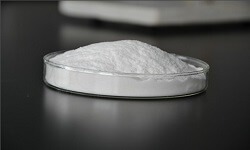
Sodium Carboxyl Methyl Cellulose
Found this useful?