Petrobras' New P-80 Platform Departs Singapore for the Búzios Field
Petrobras' New P-80 Platform Departs Singapore for the Búzios Field
Petrobras' P-80 Platform Begins Journey to Brazil
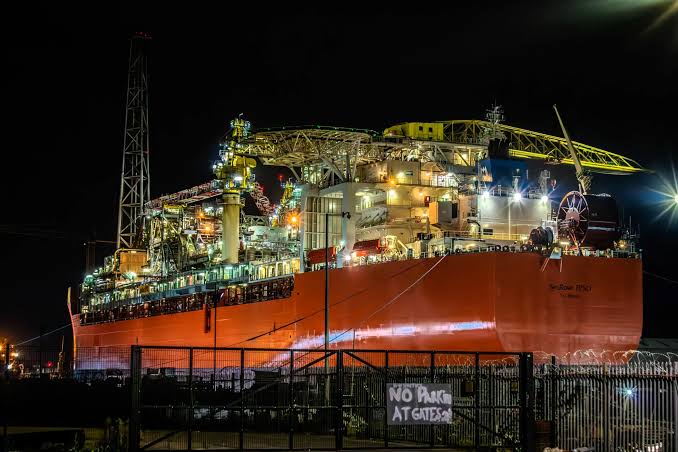
Brazilian state-controlled energy company Petrobras has marked a major milestone in its offshore development program as its new P-80 floating production, storage, and offloading (FPSO) platform departs Singapore for the Búzios Field in Brazil.
The platform is part of Petrobras' strategy to expand oil and natural gas production in the pre-salt region of the Santos Basin, one of Brazil's major offshore petroleum development areas.
The departure represents an important stage in the project's progression toward offshore installation, commissioning, and eventual production operations.
P-80 Platform Designed for Large-Scale Offshore Production
The P-80 is designed to operate in deepwater conditions and support the development of the Búzios Field.
The FPSO will have the following planned capabilities:
Oil production capacity: 225,000 barrels per day.
Natural gas processing capacity: 12 million cubic meters per day.
Water injection capacity: 250,000 barrels per day.
Storage capacity: Approximately 1.4 million barrels of crude oil.
These capabilities are intended to support large-scale hydrocarbon production while enabling the processing, storage, and offloading of extracted resources.
Búzios Field Strengthens Brazil's Pre-Salt Production
Located in the Santos Basin offshore Brazil, the is a central component of Petrobras' long-term production strategy.
The field contains substantial pre-salt petroleum resources and has attracted investment in advanced offshore production infrastructure.
The addition of P-80 is expected to contribute to the field's production capacity and support Petrobras' broader development objectives.
Its deployment also reflects the continuing importance of FPSO technology in Brazil's offshore oil industry.
Advanced Technology and Offshore Infrastructure
FPSO vessels combine offshore production facilities with storage and offloading systems, allowing operators to process hydrocarbons at sea before transferring crude oil to shuttle tankers.
The P-80 is designed to integrate production, gas processing, water injection, and storage functions into a single offshore facility.
Water injection is particularly relevant to reservoir management, as it helps maintain pressure and supports oil recovery.
The platform's production systems are intended to operate under the technical and environmental conditions associated with deepwater pre-salt developments.
Implications for Petrobras' Production Strategy
The deployment of P-80 forms part of Petrobras' wider offshore investment program, which focuses on expanding production capacity in Brazil's pre-salt provinces.
Additional FPSO capacity can support production growth, strengthen the company's offshore infrastructure, and contribute to Brazil's position in international oil markets.
The platform's arrival and subsequent commissioning will be important milestones before it begins commercial production.
What Happens Next?
Following its departure from Singapore, the P-80 will continue toward the Búzios Field, where offshore installation and commissioning activities will take place.
The transition from construction to operational readiness involves integrating the platform with subsea infrastructure, testing production systems, and completing required technical procedures.
Once operational, the FPSO is designed to produce up to 225,000 barrels of oil per day, adding another major production unit to Petrobras' offshore portfolio.
Sources

Mono Propylene Glycol (E1520)
Found this useful?