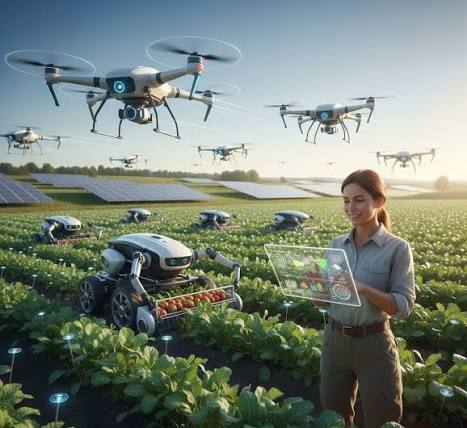
Precision agriculture is changing the relationship between crop protection chemical demand and farm productivity. Instead of applying the same treatment uniformly across an entire field, growers can increasingly use drones, machine vision and variable rate systems to identify where treatment is actually needed.
For chemical traders and agricultural procurement teams, this creates an important market distinction. Lower chemical waste does not necessarily mean lower agricultural chemical demand. Precision application can make each unit of product more valuable by improving placement, reducing unnecessary coverage and helping growers manage labor constraints.
Drone spot treatment and precision sprayers also address a practical challenge facing large-scale farming: how to cover more acreage with fewer workers while maintaining timely crop protection. That makes ag technology an increasingly important part of the crop protection supply chain.
Precision Spraying Is Changing Chemical Use Per Acre
Traditional broadcast spraying treats a field according to an average application requirement. Precision systems instead use field information, sensors, cameras or prescription maps to adjust where and how much product reaches the crop or target.
John Deere's See & Spray technology, for example, uses camera vision and machine learning to distinguish crops from weeds and activate spray nozzles only where weeds are detected. Its newer systems can also use biomass detection to vary application rates according to field conditions.
This approach changes the economics of chemical application. A grower can potentially reduce unnecessary applications while maintaining the treatment intensity required in areas with greater weed or pest pressure.
The result is a move from volume-based application toward precision-based input efficiency.
Drone Spot Treatment Adds a New Layer of Flexibility
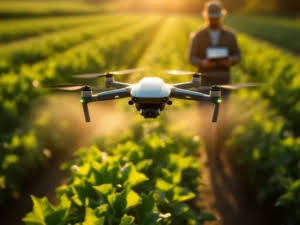
Agricultural drones can reach areas that conventional machinery may struggle to access efficiently. They can also operate without putting a heavy tractor or sprayer directly through the crop, which can be useful where crop damage, soil conditions or field geometry create operational constraints.
Research published in 2026 on drone herbicide application in transplanted rice found advantages in droplet characteristics, distribution and application efficiency compared with knapsack spraying. The study also reported savings in application time, labor, chemical use and production costs.
The commercial significance extends beyond rice. As drone spraying systems become more capable, growers can consider aerial treatment for specific areas rather than viewing spraying as an all-or-nothing field operation.
That creates opportunities for spot treatment, where a drone concentrates application on identified problem areas instead of treating the entire acreage at the same intensity.
Variable rate application systems take precision agriculture a step further. Instead of deciding only whether to spray, the system can determine how much product to apply according to a prescription, sensor reading or real-time assessment.
Current precision spraying platforms increasingly combine positioning, cameras, software and nozzle controls. John Deere's 2026 ExactApply Multi-Rate technology, for example, supports multiple application rates across boom sections during a single pass, allowing operators to adjust treatment according to different field zones.
Research into unmanned aerial systems is also moving toward variable-rate spreading based on both prescription maps and real-time sensing. These technologies give growers more options for matching application intensity to actual field conditions.
For chemical buyers, this matters because the market may increasingly reward products that perform consistently at precise application rates. Formulation quality, concentration and compatibility with precision equipment can become more commercially important as technology advances.
Ag Tech Companies Are Becoming Part of the Crop Protection Value Chain
The efficiency gains behind precision spraying come from a broader ecosystem rather than from chemical manufacturers alone. Equipment producers, drone developers, sensor companies and agricultural software providers increasingly influence how crop protection products reach the field.
John Deere is one prominent example. Its See & Spray platform combines cameras, machine learning and nozzle control to target weeds, while its variable-rate capabilities allow application rates to change according to detected biomass or operator-defined thresholds.
XAG represents another part of the ecosystem through its agricultural unmanned aerial systems. Its P Series plant protection UAS combines RTK positioning, autonomous operation and rotary atomization for aerial spraying. XAG states that its system is designed to reduce pesticide and water use through more precise application.
These companies matter to chemical traders because technology can influence the quantity, timing and formulation characteristics of products growers purchase.
The future crop protection market therefore involves more than active ingredients. It increasingly connects chemistry, machinery, data and automation.
Lower Waste Can Support Stronger Chemical Economics
At first glance, reducing chemical waste appears negative for chemical demand. If a farmer uses less herbicide per acre, total product consumption could fall.
The broader picture is more complicated. Precision technology can reduce waste while making crop protection economically viable across larger areas, particularly where labor shortages make manual intervention difficult.
A grower may use less product on each treated acre but apply crop protection more consistently across a larger commercial operation. Technology can also make more targeted treatments practical in fields where blanket applications would be unnecessarily expensive.
This creates several potential market effects:
Lower product waste: Precision systems can reduce applications outside target areas.
Better input economics: Savings can improve the return on crop protection programs.
Larger operational coverage: Automation can help fewer workers manage larger areas.
More differentiated products: Formulations that perform reliably at precise rates can gain importance.
Higher technology adoption: Equipment investment can encourage growers to optimize other inputs as well.
For suppliers, the key metric is therefore not simply kilograms of chemical consumed per acre. It is the value created by each unit of product within a more efficient application system.
Precision Agriculture Helps Offset Labor Shortages
Labor availability remains an important constraint for commercial agriculture. Manual scouting, spraying and weed control can require substantial time, particularly when farms operate across large areas.
Automation addresses this problem in several ways. Drones can perform targeted aerial applications, machine vision can identify weeds and automated sprayers can control individual nozzles without requiring an operator to make every application decision manually.
This makes precision agriculture a productivity offset to labor shortages.
The relationship also creates a reinforcing cycle. As farms become larger and labor becomes harder to secure, growers have stronger incentives to invest in automation. Once that equipment is in place, growers have greater incentives to use application methods that take advantage of its precision.
Chemical procurement then becomes connected to the capabilities of the equipment being deployed.
What Precision Technology Means for Chemical Procurement
Procurement managers should increasingly evaluate crop protection products alongside the equipment used to apply them. A chemical that works effectively in conventional broadcast spraying may need different consideration when growers apply it through drones or variable-rate systems.
Important purchasing questions include:
Application compatibility: Can the formulation perform consistently through the intended spraying equipment?
Concentration: Does the product support precise application without compromising efficacy?
Droplet requirements: Is the formulation suitable for the required spray characteristics?
Storage and handling: Can distributors maintain product quality throughout the supply chain?
Registration: Does the product have the approvals required for the target crop and application method?
Supply reliability: Can suppliers maintain consistent specifications across recurring commercial batches?
These factors can become procurement differentiators as precision application moves from early adoption into mainstream commercial farming.
Precision Systems Could Change Demand Forecasting
Traditional agricultural chemical forecasting often relies on acreage, crop mix, pest pressure and expected application rates. Precision agriculture adds another variable: technology penetration.
If a growing percentage of acreage uses targeted spraying or variable-rate application, average chemical use per treated acre may change. However, the same technology can also encourage more systematic crop protection by reducing labor requirements and improving application timing.
Chemical traders should therefore track technology adoption alongside agricultural fundamentals.
Useful indicators include:
Growth in agricultural drone fleets and professional spraying services.
Adoption of machine vision and targeted sprayer systems.
Expansion of variable-rate application capabilities.
Increasing use of digital field prescriptions and sensor-based scouting.
Equipment upgrades that improve nozzle-level control and application accuracy.
These indicators can provide an additional perspective on future crop protection demand.
The Competitive Landscape Is Moving Beyond Chemistry
Crop protection manufacturers traditionally compete on efficacy, price, formulation quality and distribution. Precision agriculture adds another dimension because the application platform can influence how effectively a product performs.
This could encourage closer cooperation between chemical producers and ag technology companies. Product developers may increasingly consider compatibility with autonomous sprayers, drone platforms, variable-rate systems and digital application prescriptions.
For traders, this creates opportunities to build relationships across both sides of the market. A supplier that understands the equipment and application practices used by its customers can provide more relevant product recommendations and improve supply planning.
The strongest commercial position may belong to businesses that understand both what growers are buying and how growers are applying it.
What Buyers Should Watch Through 2026 and Beyond
Precision spraying is unlikely to eliminate crop protection chemicals. Instead, it is likely to change how growers allocate them.
The commercial direction is toward more targeted application, better timing and closer matching of treatment intensity to actual field conditions. Drones, machine vision and variable-rate systems can help farmers address labor shortages while reducing unnecessary chemical use.
For chemical traders, this means demand analysis should include technology adoption rather than focusing exclusively on acreage and crop yields. The next phase of agricultural chemical efficiency will increasingly depend on the interaction between the formulation in the tank and the technology delivering it.
Procurement teams that monitor this connection can identify changing product requirements earlier, evaluate suppliers more effectively and position inventory around emerging application practices.
The crop protection market is not simply becoming more digital. It is becoming more precise, and that precision could reshape the economics of chemical demand across row crops.