
Market Insight
Jun 23, 2026schedule5 Min Read
Water Treatment Specialty Chemicals: Post-Crisis Desalination
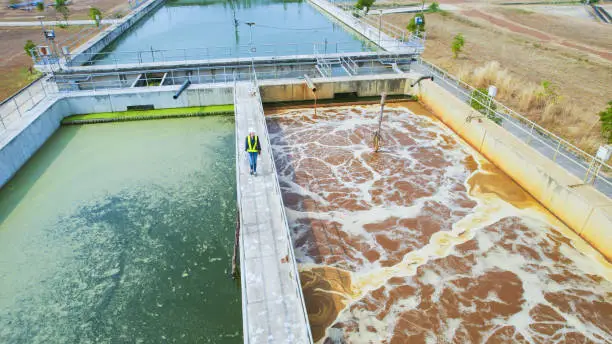
GCC desalination infrastructure which provides 99% of drinking water in Qatar and Kuwait, 90%+ in Bahrain,70% in UAE
Full Reportarrow_forward


prodchem
Jun 10, 2026
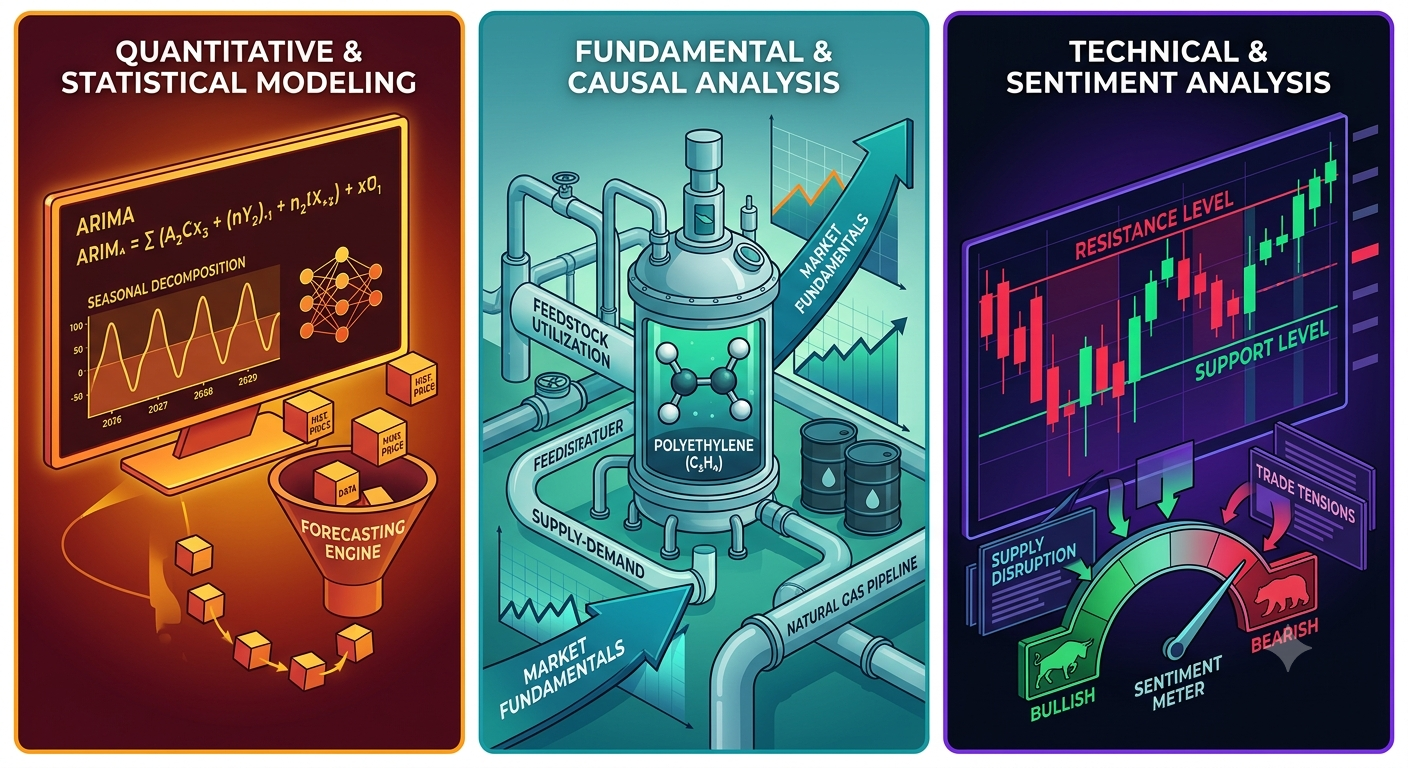
Chemical markets are highly dynamic and influenced by a wide range of factors, including feedstock costs, supply-demand balances, freight rates, energy prices, geopolitical events, and regulatory changes. As a result, accurately forecasting chemical prices has become a critical capability for manufacturers, distributors, traders, and procurement professionals.
Price forecasting helps businesses make informed purchasing decisions, manage risks, optimize inventory levels, and improve profitability. However, because chemical markets are interconnected with global economic and industrial trends, forecasting prices requires a structured approach that combines market intelligence, historical data, and analytical methodologies.
This article explores the most widely used price forecast methodologies in chemical markets and explains how businesses use them to anticipate future market movements.
Chemical prices can fluctuate significantly due to sudden changes in supply chains, feedstock availability, transportation costs, and industrial demand. Without accurate forecasts, organizations may face higher procurement costs, inventory losses, or reduced profit margins.
Effective price forecasting enables companies to:
Improve procurement planning.
Optimize inventory management.
Reduce exposure to market volatility.
Support contract negotiations.
Enhance budgeting and financial forecasting.
Identify strategic purchasing opportunities.
In today's competitive environment, accurate market forecasts can provide a significant business advantage.
Before discussing forecasting methodologies, it is important to understand the factors that drive chemical prices.
Raw materials such as crude oil, natural gas, naphtha, ethane, and propylene often account for a substantial portion of production costs. Changes in feedstock prices typically have a direct impact on downstream chemical pricing.
When demand exceeds available supply, prices generally increase. Conversely, oversupply conditions often lead to lower market prices.
Shipping rates, fuel costs, port congestion, and transportation disruptions can significantly affect landed costs and regional pricing differences.
Industrial production, manufacturing activity, consumer demand, and economic growth influence chemical consumption patterns worldwide.
Trade restrictions, environmental regulations, sanctions, and geopolitical tensions can disrupt supply chains and create market uncertainty.
Historical trend analysis is one of the most widely used forecasting methods. Analysts examine past price movements to identify recurring patterns and long-term market behavior.
This methodology assumes that historical trends can provide insights into future price movements, particularly when market fundamentals remain relatively stable.
Advantages include:
Simple implementation.
Easy interpretation.
Useful for identifying seasonal trends.
Limitations include:
Less effective during market disruptions.
Cannot fully account for unexpected events.
Feedstock-based forecasting estimates future chemical prices by analyzing expected movements in raw material costs.
For example, analysts may forecast polyethylene prices by monitoring crude oil, naphtha, and ethylene markets. If feedstock costs are expected to rise, downstream chemical prices are likely to increase as well.
This methodology is particularly effective for commodity chemicals where feedstock costs represent a significant share of production expenses.
Supply-demand modeling focuses on market fundamentals by evaluating production capacity, operating rates, inventories, imports, exports, and consumption trends.
Analysts estimate future market balances by comparing projected supply against expected demand.
Key indicators include:
Plant shutdowns and maintenance schedules.
Capacity expansions.
Inventory levels.
End-user demand growth.
When projected demand exceeds supply, prices are generally expected to rise.
Econometric models use statistical techniques to quantify relationships between chemical prices and economic variables.
These models often incorporate:
GDP growth.
Industrial production indices.
Manufacturing activity.
Exchange rates.
Energy prices.
By analyzing historical relationships, economists can estimate how changes in these variables may influence future chemical prices.
This methodology is commonly used for medium- and long-term forecasting.
Scenario analysis evaluates multiple possible future outcomes based on different market conditions.
Typical scenarios include:
Base Case Scenario
Bullish Scenario
Bearish Scenario
For example, analysts may model the impact of rising oil prices, supply disruptions, or economic slowdowns on chemical markets.
Scenario planning helps organizations prepare for uncertainty and develop contingency strategies.
Cost-plus forecasting estimates future prices by calculating expected production costs and adding target profit margins.
The model typically includes:
Feedstock costs.
Energy costs.
Labor expenses.
Logistics costs.
Regulatory compliance expenses.
This approach is often used in specialty chemical markets where production costs strongly influence pricing decisions.
Many chemical forecasting organizations combine quantitative analysis with expert judgment.
Market analysts gather information from:
Producers.
Distributors.
Traders.
End users.
Industry associations.
This qualitative intelligence helps identify market developments that may not yet be reflected in historical data.
Examples include:
Unexpected plant outages.
New environmental regulations.
Emerging geopolitical risks.
Changes in customer buying behavior.
Modern forecasting increasingly relies on advanced analytics and digital technologies.
Artificial intelligence, machine learning, and big data platforms can process large volumes of information from multiple sources, including:
Commodity markets.
Shipping data.
Economic indicators.
Weather patterns.
Trade flows.
These technologies enable analysts to identify complex relationships and improve forecast accuracy.
Many procurement teams now use digital market intelligence platforms that provide real-time pricing insights and predictive analytics.
Despite sophisticated methodologies, forecasting chemical prices remains challenging due to market uncertainty.
Common challenges include:
Geopolitical disruptions.
Supply chain interruptions.
Rapid demand shifts.
Unexpected regulatory changes.
Extreme energy price volatility.
Natural disasters affecting production facilities.
Because no single methodology can predict every market movement, most organizations combine multiple forecasting approaches to improve reliability.
Organizations can improve forecasting accuracy by:
Combining quantitative and qualitative methods.
Monitoring feedstock and energy markets continuously.
Updating forecasts regularly.
Using scenario analysis for risk management.
Tracking supply-demand fundamentals.
Leveraging market intelligence and industry expertise.
A multi-method approach generally provides more reliable forecasts than relying on a single model.
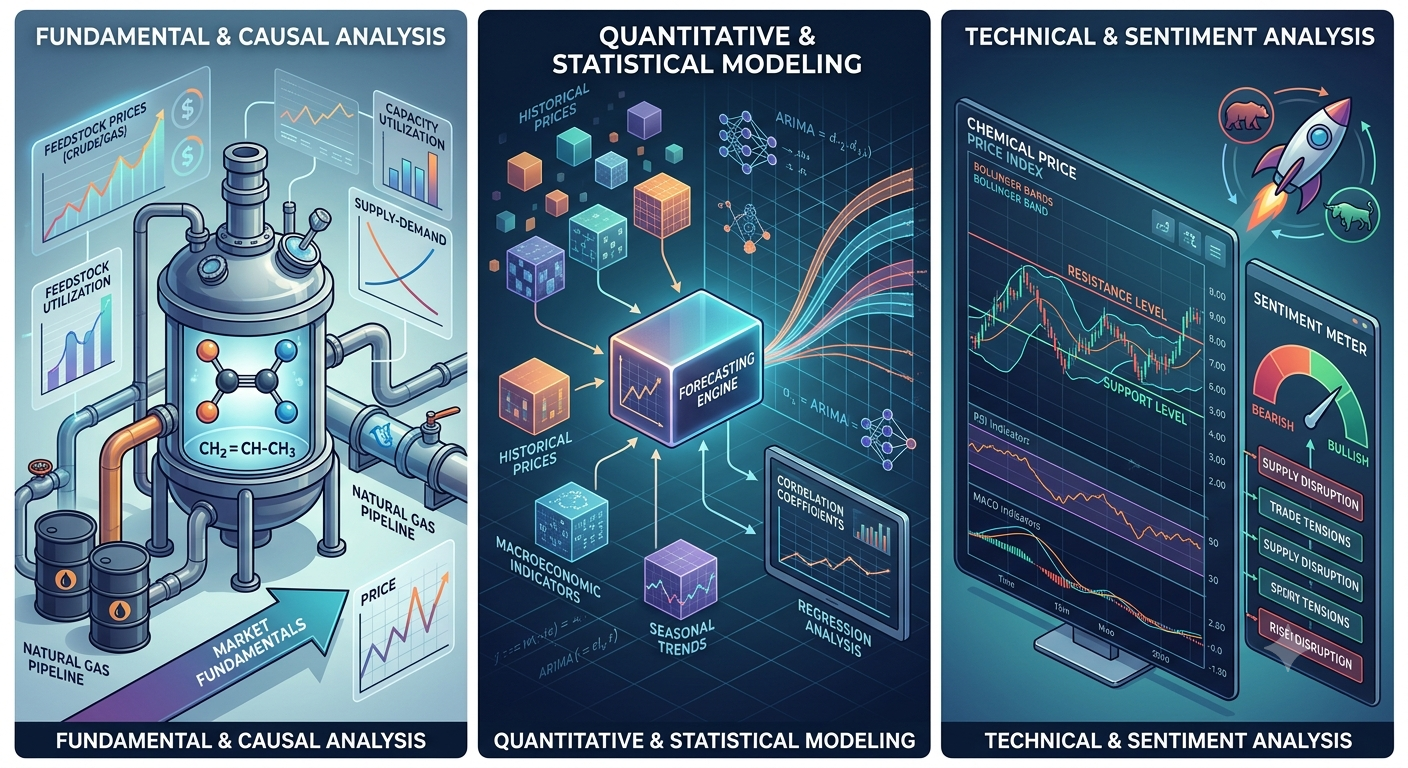
Price forecasting is an essential component of strategic decision-making in chemical markets. By understanding the methodologies used to predict future price movements, businesses can better manage risk, optimize procurement strategies, and improve financial planning.
Whether using historical trend analysis, feedstock-based forecasting, supply-demand modeling, econometric techniques, or scenario planning, successful forecasting depends on combining data, market intelligence, and expert judgment. As chemical markets continue to evolve, organizations that invest in robust forecasting capabilities will be better positioned to navigate volatility and maintain a competitive advantage.
Found this useful?
Continue Reading
GCC desalination infrastructure which provides 99% of drinking water in Qatar and Kuwait, 90%+ in Bahrain,70% in UAE

Cyclohexane is produced by benzene hydrogenation and is the primary feedstock for both caprolactam

The oleochemicals market is expanding rapidly as sustainability goals and higher crude oil prices improve competitiveness against petrochemical alternatives. This analysis explores demand growth, feedstock trends, trade dynamics and procurement implications through 2033.