ProLogium’s Dynamic Coordination Network Could Redefine Fast-Charging Battery Electrolytes
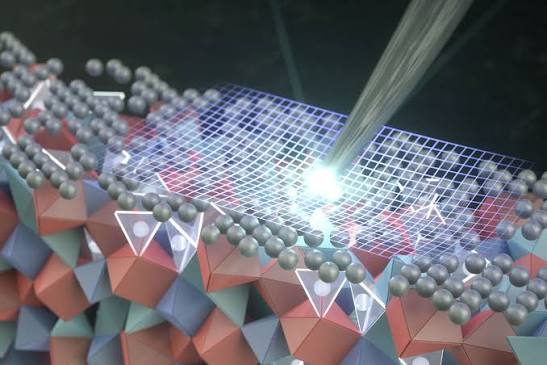
ProLogium’s Dynamic Coordination Network (DCN) introduces a new approach to lithium-ion movement that could change how manufacturers design fast-charging electric vehicle batteries. Unveiled in October 2026, the technology uses a Superfluidized Inorganic Electrolyte (SFIE) to create dynamic pathways for lithium ions, moving beyond the conventional transport mechanisms associated with liquid and solid electrolytes.
The development matters beyond battery engineering. Faster charging, improved low-temperature performance and more adaptable electrolyte structures could influence demand for specialty chemicals, inorganic materials and advanced battery components. For chemical traders and procurement teams, understanding this technology provides an early view of the material innovations that may shape the next generation of energy storage.
What Is ProLogium’s Dynamic Coordination Network?
The Dynamic Coordination Network is an electrolyte architecture developed for ProLogium’s fourth-generation battery technology, known as GEN4. It uses a superfluidized inorganic electrolyte whose local coordination structures continually change, creating short-range pathways that help lithium ions move through the material.
Conventional liquid electrolytes generally rely on solvents to help lithium ions move between electrodes. Traditional solid electrolytes instead depend on ion movement through relatively fixed structures, which can create challenges involving conductivity and contact between the electrolyte and electrode surfaces.
ProLogium’s approach seeks to combine aspects of both systems. Its electrolyte maintains an inorganic structure while adapting locally, allowing lithium ions to move between changing coordination environments rather than relying entirely on solvent-assisted diffusion or rigid conduction pathways.
The distinction is important because electrolyte performance affects several battery characteristics at once. Ion transport, interfacial resistance, temperature response and manufacturing requirements all influence how effectively a battery can deliver power and recharge.
How Superfluidized Inorganic Electrolyte Enables Faster Charging
ProLogium’s SFIE uses specially engineered ligands to influence how lithium ions and negatively charged ions, known as anions, interact within the electrolyte. According to the company, this arrangement constrains anion movement more strongly while increasing the proportion of ionic transport carried by lithium ions.
This mechanism aims to reduce ion redistribution and concentration gradients during charging and discharging. When lithium ions move efficiently through the electrolyte, the battery can potentially accept higher charging rates without encountering the same degree of transport limitations.
Three features distinguish the proposed architecture:
Dynamic coordination: Lithium ions move between continuously changing local coordination structures, creating short-range transport pathways through the electrolyte.
Improved ion selectivity: The engineered interactions aim to favor lithium-ion transport and reduce concentration imbalances during battery operation.
Adaptive interfaces: The electrolyte can respond to mechanical stress and electrode-surface changes, helping maintain contact between the materials.
The third feature may be especially relevant for battery manufacturers. Electrode materials can change in volume during repeated charging and discharging, placing stress on the interface between the electrode and electrolyte. A material that adapts to these changes could help maintain electrical performance over repeated cycles.
Reported Performance and Its Significance for Electric Vehicles
ProLogium has reported promising laboratory and battery-test results for its superfluidized inorganic electrolyte. The company states that testing witnessed by SGS recorded ionic conductivity of up to 57 mS/cm at room temperature, while its internal battery tests demonstrated fast charging and performance under demanding operating conditions.
The company reports the following results for batteries using SFIE:
Charging from 5% to 80% in 6.4 minutes.
More than 1,000 fast-charge cycles.
More than 90% capacity retention at -20°C.
Discharge rates reaching 15C.
These figures indicate the performance targets ProLogium is pursuing with GEN4. They are company-reported results, and real-world outcomes will depend on cell design, charging equipment, thermal management and operating conditions.
For electric vehicle manufacturers, charging speed remains only one part of the commercial equation. Battery life, energy density, low-temperature operation, safety and production cost also determine whether a new technology can compete with established battery systems.
If the reported performance translates into commercially manufactured cells, the technology could help manufacturers develop vehicles that spend less time charging and maintain useful performance in colder climates. Fleet operators and commercial vehicle users could also benefit from shorter charging interruptions, provided the complete battery system delivers the expected durability.

What the Technology Could Mean for Battery Materials Supply Chains
A new electrolyte architecture can affect more than the chemistry inside a battery cell. It can also change the specifications, processing requirements and supplier capabilities that manufacturers expect from their material partners.
ProLogium’s inorganic electrolyte approach creates potential opportunities for suppliers involved in specialty materials, inorganic compounds, ceramic processing and battery manufacturing equipment. However, the commercial impact will depend on the precise material formulation and the volumes required as production expands.
For chemical traders and distributors, several areas deserve attention:
Inorganic material sourcing: Suppliers may need to support tighter specifications for electrolyte ingredients, including consistent purity, moisture control and batch-to-batch quality.
Specialty chemical development: Formulation ingredients and coordination-related materials could become strategically important as battery developers refine their electrolyte systems.
Ceramic and interface materials: Battery designs that combine inorganic electrolytes with ceramic separators may create opportunities for suppliers that can meet demanding technical requirements.
Quality assurance and testing: Buyers will need reliable analytical data, traceability and documented performance to qualify materials for battery production.
These are potential supply-chain implications rather than confirmed purchasing requirements for ProLogium. The company’s public description does not provide a complete bill of materials or identify every commercial supplier, so traders should avoid assuming that a particular commodity will enter the formulation without technical confirmation.
Manufacturing Scale and Commercial Readiness
A laboratory breakthrough becomes commercially meaningful only when manufacturers can reproduce its performance at scale. Electrolyte formulations must remain consistent across production batches, integrate with electrode and separator manufacturing, and withstand the operating conditions expected in finished battery packs.
ProLogium has highlighted its manufacturing footprint in Taiwan and the development of its gigafactory in Dunkirk, France, as part of its broader battery industrialization strategy. The company has also presented collaborations with automotive engineering partners FEV and OPmobility involving battery modules, prototypes and high-performance packs.
These activities matter because scaling a new electrolyte involves more than increasing output. Manufacturers must establish repeatable processing conditions, qualify materials and components, control defects and demonstrate that performance remains consistent across cells and modules.
For procurement teams, the distinction between a demonstrated technical result and a qualified production material is essential. A supplier may produce a chemically suitable ingredient, yet still need to meet additional requirements for documentation, manufacturing consistency, logistics and long-term availability before an automotive customer approves it.
Battery makers will also need to assess how the electrolyte fits into existing production lines. If a new formulation reduces the need for certain processing pressures or simplifies interface management, it could offer manufacturing advantages. Those benefits, however, depend on the complete cell architecture rather than the electrolyte alone.
Key Challenges for Chemical Buyers and Suppliers
The commercial opportunity comes with several challenges. Buyers must evaluate technical performance alongside cost, supply reliability and compatibility with the final battery design.
Material specifications and purity: Advanced electrolytes may require tightly controlled chemical compositions. Procurement teams should confirm acceptable impurity limits, moisture sensitivity, analytical methods and consistency between batches before approving a supplier.
Qualification timelines: Automotive battery materials often require extensive validation before they enter production. Traders should account for testing, documentation and customer approval when estimating how quickly a new material could generate recurring demand.
Cost at scale: Strong laboratory performance does not automatically translate into competitive production economics. Manufacturers must consider raw material costs, processing requirements, manufacturing yield and the cost of quality control.
Intellectual property and supplier access: Proprietary electrolyte architectures may restrict access to formulation details. Suppliers should establish exactly which materials they can provide and whether they meet the customer's approved specifications, rather than relying on broad claims that a product supports solid-state batteries.
Supply continuity: Battery production requires dependable deliveries and consistent quality. Buyers should assess manufacturing capacity, lead times, contingency plans and traceability before committing to supply agreements.
For chemical distributors, the practical lesson is to build technical relationships early. A supplier with strong documentation and reliable quality systems may be better positioned for qualification than a supplier competing on price alone.
How the Innovation Fits into the Low-Carbon Chemicals Market
Advanced battery technologies support the wider transition toward electrified transport and energy storage. Their environmental value depends on factors including manufacturing energy use, raw material sourcing, battery lifetime and recycling, but improvements in charging performance can help make electric mobility more practical.
ProLogium’s SFIE architecture also raises an important question for the chemical industry: how can suppliers support more efficient energy technologies while maintaining responsible material sourcing and production practices?
Chemical manufacturers can prepare by investing in three areas:
Application-specific research: Develop expertise in inorganic materials, electrolyte chemistry and the compatibility requirements of next-generation batteries.
Responsible production: Improve process efficiency, reduce waste and document the environmental impacts associated with raw material processing.
Material recovery: Explore recovery and reuse opportunities for battery materials, including processes that could support future recycling systems.
ProLogium has identified battery recycling and material circularity as parts of its wider industrial strategy.
For chemical suppliers, this creates a reason to monitor developments across the battery value chain, from initial material production to end-of-life recovery.
However, the Dynamic Coordination Network should not be treated as a direct replacement for every existing electrolyte technology. Different battery applications have different priorities, and commercial adoption will depend on performance, cost, manufacturing compatibility and customer requirements.
What Procurement Teams Should Watch Next
ProLogium’s Dynamic Coordination Network highlights how advances in material structure can create new possibilities for battery performance. Its superfluidized inorganic electrolyte aims to improve lithium-ion transport while maintaining adaptable contact with electrode surfaces, potentially addressing several limitations associated with conventional electrolyte systems.
Chemical buyers and traders can prepare for further developments by monitoring:
Production expansion: Track manufacturing milestones and announcements that clarify the technology’s path from development to commercial supply.
Supplier qualification: Identify producers capable of meeting the purity, consistency and documentation requirements of advanced battery materials.
Technical validation: Follow additional performance data on charging speed, cycle life, safety and operation across different temperatures.
Commercial specifications: Wait for clear information about required ingredients, approved material grades and procurement volumes before making sourcing commitments.
Recycling and recovery: Monitor opportunities to supply materials and processes that support battery circularity.
The broader opportunity lies in understanding how battery innovation changes material requirements. Suppliers that combine technical knowledge with dependable sourcing and quality management will be better prepared to respond as next-generation battery manufacturing develops.
For the chemical trade, ProLogium’s approach is a reminder that future demand may emerge not only from established bulk chemicals but also from specialized materials engineered for particular performance requirements.
Fumed Silica
Found this useful?