Ranking FDA Commissioner Nominee Scrutiny Against Historical Industry Reaction Patterns
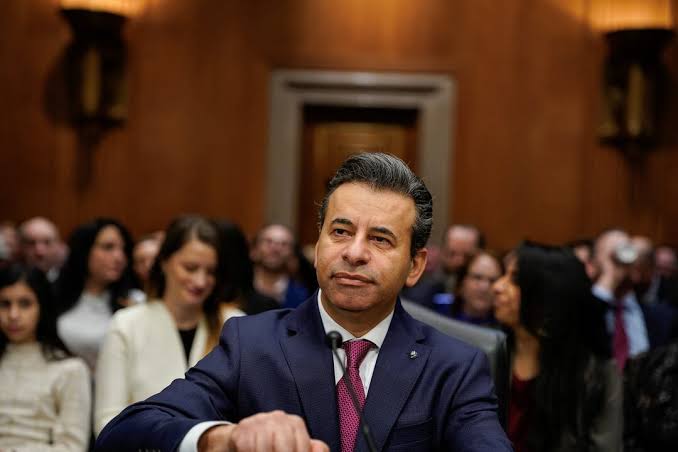
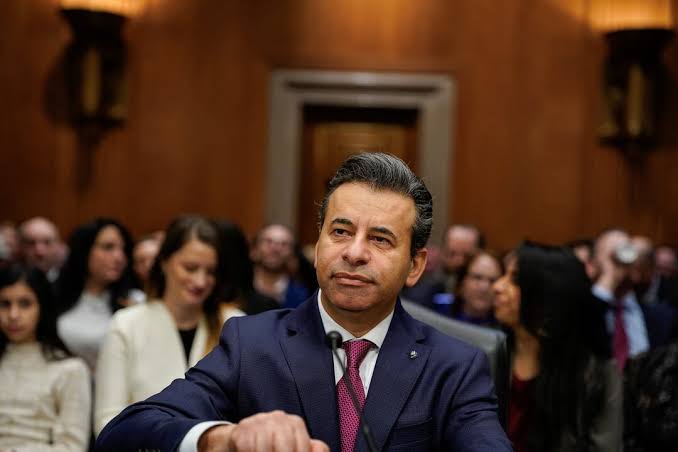
The current scrutiny surrounding President Donald Trump's FDA commissioner nominee, Heidi Overton, offers an unusually useful benchmark for comparing how the pharmaceutical industry reacts to potential changes in FDA leadership.
Overton, a physician and White House Domestic Policy Council deputy director, was nominated to replace Marty Makary, who resigned after roughly 13 months amid disputes with the administration and controversy surrounding several FDA policy decisions. Her nomination comes after a period of significant leadership instability at the agency.
The intensity of attention is notable because FDA commissioner nominations typically generate questions about drug approval standards, regulatory predictability, clinical-trial policy, and industry relationships. The current situation goes further: pharmaceutical and biotechnology stakeholders are evaluating not only Overton's qualifications but also her policy alignment, management experience, and potential impact on the agency's scientific credibility.
That makes the 2026 nomination a useful case study in regulatory-risk intelligence.

Why Industry Reaction Matters
The pharmaceutical industry's reaction to an FDA commissioner nominee can provide an early indication of how companies expect regulatory conditions to change.
Industry stakeholders typically focus on:
Drug approval standards
Review timelines
Clinical-trial requirements
Post-market safety
Agency independence
Regulatory predictability
Vaccine policy
Drug pricing
Pharmaceutical-industry relationships
A nominee viewed as predictable and technically experienced may receive relatively muted scrutiny.
A nominee perceived as likely to alter established regulatory practices can generate substantially more attention before taking office.
The 2026 Scrutiny Benchmark
Overton's nomination arrives under unusually complicated circumstances.
The FDA has experienced significant personnel losses and leadership instability during the Trump administration. Reuters reported that more than 3,000 FDA employees had left the agency over the preceding year, including senior division leaders.
That means the industry is evaluating the nominee against an agency that is already undergoing institutional change.
The core intelligence question is therefore not simply:
"Will Overton be confirmed?"
It is:
"Will her appointment increase or reduce regulatory uncertainty for drug developers?"
#1 — Heidi Overton: High-Scrutiny Environment
The current nomination is generating scrutiny around three primary areas.
1. Management Experience
Overton has significant policy experience but comparatively limited experience managing a large regulatory agency.
That distinction matters because the FDA oversees thousands of employees, multiple scientific centers, complex review systems, inspections, enforcement activities, and public-health responsibilities.
2. Policy Alignment
Overton has been closely involved with Trump administration health-policy initiatives, including controversial vaccine-policy proposals. Her alignment with the administration can be interpreted either as an advantage for implementing presidential priorities or as a potential source of concern for stakeholders seeking regulatory independence.
3. Agency Stability
The nomination follows Makary's departure and a period of leadership turnover.
Industry observers therefore have an unusually large amount of institutional uncertainty to price into the appointment.
Historical Benchmark #1 — Marty Makary
Makary provides the most relevant recent comparison because he was Trump's previous FDA commissioner.
His 2025 nomination was not without controversy, but the pharmaceutical investment community initially reacted relatively positively.
Following Trump's selection of Makary, one pharmaceutical analyst described the choice as likely to provide investors with a "reprieve" after concerns surrounding Robert F. Kennedy Jr.'s nomination to lead HHS.
Makary ultimately received Senate confirmation by 56–44.
The contrast is important.
Makary in 2024–25:
Industry attention centered heavily on what his regulatory philosophy would mean.
Overton in 2026:
Industry attention is occurring against an existing backdrop of FDA instability, staffing losses, policy disputes, and questions about institutional direction.
This makes the 2026 scrutiny structurally more intense.

Citric Acid Anhydrous (E330)
Historical Benchmark #2 — Robert Califf
Robert Califf represents a different type of nomination.
He had extensive clinical and academic experience and was already familiar with FDA operations when nominated.
His industry scrutiny centered heavily on pharmaceutical-industry relationships.
Critics questioned his connections to drug companies and prior industry consulting and board relationships. His ties became a major part of the confirmation debate.
This illustrates a traditional pattern:
Experienced technical nominee → scrutiny focused on conflicts and industry relationships.
The Overton situation is different because questions are more heavily concentrated on policy alignment, management experience, and institutional stability.
Historical Benchmark #3 — Scott Gottlieb
Scott Gottlieb's 2017 nomination provides another useful comparison.
Gottlieb arrived with substantial medical, policy, and healthcare experience and had already worked extensively around healthcare regulation.
His later FDA tenure demonstrated how a commissioner can simultaneously be viewed as:
Pro-innovation
Industry knowledgeable
Regulatory reform oriented
Aggressive on public-health issues
His subsequent role in venture capital and corporate boards also illustrates how FDA leadership can create long-term connections between regulators and the private healthcare sector.
The historical lesson is that industry reaction often depends less on whether a nominee is perceived as "pro-industry" or "anti-industry" and more on whether stakeholders can predict how the person will regulate.
Ranking the Reaction Patterns
A useful framework is to classify recent commissioner scrutiny into several categories.
Nominee | Primary Industry Concern | Reaction Pattern |
|---|---|---|
Heidi Overton | Policy alignment, management, agency stability | High uncertainty |
Marty Makary | Regulatory philosophy and drug-review direction | Moderate-to-high scrutiny |
Robert Califf | Industry relationships and conflicts | High conflict scrutiny |
Scott Gottlieb | Regulatory reform and industry orientation | Generally more predictable |
Stephen Hahn | Experience and regulatory independence | Moderate scrutiny |
The comparison is qualitative rather than a numerical score because industry reactions are not measured through a standardized historical index.
Why Predictability May Matter More Than Ideology
Drug companies can often adapt to stricter regulation if the rules are clear.
The greater commercial problem is regulatory unpredictability.
Uncertainty can affect:
Clinical-development timelines
Trial design
Regulatory strategy
Capital allocation
Product launch planning
Probability-adjusted valuations
Business-development decisions
A company can model a known regulatory requirement.
It is much harder to model a regulatory environment where standards may change rapidly.
The Makary Exit Changes the Benchmark
The Overton nomination cannot be evaluated independently of Makary's departure.
Makary's resignation in May 2026 created a leadership vacuum that generated mixed reactions in biotechnology markets. Reuters reported that some biotech stocks rose following his departure, reflecting relief over certain disputes, while analysts simultaneously warned that prolonged FDA uncertainty could delay approvals and undermine confidence.
That produces an unusual situation:
The industry is scrutinizing the new nominee while simultaneously assessing the consequences of the previous commissioner's departure.
This makes the 2026 nomination more consequential than a routine leadership transition.
Drug Approval Predictability Is the Key Commercial Variable
For pharmaceutical companies, the FDA commissioner influences the environment in which regulatory decisions are made, even though individual drug decisions remain dependent on scientific review and statutory requirements.
Industry intelligence teams should therefore watch:
Approval Standards
Does the administration favor faster approvals or more extensive evidence requirements?
Clinical Trials
Will trial requirements become more flexible?
Accelerated Approval
Could the administration expand or restrict reliance on surrogate endpoints?
Post-Market Requirements
Will confirmatory trials and safety monitoring become more demanding?
Agency Staffing
Can the FDA rebuild experienced scientific and regulatory teams?
Institutional Independence
How much authority will career scientific staff retain over technical decisions?
Why the Pharmaceutical Industry Is Watching Closely
The FDA regulates an enormous portion of the pharmaceutical industry's commercial pipeline.
A shift in regulatory policy can affect:
Drug-development economics
Clinical trial costs
Time to market
Probability of approval
Label expansion
Post-market obligations
Investor expectations
Consequently, industry scrutiny of a commissioner nominee is rational even before confirmation.
The nominee effectively represents a potential change in the regulatory operating environment.
Competitive Intelligence Framework
Pharmaceutical companies can track the nomination through several indicators.
1. Senate Confirmation
The confirmation vote provides the first formal measure of political support.
2. Industry Statements
Monitor reactions from major pharmaceutical trade associations and biotechnology groups.
3. Congressional Hearings
Questions from senators can reveal which policy issues are likely to dominate the new commissioner's agenda.
4. FDA Staffing
Employee retention and senior leadership appointments will indicate whether institutional stability is improving.
5. Drug-Review Policy
Track changes in review timelines, evidentiary standards, and clinical-development guidance.
6. Market Reaction
Biotech and pharmaceutical equity movements can provide an early, though imperfect, measure of investor expectations.
Historical Pattern: What Usually Triggers Industry Concern?
Across recent FDA commissioner nominations, scrutiny tends to cluster around four themes:
Conflicts of interest
Scientific credibility
Regulatory philosophy
Political independence
The relative weight of each theme changes by nominee.
Califf's nomination highlighted industry ties.
Makary's nomination focused more on regulatory philosophy.
Overton's nomination combines policy alignment and management concerns with an existing institutional-stability problem, making the current environment unusually complex.
What Would Reduce Industry Scrutiny?
Several developments could quickly lower uncertainty.
Clear statements supporting evidence-based drug review
A strong FDA management team
Retention of experienced scientific leadership
Predictable clinical-trial standards
Transparent approval processes
Consistent communication with industry
Greater clarity around vaccine and public-health policy
Conversely, abrupt policy changes or additional senior departures could increase concern.
Implications for Investors
For biotech investors, the nomination should be evaluated less as a simple political event and more as a potential change in regulatory discount rates.
Greater uncertainty can increase the perceived risk of:
Clinical programs
Approval timelines
Commercial launches
Development costs
Greater predictability can have the opposite effect.
This is particularly important for small biotechnology companies whose valuations depend heavily on one or two FDA milestones.
Implications for Pharmaceutical Suppliers
Changes in FDA policy can also indirectly affect suppliers of:
Pharmaceutical intermediates
Active pharmaceutical ingredients
Excipients
Solvents
Laboratory chemicals
Clinical-trial materials
If regulatory uncertainty delays development programs, demand for certain inputs may shift.
If accelerated development increases clinical activity, specialized supply-chain demand could rise.
Looking Ahead
The current scrutiny of Heidi Overton should be understood in the context of an FDA already experiencing substantial institutional disruption.
The historical comparison suggests that commissioner nominations become particularly contentious when stakeholders cannot confidently predict the nominee's regulatory approach.
That is the central intelligence distinction between ordinary nomination scrutiny and the current situation.
Califf faced significant questions about industry relationships. Makary generated debate around his regulatory philosophy. Overton enters an environment where policy alignment, management capability, scientific credibility, and agency stability are all being evaluated simultaneously.
For pharmaceutical companies, the most important benchmark will therefore not be the confirmation vote alone.
It will be whether the new FDA leadership can restore predictability, scientific credibility, and operational stability to an agency whose decisions directly influence billions of dollars in drug-development investment.
Key Takeaways
Heidi Overton's FDA nomination is attracting scrutiny amid an unusually unstable period for the agency.
The current debate combines questions about policy alignment, management experience, scientific credibility, and FDA stability.
Marty Makary's 2025 nomination initially received relatively constructive reactions from parts of the pharmaceutical investment community.
Robert Califf's nominations generated significant scrutiny over pharmaceutical-industry relationships and potential conflicts.
Historical comparisons suggest that regulatory predictability may matter more to drug developers than whether a commissioner is simply perceived as pro- or anti-industry.
FDA staffing, drug-review standards, clinical-trial policy, and communication with industry will be important signals after confirmation.
For biotech investors, regulatory uncertainty can materially affect milestone-driven valuations and development timelines.
Found this useful?