Ranking FDA Commissioner Nominees: Overton's White House Background Against Past Picks
President Donald Trump's nomination of Dr. Heidi Overton to lead the U.S. Food and Drug Administration places a White House policy official at the center of one of the country's most important health regulators. Overton currently serves as deputy director of the White House Domestic Policy Council and previously worked as chief policy officer at the America First Policy Institute.
Her nomination stands out because her recent career has been centered more on health policy and executive-branch policymaking than on running a large regulatory organization. At the same time, Overton is a physician with a doctorate in clinical investigation, giving her a scientific and medical background alongside her policy experience.
For pharmaceutical companies, investors and regulatory professionals, that combination makes her nomination an important signal about the direction of FDA leadership.
Why Overton's Background Matters
The FDA commissioner oversees an agency responsible for regulating:
Prescription drugs
Biologics
Medical devices
Vaccines
Food safety
Tobacco products
Other health-related products
The position therefore requires more than scientific knowledge.
It also involves:
Regulatory judgment
Agency management
Political independence
Industry engagement
Public-health decision making
Overton's nomination places particular attention on how her policy background translates into managing this complex regulatory institution.
A Policy-First Profile
Overton has spent significant time working within the Trump administration and previously at the America First Policy Institute.
Her current White House position has involved health-policy issues and advising senior administration officials.
That makes her profile different from a conventional FDA leadership candidate whose career may be more directly rooted in regulatory administration, clinical medicine or pharmaceutical development.
But Overton Is Also a Physician
Calling Overton purely a political appointee would overlook an important part of her background.
She attended medical school at the University of New Mexico and holds a doctorate in clinical investigation from Johns Hopkins University. She is also board-certified in public health and general preventive medicine.
The more accurate description is therefore:
Medical training + Clinical research + Public-health background + White House policy experience
The question is whether that combination is sufficient for leading the FDA at a particularly difficult moment.
Management Experience Is the Main Question
One of the clearest concerns raised about the nomination involves management experience.
Senator Bill Cassidy, a physician and Republican member of the Senate, questioned whether Overton's background prepares her to lead an agency dealing with staffing and morale problems.
That makes management capability an important benchmark during the confirmation process.
The FDA Is Already Under Pressure
Overton would inherit an agency dealing with substantial disruption.
The FDA has experienced major staff departures and internal uncertainty during the Trump administration. Reuters reported that more than 3,000 employees had left amid broader changes at the Department of Health and Human Services.
A new commissioner therefore faces an immediate organizational challenge.
The task is not simply setting policy.
It is also rebuilding confidence and operational stability.
The Comparison With Recent Nominees
Recent FDA commissioner selections have generally attracted attention around combinations of:
Medical expertise
Scientific credentials
Regulatory experience
Academic leadership
Healthcare management
Overton's profile adds a stronger White House policy dimension to that equation.
That makes her nomination notable even before considering her policy positions.
Why the Pharmaceutical Industry Is Watching
FDA leadership directly affects pharmaceutical companies through decisions involving:
Drug approvals
Clinical-trial requirements
Manufacturing standards
Post-market safety
Generic drugs
Biologics
Digital health
Regulatory timelines
A change in leadership can therefore influence how companies assess regulatory risk and development strategy.
Drug Approval Policy Will Be Important
The Trump administration has emphasized faster drug development and regulatory reform.
Trump has also highlighted Overton's role in advancing his health agenda, including efforts involving drug prices and pharmaceutical policy.
For drug developers, the key question will be whether a more policy-oriented FDA leadership produces faster decisions without weakening regulatory confidence.
Vaccine Policy Adds Another Dimension
Overton's involvement in recent White House vaccine policy has already attracted scrutiny.
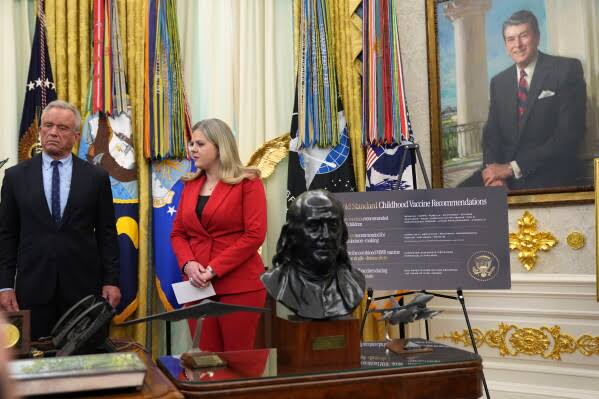
She appeared alongside Trump during the signing of an executive order concerning childhood vaccine recommendations.
That makes vaccine regulation likely to become an important subject during Senate confirmation hearings.
The Industry Is Watching Scientific Independence
For pharmaceutical companies, FDA credibility depends partly on predictable, evidence-based regulatory decision-making.
The central question surrounding Overton's nomination is therefore not simply whether she supports the administration's agenda.
It is whether she can maintain confidence in the FDA's scientific and regulatory processes while implementing that agenda.
A Different Type of FDA Leadership
Overton's nomination could ultimately represent a broader change in how the administration views FDA leadership.
Rather than prioritizing a career regulator or traditional agency administrator, the administration has selected someone with:
Direct White House access
Policy experience
Medical training
Clinical research credentials
This could allow closer alignment between the FDA and broader White House health priorities.
What Investors Should Watch
Investors should monitor several areas during the confirmation process:
Drug approval timelines
Clinical-trial reforms
FDA staffing
Biotech regulation
Vaccine policy
Pharmaceutical pricing initiatives
Generic-drug policy
Industry engagement
These areas could provide early indications of the FDA's direction under new leadership.
What Pharmaceutical Companies Should Watch
Drug developers should pay particular attention to whether the new administration changes expectations around:
Evidence requirements
Approval speed
Clinical trial design
Post-market monitoring
Manufacturing regulation
Drug pricing
The implications could differ significantly across innovative drugs, generics, biologics and medical devices.
The Confirmation Process Will Be the Next Test
Overton must now secure Senate confirmation.
Her nomination has already generated questions from both sides of the political spectrum, including concerns about management experience and her positions on vaccines and other health policies.
The confirmation hearings will therefore provide an important opportunity to assess how she would approach the FDA's regulatory responsibilities.
Looking Ahead
Heidi Overton's nomination represents a notable shift in the profile of an FDA commissioner candidate.
Her background is not purely political and not purely scientific.
It combines medical training, clinical research and senior White House policy experience, while leaving questions about large-scale agency management and regulatory leadership.
That combination could become either a strength or a vulnerability during confirmation.
For the pharmaceutical industry, the bigger issue is what her nomination signals about the FDA itself.
If confirmed, Overton would inherit an agency facing staffing challenges, political pressure and major questions about the future of drug regulation.
The key benchmark will therefore be whether her White House policy background translates into effective, credible and predictable FDA leadership.
Key Takeaways
President Trump nominated Dr. Heidi Overton to become the next FDA commissioner in August 2026.
Overton currently serves as deputy director of the White House Domestic Policy Council.
She previously served as chief policy officer at the America First Policy Institute.
Her background combines medicine, clinical investigation, public health and White House policy.
Her nomination places greater emphasis on executive-branch policy experience than some traditional FDA leadership profiles.
Management experience is one of the major questions surrounding her nomination.
The FDA is already dealing with significant staffing and morale challenges.
Vaccine policy and scientific independence are likely to receive significant attention during confirmation.
Pharmaceutical companies will closely watch drug approvals, clinical-trial reforms and regulatory policy.
Overton's nomination could signal a closer alignment between FDA leadership and White House health-policy priorities.

Isopropyl Alcohol (IPA) - Taiwan
Found this useful?