Ranking Hikal's Steady Growth Against Broader Indian Specialty Chemical Sector Trends

Hikal's Q1 FY27 performance provides an interesting data point for evaluating the recovery underway across India's specialty chemicals and pharmaceutical intermediates sector.
The company reported revenue of approximately ₹403 crore in Q1 FY27, representing growth of around 6.2% year over year. The result comes after a difficult period for Hikal, during which weaker demand, inventory corrections and pricing pressure affected several of its end markets.
The significance of the quarter is therefore less about headline growth alone and more about whether Hikal is establishing a more stable operating base as it enters FY27.
Why Hikal's Performance Matters
Hikal operates across pharmaceutical and agricultural chemistry markets, with capabilities spanning:
Pharmaceutical intermediates
CDMO services
Crop-protection chemistry
Specialty chemicals
Animal health
Research and development
This diversified exposure makes the company useful for tracking several overlapping trends in India's specialty chemical industry.
Q1 Revenue Provides a Recovery Benchmark
Revenue of approximately ₹403 crore gives investors a useful starting point for measuring Hikal's FY27 performance.
The increase of roughly 6.2% year over year suggests that the company is moving toward stabilization after a prolonged period of difficult market conditions.
The pace is not exceptionally high, but steady growth can be meaningful when it follows a period of inventory correction and weaker customer ordering.
The Recovery Is More Important Than the Absolute Growth Rate
Hikal's FY26 performance reflected the challenges facing several specialty chemical and pharmaceutical-intermediate businesses.
The company reported FY26 revenue of approximately ₹1,713 crore, while management highlighted improving demand and normalization across key businesses.
That makes FY27 an important transition year.
The question is whether improving customer demand can translate into consistent revenue growth and stronger margins.
Pharmaceutical Demand Is Improving
Hikal's pharmaceutical business has been showing signs of recovery.
Management previously highlighted normalization in customer ordering patterns and an expanding global outsourcing pipeline, particularly across its CDMO activities.
This is important because pharmaceutical outsourcing can provide longer-term revenue visibility when projects move from development into commercial manufacturing.
CDMO Provides Longer-Term Potential
Contract development and manufacturing remains one of the more attractive opportunities for Indian specialty chemical companies.
Global pharmaceutical companies increasingly outsource parts of:
Process development
Intermediate manufacturing
API production
Scale-up
Specialized chemistry
Indian suppliers can compete through technical expertise, manufacturing economics and established regulatory capabilities.
Hikal's investments in specialized infrastructure are intended to strengthen its position in these higher-value areas.
High-Potency Chemistry Creates Differentiation
Hikal has invested in high-potency laboratory capabilities at its Pune R&D facility.
These investments can support more complex pharmaceutical programs and help the company participate in higher-entry-barrier chemistry.
Such capabilities can potentially improve customer stickiness compared with businesses competing primarily on manufacturing cost.
Crop Protection Is Also Recovering
Crop protection has been another important part of Hikal's recovery story.
Management indicated that customer demand and volumes were improving while the industry gradually moved through its inventory correction.
However, pricing remains a concern.
This distinction matters because higher volumes do not automatically translate into proportional revenue or margin growth when pricing remains under pressure.
Inventory Normalization Is a Sector-Wide Theme
The broader specialty chemical industry has spent much of the recent cycle working through excess inventory.
Customers reduced purchases as they sought to normalize stocks accumulated during the earlier supply-chain disruption.
As inventories become healthier, ordering patterns can gradually become more predictable.
That creates a potentially better operating environment for manufacturers such as Hikal.
Indian Specialty Chemicals Are Recovering at Different Speeds
The Indian specialty chemical sector is not moving as one group.
Some businesses remain affected by:
Chinese overcapacity
Weak global industrial demand
Commodity-price pressure
Customer destocking
Geopolitical uncertainty
Others are benefiting from:
Supply-chain diversification
China-plus-one strategies
Pharmaceutical outsourcing
New product commercialization
Domestic manufacturing investment
Hikal's performance therefore needs to be viewed within this mixed environment.
Larger Indian Chemical Producers Offer a Useful Comparison
Recent Q1 FY27 results show that some Indian chemical businesses are already delivering much stronger growth.
For example, SRF reported Q1 FY27 consolidated revenue growth of 32%, while its Chemicals Business revenue increased 26% year over year.
Himadri Speciality Chemical also reported Q1 FY27 revenue growth of 28%, alongside a 33% increase in EBITDA.
Against these examples, Hikal's roughly 6.2% revenue growth appears more measured.
That does not necessarily make the result weak—it highlights the different recovery stages across Indian chemical companies.
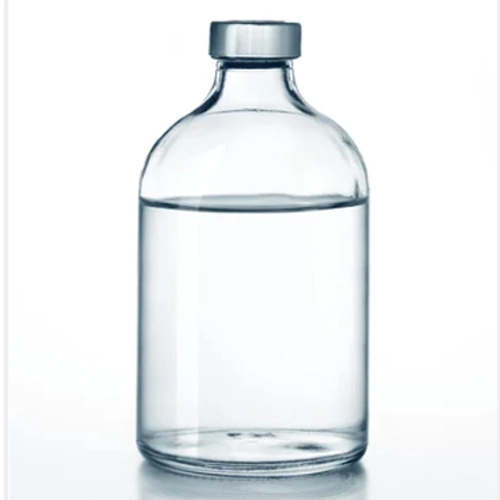
Acrylic Acid (Glacial) - China
Looking Ahead
Hikal enters FY27 with a more favorable foundation than it had during the most difficult phase of the recent downturn.
Its Q1 revenue of approximately ₹403 crore and roughly 6.2% year-over-year growth indicate that the business is moving toward stabilization.
At the same time, the broader Indian specialty chemical sector is showing a wide range of outcomes.
SRF and Himadri, for example, delivered substantially faster Q1 FY27 revenue growth, highlighting the uneven pace of recovery across the industry.
For Hikal, the next phase will depend on whether pharmaceutical demand continues improving, CDMO programs advance, crop-protection volumes normalize and new specialty products begin contributing meaningfully.
If those factors develop as planned, today's moderate revenue growth could become the foundation for a stronger FY27 and beyond.
Key Takeaways
Hikal reported approximately ₹403 crore of Q1 FY27 revenue.
Revenue increased approximately 6.2% year over year.
The result indicates gradual stabilization after a difficult industry cycle.
Pharmaceutical demand and customer ordering patterns are improving.
Hikal's CDMO pipeline provides an important longer-term growth opportunity.
Crop protection is recovering in volume terms, although pricing remains challenging.
Specialty chemicals and personal care are strategic diversification priorities.
High-potency laboratory and pilot-plant investments are now operational.
Procurement, yield improvement, backward integration and solvent recovery can support margins.
Indian chemical companies are recovering at different speeds.
SRF and Himadri's stronger Q1 growth demonstrates the breadth of outcomes across the sector.
China-plus-one sourcing remains a structural opportunity for Indian specialty chemical manufacturers.
Regulatory compliance and quality systems can increasingly become competitive advantages.
Product mix and capacity utilization will be important indicators of the next stage of Hikal's recovery.
Found this useful?