
Ranking Indoor Air Quality's Impact on Atmospheric Water Generation Purity
Atmospheric water generation is often presented as a way to produce clean water simply by extracting moisture from the air. But recent research shows that the quality of that water depends heavily on what else is present in the air being processed. A 2026 review of atmospheric water generation emphasizes that particulate matter, volatile organic compounds and other airborne pollutants can transfer into harvested water, making ambient air quality an important part of the water-quality equation.
Indoor Environments Add Their Own Contamination Risks
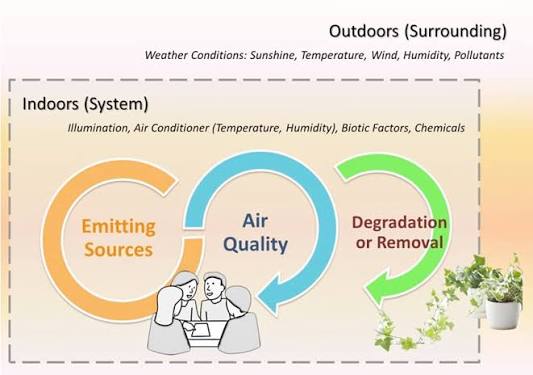
Indoor atmospheric water generation introduces a different set of variables from outdoor systems. Human activity, cleaning products, cooking emissions, building materials and ventilation conditions can all influence the chemical composition of indoor air. Because an AWG continuously processes large volumes of air, contaminants that are present at relatively low concentrations can potentially become relevant when they partition into condensed water. Research on VOC transfer shows that chemical properties such as polarity, hydrogen bonding and Henry's law constant influence which compounds are most likely to move from air into harvested water.
Condensation Does Not Automatically Mean Purity
The central misconception is that atmospheric water should automatically be clean because it originates as water vapor. In reality, condensation can facilitate the transfer of certain airborne compounds into water droplets. A 2026 system-level review notes that atmospheric water can contain particulate matter, VOCs and trace pollutants depending on the surrounding environment and system configuration. It also highlights that microbial contamination can emerge from condensation surfaces and storage components when sanitation is inadequate.
The 2026 Diesel-Exhaust Study Raises the Stakes
One of the strongest recent demonstrations of this relationship came from a 2026 stress test of condensation-based AWG systems under diesel exhaust. Researchers analyzed 73 water-quality parameters and detected pollutants including small PAHs, benzene and acrylamide in untreated condensate. The polluted environment also produced substantial acidification, which appeared to contribute to leaching of metals such as copper and aluminum from the AWG itself. Several water-quality indicators correlated with air-quality indicators, including PAHs with total volatile organic compounds and nitrate with PM2.5.
Why Indoor Air Research Deserves a High Ranking
The indoor-air question is particularly important because AWGs may eventually be deployed in homes, offices, hospitals and other enclosed environments where pollutant profiles differ substantially from outdoor settings. The relevant benchmark therefore should not simply be whether an AWG produces water with low TDS. It should consider VOC transfer, particulate contamination, metals, microbial growth, filtration performance and the chemical composition of the surrounding air. The 2026 literature increasingly treats water quality as a core performance metric alongside energy consumption and water yield.
The Intelligence Takeaway
Indoor air quality's effect on AWG purity deserves to rank among the more important atmospheric-water research themes of 2026 because it challenges the assumption that water harvested from air is inherently clean. The emerging evidence suggests that air monitoring and water monitoring should be connected: sensors measuring pollutants in the intake air could potentially help predict when harvested water requires additional treatment. For AWG manufacturers, regulators and commercial users, that could make indoor air-quality monitoring an essential part of future water-safety protocols.
Biotin
Found this useful?