Ranking Methanex's Record Quarter Against Historical Methanol Price Cycles
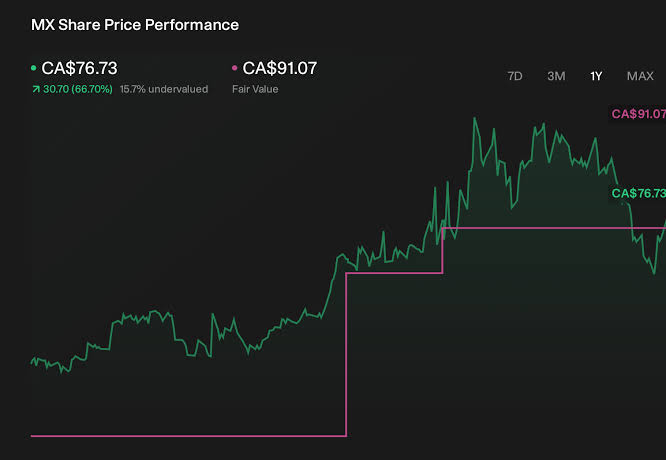
Methanex's record adjusted Q2 2026 EBITDA provides one of the clearest earnings signals of how sharply methanol markets responded to the price disruption associated with the Strait of Hormuz.
The quarter is notable not only because of the record result, but because it can be compared with previous methanol price-cycle peaks to determine whether the latest performance represents a new structural earnings level or another unusually strong point in a cyclical market.
For chemical and ingredient procurement teams, this distinction matters because methanol pricing can influence the economics of multiple downstream chemicals and intermediates.
Why Methanex's Quarter Stands Out
Methanex is one of the world's largest methanol producers and marketers.
Its earnings are highly sensitive to the relationship between:
Methanol selling prices
Production costs
Natural-gas costs
Production volumes
Plant utilization
Regional supply and demand
Freight and logistics conditions
When methanol prices rise sharply while production costs do not increase proportionately, producer margins can expand rapidly.
That dynamic helps explain why extreme price events can generate unusually strong quarterly EBITDA.
Upstream commodity volatility can also influence the broader economics of Propylene Glycol, Glycerin, Citric Acid, Sorbitol, Sodium Benzoate, and Xanthan Gum, although the degree of direct methanol exposure varies by product and manufacturing route.
Citric Acid Monohydrate (E330)
Hormuz-Linked Disruption Changed the Price Environment
The 2026 quarter was influenced by disruption associated with the Strait of Hormuz, one of the world's most strategically important energy and chemical transportation corridors.
Any disruption affecting the region can influence:
Natural-gas availability
Energy costs
Methanol production
Shipping
Insurance
Freight
Regional chemical inventories
The result can be a rapid repricing of methanol as buyers seek to secure physical supply.
For producers such as Methanex, this can create a significant short-term earnings benefit.
Record EBITDA Does Not Automatically Mean a New Normal
This is the key intelligence point.
A record quarter can result from either:
Structural Improvement
A permanent improvement in:
Capacity
Cost position
Market share
Production efficiency
Contract structure
or:
Cyclical Price Expansion
A temporary improvement caused by:
Supply disruption
Geopolitical events
Inventory shortages
Freight constraints
Unusually high spot prices
Methanex's Q2 performance should therefore be evaluated against historical methanol price cycles before being treated as a sustainable earnings benchmark.
Historical Methanol Cycles Provide the Benchmark
Methanol has historically experienced significant price volatility.
Price cycles have been influenced by:
Natural-gas prices
Chinese production
Global capacity additions
Energy markets
Shipping disruptions
Industrial demand
Formaldehyde demand
Fuel applications
Geopolitical events
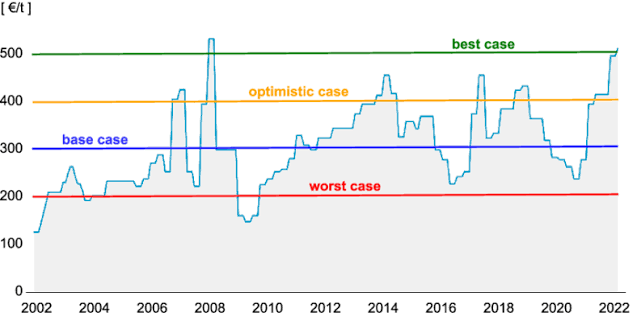
Previous methanol price peaks provide a useful reference point for determining whether the 2026 spike is unusually extreme or simply another high point within the normal range of the market.
The Producer-Margin Effect
Methanex's earnings can respond disproportionately to changes in methanol prices.
Consider the basic relationship:
Methanol selling price − production cost = producer margin
If the selling price increases substantially while production costs rise more slowly, the margin can expand rapidly.
This operating leverage means that a relatively short-lived price spike can produce an outsized quarterly earnings result.
That is why EBITDA should be interpreted alongside realized methanol prices.
Why Methanol Matters Beyond Methanex
Methanol is not simply an energy or commodity product.
It is a major chemical building block used in the production of:
Formaldehyde
Acetic acid
Methylamines
Methyl methacrylate
Solvents
Fuels
Olefins
Other chemical intermediates
Changes in methanol pricing can therefore move through downstream chemical supply chains.
A sharp increase can eventually affect production economics for multiple intermediate and specialty chemical categories.
Implications for Food Ingredients
The connection to food ingredients is indirect but relevant.
Methanol and methanol-derived chemicals can sit upstream of broader chemical manufacturing chains that supply materials used in:
Processing equipment
Packaging
Coatings
Adhesives
Cleaning products
Industrial formulations
The broader lesson for food ingredient procurement is that upstream commodity shocks can eventually influence the cost structure of seemingly unrelated supply chains.
Competitive Intelligence
Methanex's record quarter provides several useful indicators for chemical market intelligence.
1. Price Cycle
Compare current methanol prices with historical peaks.
2. Earnings Sensitivity
Measure how strongly EBITDA responds to price changes.
3. Supply Disruption
Track how quickly geopolitical events affect physical availability.
4. Production Costs
Monitor natural-gas and other feedstock costs alongside methanol prices.
5. Inventory
Watch whether buyers are rebuilding inventories after a disruption.
6. Capacity
Track new methanol capacity that could eventually pressure prices.
Procurement Considerations
Buyers should be careful about using a record producer quarter as evidence that commodity prices will remain elevated.
Instead, procurement teams should monitor:
Methanol spot prices
Contract pricing
Producer margins
Natural-gas costs
Global operating rates
Chinese production
New capacity
Shipping conditions
Regional inventories
If geopolitical disruptions ease, some of the price premium can unwind quickly.
Products to Monitor
The methanol price cycle is particularly relevant to chemical products that depend on methanol or methanol-derived feedstocks.
For food and specialty ingredient procurement, the broader upstream-cost framework can be applied to:
Glycerin
Propylene Glycol
Citric Acid
Sorbitol
Sodium Benzoate
Xanthan Gum
The degree of direct methanol exposure differs significantly by product, so buyers should distinguish between genuine feedstock exposure and broader energy or logistics effects.
Looking Ahead
Methanex's record adjusted Q2 2026 EBITDA is an important benchmark for the current methanol cycle, but the most useful question is whether the performance can be sustained after the Hormuz-related disruption fades.
Comparing the quarter with previous methanol price peaks can help distinguish between:
A temporary geopolitical windfall
A broader supply shortage
A structural change in methanol economics
A normal cyclical price spike
For procurement teams, this distinction is critical.
A temporary price shock calls for inventory and timing strategies, while a structural supply change may require longer-term contracting or supplier diversification.
Key Takeaways
Methanex delivered a record adjusted Q2 2026 EBITDA.
Hormuz-linked disruption contributed to an unusually strong methanol pricing environment.
Historical methanol price cycles provide an important benchmark for interpreting the result.
Record EBITDA should not automatically be treated as a sustainable earnings run-rate.
Methanol pricing affects a wide range of downstream chemical intermediates.
Buyers should monitor methanol prices alongside feedstock, capacity, inventories, and logistics.
The key intelligence question is whether the 2026 spike represents a temporary geopolitical event or a deeper change in methanol market fundamentals.
Found this useful?