Ranking Recyclable Polyurethane Innovation's Commercial Potential Against Prior Green Chemistry Winners
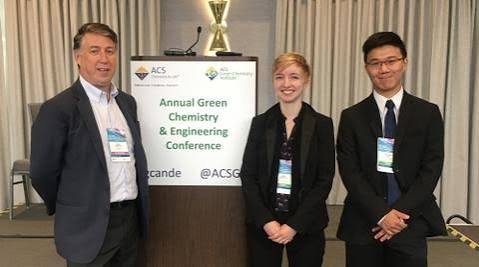
The 2026 ACS Green Chemistry Challenge recognition for a solid-state recycling platform developed by William Dichtel of Northwestern University and Alaaeddin Alsbaiee of BASF highlights a particularly difficult waste problem: cross-linked polyurethane foams and elastomers are traditionally difficult to recycle because their thermoset structures cannot simply be remelted and reshaped. The new platform is designed to upcycle these materials rather than sending them to landfill or incineration. (cen.acs.org)
That gives the technology an unusually large potential addressable market, but commercial success will ultimately depend on economics, collection infrastructure and whether recycled material can meet the performance requirements of new polyurethane products.
Why Polyurethane Recycling Is Commercially Attractive
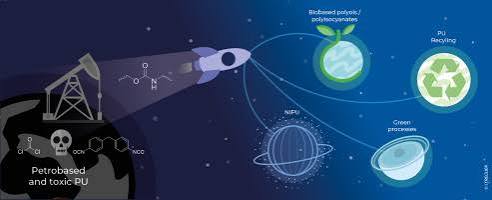
Polyurethane is used across construction, furniture, automotive components, insulation, footwear, coatings and numerous industrial applications. The inability to efficiently recycle many thermoset polyurethane products has historically limited circularity and left manufacturers dependent on virgin feedstocks.
A technology capable of recovering useful material from difficult polyurethane waste therefore addresses both an environmental problem and a potential feedstock-cost problem. The opportunity becomes particularly significant as demand for polyurethane materials continues to grow and companies face increasing pressure to incorporate recycled content.
The 2026 Technology Has a Strong Commercial Advantage
The Dichtel-BASF platform is notable because it targets solid-state recycling, potentially allowing polyurethane waste to be processed without requiring the complete redesign of the original material into a fundamentally different polymer. That could make adoption easier if recycled outputs can retain commercially useful properties.
The partnership between an academic research group and BASF also provides an important commercialization advantage. BASF already operates at global scale across polyurethane raw materials and applications, meaning the technology has a potential route toward industrial validation that purely academic innovations may lack. (cen.acs.org)
Previous Polyurethane Winners Show Both Opportunity and Risk
The Green Chemistry Challenge has recognized polyurethane-related innovations before. In 2007, Cargill received an award for BioH™ biobased polyols, demonstrating that renewable feedstocks could replace petroleum-derived inputs in polyurethane production. Earlier, Bayer's 2000 award recognized waterborne polyurethane coatings that reduced VOCs and hazardous air pollutants. (epa.gov)
The 2021 award to Clemson University's Srikanth Pilla provides an even closer comparison. His lignin-based nonisocyanate polyurethane foam was specifically designed for chemical recycling while also replacing conventional isocyanate chemistry. (epa.gov)
These examples demonstrate an important point: winning a green chemistry award establishes technological significance, not guaranteed mass-market adoption.
The Earlier Recycling Example Is Particularly Relevant
InfiChem Polymers' InfiGreen polyol technology, recognized in the Green Chemistry Challenge program, converted polyurethane scrap into polyols containing more than 60% recycled content. The technology demonstrated pilot-scale processing and was designed to reduce waste and the carbon footprint of polyurethane feedstocks. (epa.gov)
That makes InfiGreen an important benchmark for the 2026 platform. Both approaches address the same fundamental problem—creating useful feedstocks from polyurethane waste—but their eventual commercial significance depends on whether they can move beyond technically successful demonstrations into reliable, cost-effective industrial supply chains.
Commercial Adoption Should Be Ranked on Five Metrics
The strongest comparison with previous Green Chemistry Challenge winners should therefore measure:
Scale potential — how much polyurethane waste the technology can realistically process.
Cost competitiveness — whether recycled material can compete with virgin polyurethane feedstocks.
Product quality — whether recovered material performs sufficiently well for demanding applications.
Infrastructure compatibility — whether existing manufacturing and waste-management systems can adopt the process without major capital investment.
Market pull — whether regulations, recycled-content requirements and customer sustainability commitments create enough demand to justify adoption.
This framework is more useful than simply counting patents or publications because commercial green chemistry ultimately succeeds when customers are willing to buy the resulting material.
The Broader Green Chemistry Benchmark
The EPA notes that the Green Chemistry Challenge's winning technologies have collectively produced substantial environmental benefits. Through 2022, the 133 technologies recognized had reported annual reductions of hundreds of millions of pounds of hazardous chemicals and billions of gallons of water use, alongside billions of pounds of avoided CO₂-equivalent emissions. (epa.gov)
The 2026 polyurethane platform therefore enters a program with a substantial history of technologies progressing from chemistry innovation toward measurable industrial impact. Its eventual ranking should depend on whether it can achieve the same transition from technical breakthrough to widespread commercial deployment.
The Intelligence Takeaway
The recyclable polyurethane technology recognized in 2026 has the ingredients of a potentially high-impact green chemistry innovation: a large waste stream, a difficult-to-recycle material, an established industrial partner and growing demand for circular feedstocks. But its commercial potential should be judged against the real-world trajectories of earlier award winners.
The decisive question is no longer whether polyurethane can be recycled. It is whether it can be recycled economically, repeatedly and at industrial scale while producing material manufacturers actually want to buy.
Polyvinyl Alcohol (24-88) - China
Found this useful?