
Ranking the Thyroid Eye Disease Drug Race: Tepezza, Lumvoa and Now Khartis
The thyroid eye disease (TED) treatment market is entering a more competitive phase in 2026.
For years, Amgen's Tepezza (teprotumumab) was the only FDA-approved medicine specifically indicated for thyroid eye disease. That changed in June 2026 when the FDA approved Viridian Therapeutics' Lumvoa (veligrotug-vvze), creating a direct commercial competitor in the TED market.
Now, Khartis Therapeutics has emerged from stealth with an oral therapeutic approach targeting TED. Its entry adds another development-stage competitor and potentially introduces a different treatment proposition from the established intravenous therapies.
The result is a more interesting drug-development race: an established blockbuster, a newly approved competitor with broad disease-stage labeling, and an emerging oral approach that could compete primarily on convenience and treatment burden.
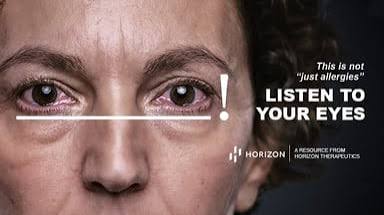
The Three-Player Landscape
Company | Product | Status in 2026 | Strategic Position |
|---|---|---|---|
Amgen | Tepezza | Approved | Established market leader |
Viridian Therapeutics | Lumvoa | FDA approved June 2026 | New commercial competitor |
Khartis Therapeutics | Khartis program | Early development | Oral challenger |
The comparison is important because these programs are not at equivalent stages.
Tepezza and Lumvoa are commercial products, while Khartis remains a development-stage program.
That makes Khartis's eventual competitive position much more uncertain.
1. Tepezza: The Established Benchmark
Tepezza established the modern targeted-treatment market for TED after its FDA approval in January 2020.
Its position provides Amgen with several advantages:
Established physician familiarity
Commercial infrastructure
Real-world treatment experience
Patient awareness
Clinical evidence
Existing reimbursement experience
The product also established an important biological precedent: targeting the IGF-1 receptor can improve important manifestations of thyroid eye disease.
That makes Tepezza the benchmark against which subsequent TED therapies are likely to be evaluated.

Refined Glycerine 99.7% Min BP
2. Lumvoa: The First Major Commercial Challenger
Viridian's Lumvoa changes the competitive structure of the market.
The FDA approved Lumvoa on June 26, 2026, making it the second major approved targeted therapy for TED after Tepezza.
Its most important differentiation is its labeling.
Lumvoa is approved for TED with data covering both active and chronic disease, potentially broadening its addressable patient population.
Viridian also reported rapid improvements in proptosis and diplopia in its pivotal studies.
That gives Lumvoa an immediate commercial opportunity: it can challenge Tepezza without requiring physicians to adopt an entirely new biological treatment concept.
3. Khartis: The Oral Challenger
Khartis enters the race from a very different position.
The company emerged from stealth in August 2026, raising approximately $95 million and positioning an oral therapy as its initial focus in thyroid eye disease.
The potential strategic advantage is straightforward:
oral administration could offer a fundamentally different patient experience from intravenous therapy.
That could matter because treatment convenience can influence:
Patient acceptance
Treatment-site requirements
Infusion burden
Physician workflow
Healthcare-resource utilization
Potential treatment adherence
However, Khartis remains substantially earlier in development. A first-in-human trial was planned for the second half of 2026, meaning clinical efficacy and safety have yet to be established publicly at the level of the approved therapies.
Why TED Has Become a Competitive Niche
The market is particularly interesting because TED is a relatively specialized autoimmune condition.
Historically, treatment options included approaches such as:
Corticosteroids
Radiotherapy
Surgery
Supportive care
Targeted biologic treatment changed that landscape.
The emergence of Lumvoa means competition is now developing around an established therapeutic mechanism rather than simply around whether targeted treatment works.
Khartis potentially takes the competition one step further by asking whether the same disease can be addressed through a more convenient oral approach.
The Competitive Ranking
#1 — Tepezza: Commercial Scale
Tepezza retains the strongest incumbent position because of its years of market experience, established physician base, and first-mover advantage.
Its biggest challenge is that it is no longer competing in a one-product market.
#2 — Lumvoa: Immediate Competitive Threat
Lumvoa is the most important near-term challenger because it is already FDA approved and commercially available.
Its active-and-chronic TED labeling gives Viridian a potentially meaningful differentiation strategy.
#3 — Khartis: Highest Development Uncertainty, Potential Convenience Upside
Khartis is the most speculative entrant.
Its oral approach could become highly differentiated if clinical trials demonstrate strong efficacy and safety.
But it still needs to clear the most difficult stages of drug development.
What Could Change the Ranking?
The current ranking is based heavily on commercial maturity.
Future rankings will depend on several factors.
Efficacy
Does Khartis produce clinically meaningful reductions in proptosis and diplopia?
Safety
Can an oral therapy provide an attractive safety profile relative to IV biologics?
Convenience
How much value do patients and physicians place on avoiding infusions?
Durability
How long do treatment benefits persist?
Disease Stage
Can therapies effectively treat both active and chronic TED?
Reimbursement
How do payers position the competing therapies?
Treatment Cost
Does administration convenience translate into a meaningful overall economic advantage?
Lumvoa's Broad Label Could Matter
One of the most important competitive developments is the expansion of treatment across disease stages.
Viridian describes Lumvoa as the first approved TED therapy with labeling supported by data from both active and chronic disease.
That could become strategically important because chronic TED patients have historically presented a particularly difficult treatment challenge.
A therapy that demonstrates meaningful benefits across different stages may have an advantage in physician decision-making.
The Oral Versus IV Question
Khartis introduces another dimension into the market.
The competitive question could eventually become less about:
Which IGF-1R therapy is better?
and more about:
What treatment format is most appropriate for the patient?
An oral treatment could potentially compete on:
Convenience
Treatment location
Patient preference
Healthcare-system burden
Meanwhile, IV therapies retain the advantage of established clinical evidence and commercial experience.
This creates a classic pharmaceutical competition between clinical maturity and administration convenience.
Data Will Determine Khartis's Commercial Potential
The $95 million financing provides Khartis with substantial resources to advance its platform, but capital alone does not establish competitive viability.
The critical milestones will be:
First-in-human safety
Proof of pharmacological activity
Dose selection
Early efficacy
Phase 2 validation
Phase 3 confirmation
Regulatory approval
Until those milestones are reached, Khartis should be considered an emerging competitor rather than a direct commercial rival.
Competitive Intelligence Framework
Companies tracking the TED market should monitor:
Clinical Trials
Compare efficacy, safety, treatment duration, and patient populations.
Regulatory Labels
Watch how broadly each product is approved.
Administration
Track IV versus oral approaches and treatment frequency.
Commercial Uptake
Monitor physician adoption and patient access.
Pricing
Compare drug cost alongside administration and healthcare-resource requirements.
Reimbursement
Track payer coverage and utilization controls.
Pipeline Expansion
Watch whether companies extend their TED platforms into other autoimmune diseases.
What the Race Means for Autoimmune Drug Development
The TED market provides a useful example of how competition can develop rapidly after the first successful targeted therapy validates a disease mechanism.
The sequence is:
First targeted therapy → validated market → commercial challenger → differentiated formulation → broader competitive field
That pattern can occur in other niche autoimmune diseases as well.
Once a biological pathway has been clinically validated, competitors can focus on improving:
Efficacy
Safety
Duration
Convenience
Administration
Patient selection

Implications for Investors
Investors should distinguish between the three companies' very different risk profiles.
Amgen: primarily commercial-execution and market-share risk.
Viridian: launch execution, market penetration, reimbursement, and competition against an established incumbent.
Khartis: primarily clinical and development risk, with potentially significant upside if oral therapy proves successful.
This makes the three-way comparison particularly useful for understanding risk-adjusted opportunity rather than simply ranking drug candidates.
Looking Ahead
The thyroid eye disease market has moved from a near-monopoly toward a genuine competitive landscape in a remarkably short period.
Tepezza remains the established benchmark.
Lumvoa has now created the first meaningful commercial alternative, with FDA labeling covering both active and chronic TED.
Khartis adds a more speculative but potentially disruptive idea: an oral therapy that could compete on convenience as well as clinical performance.
The most important question for 2026 and beyond is therefore no longer whether targeted therapies can treat TED.
It is whether the market will ultimately reward better efficacy, broader disease coverage, lower treatment burden, oral convenience, or some combination of all four.
For now, the commercial hierarchy is clear—but Khartis has introduced a credible reason to watch how that hierarchy develops.
Key Takeaways
Tepezza remains the established commercial benchmark after its 2020 FDA approval.
Lumvoa became the second major FDA-approved targeted TED therapy in June 2026.
Lumvoa's labeling includes data covering both active and chronic TED, giving it a potentially important differentiation point.
Khartis emerged from stealth in August 2026 with an oral TED-focused development strategy and approximately $95 million in financing.
Khartis is still early-stage, with first-in-human development planned, so its competitive risk is substantially more speculative.
The TED market is shifting from first-mover dominance toward competition based on efficacy, disease-stage coverage, safety, convenience, and access.
The broader race offers a useful model for how niche autoimmune markets can evolve after successful biological validation.
Found this useful?