Ranking Woodside's Strategic Reversal Against Its Broader 2026 Energy Transition Portfolio
Woodside's decision to place its Beaumont New Ammonia facility in Texas under strategic review is one of the clearest indicators yet of how rapidly its energy-transition strategy has changed in 2026. The facility was acquired from OCI Global for approximately US$2.35 billion in 2024 and was previously positioned as a flagship investment in new energy products and lower-carbon services. Yet only months after Woodside assumed operational control in March 2026, the company announced that it would review all options for the asset.
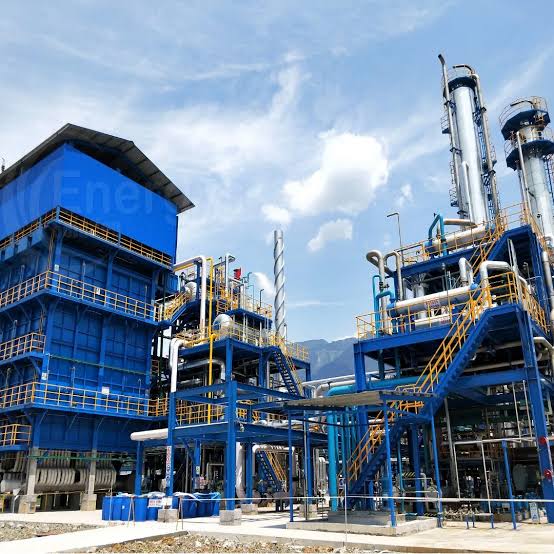
The reversal matters because Beaumont was not an early-stage concept. The 1.1-million-tonne-per-year facility achieved its first conventional ammonia production in December 2025, and Woodside had been targeting lower-carbon ammonia production through carbon capture infrastructure.
Beaumont Was Meant to Anchor the New-Energy Portfolio
Earlier in 2026, Woodside still described Beaumont as an important part of its strategy to invest in new energy products and lower-carbon services. The company highlighted ammonia's potential applications in agriculture, industrial markets, power generation and marine fuel, while anticipating future demand for lower-carbon ammonia in Europe and Asia.
The project also represented a potentially significant transition investment because its lower-carbon model depended on auto-thermal reforming and carbon capture, with Woodside describing the facility as targeting up to 95% carbon dioxide capture once the associated infrastructure is operational.
That makes the August 2026 review more significant than the cancellation of a small experimental project. Woodside is reassessing one of its largest operational investments associated with its lower-carbon portfolio.
The Broader Portfolio Has Been Moving in the Same Direction
Beaumont is not an isolated case. Woodside has also retired the remaining assets of its H2OK liquid hydrogen project after determining that they were unrecoverable. The company recorded additional impairment charges in 2026 following an earlier impairment in 2025.
At the same time, Woodside has abandoned its previous target to invest US$5 billion in new energy products and lower-carbon services by 2030 and retired its Scope 3 investment and emissions-abatement targets. The company has retained its 2030 net equity Scope 1 and 2 emissions-reduction target, but its transition strategy is now being framed more explicitly around commercial viability rather than a predetermined investment commitment.

How the 2026 Portfolio Now Ranks
Against Woodside's wider portfolio, the strategic shift can be ranked according to how strongly each investment aligns with the company's current capital-allocation priorities:
Portfolio area | 2026 strategic position | Relative ranking |
|---|---|---|
LNG and gas | Major growth priority, including Louisiana LNG | 1 — Core growth |
Oil development | Significant capital commitment, including Trion | 2 — Core growth |
Existing conventional ammonia | Beaumont continues operating and selling into established markets | 3 — Operational diversification |
Lower-carbon ammonia | Strategic review due to uncertainty around market development and economics | 4 — Under reassessment |
Hydrogen | H2OK assets retired after impairments | 5 — Major retreat |
Woodside's growth capital remains concentrated in large oil and gas developments, including Louisiana LNG, the Scarborough Energy Project and the Trion deepwater development in Mexico. The company's first-half 2026 disclosures showed Trion 64% complete at the end of June and still targeting first oil in 2028.
Why the Ammonia Market Changed the Investment Case
Woodside's explanation for reviewing Beaumont is especially revealing. Management has said the asset was acquired in a different global environment, when there appeared to be clearer prospects for a developing lower-carbon ammonia market and the regulatory frameworks needed to support it.
Over the past year, however, those assumptions have weakened. Woodside's CEO Liz Westcott said the company would examine all options to determine the best value outcome for the asset, with no predetermined pathway.
The underlying issue is not that ammonia itself lacks a market. Beaumont is already producing conventional ammonia and has access to established demand, particularly from the fertilizer and chemical sectors. The uncertainty is concentrated around the additional value proposition for lower-carbon ammonia in future markets such as shipping and power generation.
A Reversal in Transition Capital Allocation
The strongest signal from Woodside's 2026 portfolio is therefore a change in capital discipline rather than a complete abandonment of decarbonization. The company continues to maintain its direct operational emissions target, but projects must increasingly compete with conventional oil and gas investments on commercial returns.
This creates a substantially different hierarchy from Woodside's earlier strategy. Previously, Beaumont was positioned as part of a planned US$5 billion expansion into new energy and lower-carbon services. Now, the quantified investment target has been removed, the company's largest new-energy operating asset is under review, and hydrogen has already suffered a significant retreat.
The Strategic Reversal Ranks as a Portfolio-Level Signal
Among Woodside's 2026 energy-transition decisions, the Beaumont review ranks as the most important active reversal because of the asset's scale, operational status and original strategic role.
H2OK demonstrates the risk of early-stage hydrogen development, but Beaumont goes further. It shows that even a completed, operating facility with existing conventional demand can be reconsidered when the expected market premium for lower-carbon products fails to develop as quickly as anticipated.
The decision therefore provides a useful benchmark for other energy companies. Transition investments increasingly face a second test beyond technical feasibility: whether policy support, customer willingness to pay and infrastructure development arrive quickly enough to justify the capital committed.
The Intelligence Takeaway
Woodside's Texas ammonia review should be viewed as more than a project-level adjustment. When ranked against the company's broader 2026 portfolio, it represents a clear reprioritization of capital toward LNG, gas and oil projects with established demand, while hydrogen and lower-carbon ammonia face a much stricter commercial threshold.
The outcome of the Beaumont review will now be the key indicator to watch. If Woodside retains and develops the asset's lower-carbon capability, the company may still maintain a meaningful ammonia-based transition platform. If it sells, restructures or significantly deprioritizes Beaumont, 2026 could be remembered as the year Woodside moved decisively from a target-driven energy-transition portfolio to a commercially selective, hydrocarbon-led growth strategy.

Biotin
Found this useful?