Rotork's Valve Automation Technology Touches Petrochemical Plant Reliability
Rotork’s electric actuators and flow control solutions serve petrochemical and process industry customers worldwide, now folding into ABB’s automation portfolio to create unified offerings spanning from distributed control systems through final execution elements. This integration addresses longstanding interface complexities between upstream process control and downstream valve actuation that have historically required multi-vendor coordination and created accountability gaps during system failures. For industrial procurement teams managing process automation spend, the combination promises simplified vendor management and improved root cause resolution when unplanned downtime occurs. The technical synergy extends beyond commercial bundling to enable tighter feedback loops between control algorithms and mechanical execution that optimize process stability and energy efficiency. Buyers should interpret this vertical integration as response to end-user demands for single-supplier responsibility in mission-critical applications where component-level troubleshooting delays carry severe safety and financial consequences. Market participants now anticipate accelerated development of intelligent actuator platforms designed natively for ABB control ecosystems rather than adapted third-party protocols.
Technical Integration Benefits for Process Reliability
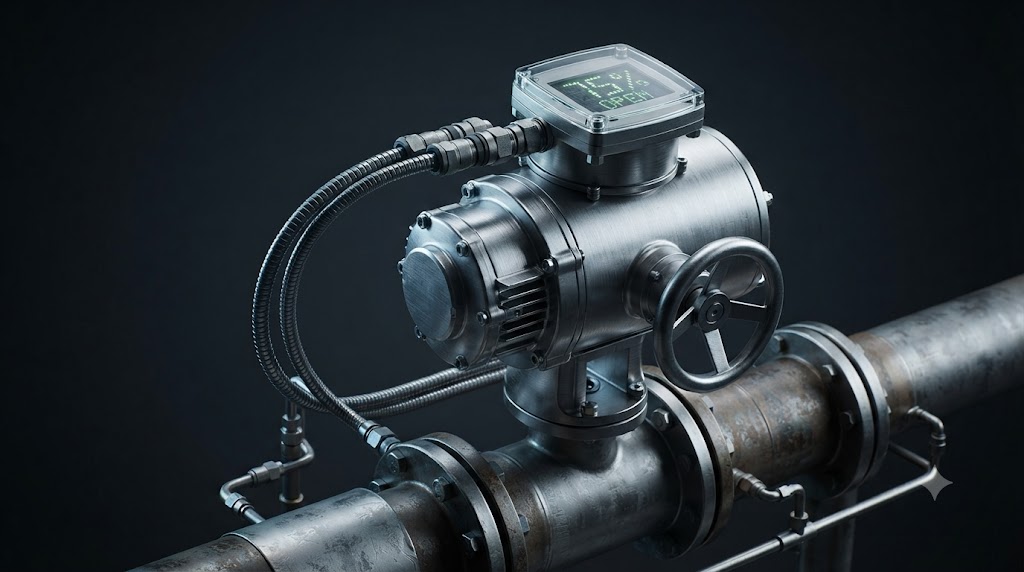
Traditional automation architectures treat valve actuators as dumb peripherals receiving simple open-close or modulating signals from central controllers without returning diagnostic data. Rotork’s intelligent platforms embed sensors monitoring motor current, torque profiles, cycle counts and seal integrity that reveal developing mechanical issues before catastrophic failure. Integrating these telemetry streams directly into ABB control systems enables predictive maintenance algorithms that schedule interventions during planned outages rather than emergency shutdowns.
Closed-loop optimization becomes possible when actuators report actual valve position and travel time back to control algorithms in real-time. Controllers can detect sticking valves, degraded seals or calibration drift immediately and adjust outputs accordingly rather than assuming commanded positions match physical reality. This bidirectional communication reduces process variability and improves product quality consistency in sensitive chemical reactions where precise flow regulation determines yield rates.
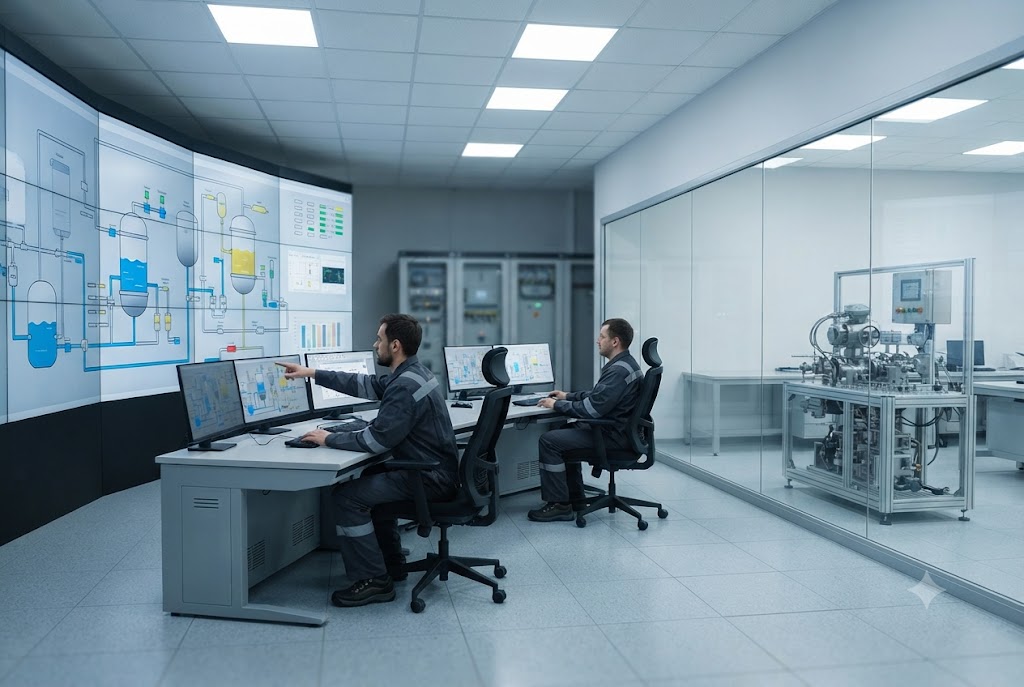
Unified engineering environments allow configuration of both control logic and actuator parameters through single software platforms rather than separate proprietary tools. Commissioning timelines compress significantly when technicians program entire control loops from one interface instead of switching between vendor-specific configurators. Reduced complexity also lowers training burdens and human error risks during startup and modification activities.
Petrochemical Application Requirements and Compliance
Petrochemical facilities impose extreme operating conditions including explosive atmospheres, corrosive media and wide temperature ranges that demand specialized actuator designs. Explosion-proof enclosures, intrinsically safe electronics and chemically resistant coatings represent baseline requirements rather than premium options in these environments. Rotork maintains comprehensive certification portfolios spanning ATEX, IECEx and regional standards accumulated through decades of field validation in refineries and chemical plants globally.
Functional safety ratings verify reliable performance during emergency shutdown scenarios where actuator failure could escalate incidents catastrophically. SIL-certified devices undergo rigorous third-party testing confirming fail-safe behavior under fault conditions and documenting probability of dangerous failure metrics. Integration with ABB safety instrumented systems ensures coordinated response sequences that meet regulatory requirements for layered protection architectures.
Extended lifecycle expectations matching twenty to thirty year asset depreciation schedules require robust mechanical designs and long-term parts availability commitments. Petrochemical operators cannot tolerate premature obsolescence forcing costly retrofits mid-asset life. Suppliers serving this segment must demonstrate sustainable support models including documentation archival, reverse engineering capabilities and backward-compatible upgrade paths that preserve initial investments.
Aftermarket Service Continuity During Integration
Installed base servicing represents critical revenue stream and customer relationship anchor independent of new project cycles. Existing Rotork customers require continued spare parts access, field technician support and firmware updates regardless of ownership changes. Maintaining service level agreements during transition periods preserves trust and prevents competitive displacement by rivals exploiting uncertainty windows.
Technical knowledge retention poses greater risk than physical inventory continuity during M&A integration. Application engineers familiar with legacy installations and site-specific configurations represent irreplaceable assets whose departure degrades service quality immediately. Retention incentives and career path clarity within combined organization help preserve institutional memory essential for supporting aging equipment fleets.
Digital service platforms enable remote diagnostics and proactive intervention reducing reliance on site visits for routine monitoring. Connected actuators transmitting health data to centralized analytics centers allow experts to identify emerging issues across global installed bases simultaneously. Scaling these capabilities through ABB’s broader digital infrastructure accelerates value delivery beyond standalone Rotork deployments.
Cross-Industry Technology Transfer Opportunities
Marine and water treatment sectors share many technical requirements with petrochemicals despite different regulatory frameworks and economic drivers. Subsea actuator designs originally developed for offshore platforms now protect municipal water infrastructure against flooding and contamination events. Corrosion-resistant materials and sealing technologies validated in aggressive chemical environments migrate to desalination plants where chloride exposure destroys conventional components rapidly.
Power generation applications benefit from seismic qualification and extended warranty models proven in nuclear and fossil fuel facilities. Grid modernization projects requiring fast-acting steam turbine bypass valves leverage actuator response characteristics optimized for refinery emergency shutdown systems. Knowledge transfer between sectors accelerates solution development while spreading R&D costs across larger addressable markets.
Mining and mineral processing operations face similar abrasion and shock loading challenges that drive innovation in heavy-duty actuator designs. Dust-tight enclosures and reinforced gear trains developed for mining conveyors find secondary applications in cement kilns and aggregate handling systems. Cross-pollination of ruggedization techniques improves reliability across all harsh-environment segments simultaneously.
Supply Chain Resilience Through Integrated Manufacturing
Vertical integration between control systems and final elements reduces dependency on external suppliers for critical interface components. Internal sourcing of motors, gearboxes and electronics buffers against merchant market shortages that delay standalone actuator manufacturers disproportionately. Buyers gain confidence in delivery reliability when suppliers control more of their own value chain rather than assembling purchased components.
Geographic manufacturing diversification spans Europe, Asia and Americas with regional capacity aligned to local content requirements and logistics efficiencies. Distributed production footprint reduces exposure to single-point disruptions whether from natural disasters, trade policy shifts or labor disputes. Regional sourcing strategies also minimize freight costs and lead times for aftermarket parts supporting global installed bases.
Strategic inventory management balances working capital efficiency against service level commitments through sophisticated demand forecasting and allocation algorithms. Critical spares stocking policies reflect installed base age profiles and failure rate analytics rather than generic turnover targets. Data-driven inventory optimization ensures high availability for legacy equipment while avoiding excess carrying costs for declining platforms.
Adjusting Sourcing Strategies Around Integrated Suppliers
Audit current automation spend across control systems and valve actuators to quantify integration opportunity value and identify existing interface pain points.
Request unified service level agreements covering both control and actuation elements with single point of accountability for cross-system issues.
Evaluate digital platform compatibility ensuring existing connected devices integrate seamlessly with ABB analytics tools post-integration.
Assess technical support continuity plans verifying retention of application engineers familiar with your specific installation configurations.
Monitor product roadmap announcements for native integration features versus adapted third-party protocols indicating true engineering synergy depth.
Rotork’s valve automation technology folding into ABB’s portfolio transforms fragmented process automation sourcing into unified reliability partnerships spanning control through execution layers. Industrial procurement professionals who understand this integration logic will evaluate supplier relationships through lenses extending beyond component specifications toward systemic performance accountability. Ready to source electric actuators from verified global suppliers? Explore competitive offers on our platform today.

Sodium Lauryl Ether Sulfate (1EO 70%)
Found this useful?