West Virginia Institute Incident Prompts Renewed Hazard Review Procedure Scrutiny
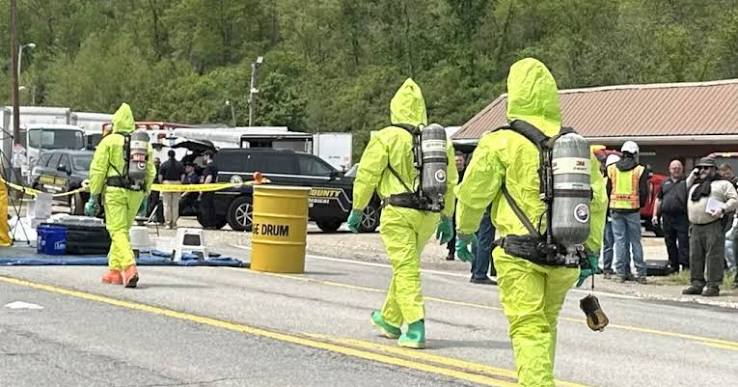
The April 22, 2026 hydrogen sulfide release at Catalyst Refiners in Institute, West Virginia has renewed industry attention on the safety controls used during chemical facility decommissioning. Two workers died and four others were seriously injured after a chemical reaction generated highly toxic vapors during decommissioning activities.
The U.S. Chemical Safety and Hazard Investigation Board's August 13 update identified several areas for continued investigation, including chemical incompatibilities, decommissioning hazard analysis, chemical disposal procedures, personal protective equipment, atmospheric monitoring and corporate oversight.
For chemical operators, contractors and procurement teams, the incident reinforces a critical principle: shutting down a chemical process does not eliminate its hazards. Decommissioning requires its own documented risk assessment and operating controls.
Why Decommissioning Requires Dedicated Hazard Reviews
The Institute incident occurred while Catalyst Refiners was decommissioning its facility. The site's silver reclamation operations had stopped, but its wastewater pretreatment system remained operational while employees worked through the process of disposing of chemicals still present at the facility.
That combination creates a different operating environment from routine production. Equipment may remain connected to active systems while chemicals from former processes are being removed, transferred or disposed of.
A dedicated decommissioning hazard review can help identify risks created by these changing conditions. It should consider chemical inventories, equipment status, temporary connections, waste streams and the interaction between systems that previously operated under established procedures.
Documented Procedures Become Critical During Facility Shutdowns
According to the CSB's investigation update, Catalyst Refiners did not have a written procedure for disposing of the chemicals involved through the wastewater treatment system. Employees transferred A-50 and M-2000A solutions into a wastewater receiving tank before diluted nitric acid was subsequently pumped into the same tank.
The CSB reported that workers observed a chemical reaction and fog forming over the tank after nitric acid entered the system. The subsequent release produced hydrogen sulfide, which overcame workers in the area.
The case demonstrates why informal knowledge or routine assumptions may not provide sufficient protection during decommissioning. A written procedure can establish what materials may be combined, which systems may be used for disposal, what checks must occur beforehand and what controls workers must follow.
For procurement and operations teams, documented procedures also create a clearer basis for contractor qualification and work authorization.
Chemical Compatibility Should Remain Central to Decommissioning
Chemical incompatibility is one of the specific issues the CSB says it will continue examining as part of its investigation.
Decommissioning can introduce chemical combinations that did not occur during normal production. Materials that were previously isolated in separate storage systems can enter a common waste or treatment stream as workers remove inventory.
Companies should therefore reassess compatibility during every major stage of shutdown work.
Important review questions include:
What chemicals remain onsite? Former process chemicals should remain part of the hazard inventory until they have been properly characterized and removed.
Where can materials move? Teams should identify every potential transfer route, including temporary piping, tanks and wastewater systems.
Can residues react? Residual chemicals inside equipment can create hazards when new materials enter the same system.
Are disposal routes approved? Wastewater or waste-handling systems should not become default destinations without a documented compatibility assessment.
These checks can reduce the possibility that decommissioning activities create new chemical reaction pathways.
Atmospheric Monitoring Cannot Disappear When Production Ends
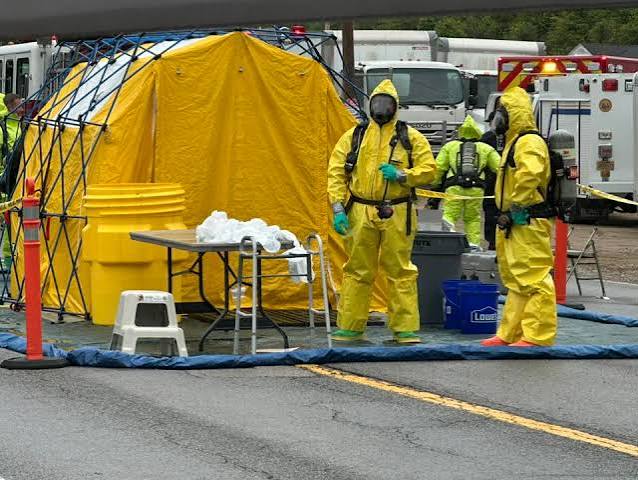
The CSB reported that Catalyst Refiners did not provide or require workers to use personal gas monitors during decommissioning. The agency also found four full-face respirators at the facility, but they lacked filters capable of protecting against hazardous gases such as hydrogen sulfide.
Workers reportedly told investigators that respirator use was no longer required after the facility transitioned from production to decommissioning.
This raises an important industry-wide question about how companies determine when protective requirements can be reduced during shutdown work.
A change from production to decommissioning should trigger a new hazard assessment rather than an automatic reduction in controls. If chemical hazards remain, monitoring and appropriate respiratory protection may still be necessary.
The Institute response also demonstrated the importance of area monitoring. State and federal agencies deployed air monitors inside the facility, around the site perimeter and in nearby downwind areas following the release.
Decommissioning Changes the Role of Operating Procedures
Standard operating procedures often evolve around normal production activities. Decommissioning can invalidate parts of those procedures because equipment may operate outside its original design sequence.
A shutdown program should therefore establish dedicated procedures for activities such as chemical removal, equipment isolation, tank cleaning, waste transfer and dismantling.
The procedure should identify who has authority to stop work when conditions change. It should also establish communication requirements between operators, supervisors, contractors and emergency-response personnel.
This is particularly important when a facility is approaching closure and experienced personnel may be reassigned or contractors may assume a larger share of the work.
Contractor Management Becomes a Procurement Issue
Decommissioning frequently involves external contractors, making procurement decisions directly relevant to safety. Companies selecting service providers should evaluate chemical hazard experience alongside commercial terms.
A contractor's ability to manage chemical incompatibility, atmospheric hazards and emergency procedures can be as important as its equipment and labor capacity.
Procurement teams can strengthen contractor qualification by reviewing:
Previous experience with chemical facility decommissioning.
Training for hazardous chemical environments.
Atmospheric monitoring capabilities.
Respiratory protection programs.
Emergency response arrangements.
Written work procedures and permit systems.
Ability to document completed safety checks.
This turns contractor selection into part of the facility's broader risk-management process.
The Incident Has Implications Beyond Institute
The CSB opened its investigation to determine how the incident occurred and identify ways to prevent similar events. Its current investigation specifically includes decommissioning hazard analysis, disposal procedures, PPE and atmospheric monitoring.
That focus makes the case relevant to facilities beyond West Virginia. Companies closing plants, retiring production lines or removing chemical equipment can use the investigation as a prompt to examine their own transition procedures.
The lesson applies across facility types because decommissioning changes the relationship between people, equipment and chemical inventories. A system that appears inactive may still contain chemical hazards capable of producing serious consequences.
Supply Chain Planning Should Include Decommissioning Risk
Decommissioning safety also has a commercial dimension. A serious incident can delay facility closure, disrupt asset removal and affect the availability of chemical products or intermediates associated with the site.
For buyers, supplier shutdown plans can therefore become part of continuity assessments.
Procurement teams sourcing critical chemicals can ask suppliers about major planned shutdowns, facility transitions and contingency arrangements where appropriate. Understanding whether a supplier has alternative production capacity can help buyers distinguish temporary operational changes from longer-term supply risks.
This is especially relevant when a supplier operates older facilities that may face significant maintenance or retirement decisions.
What Chemical Companies Should Review Now
The Institute incident provides a practical trigger for companies to reassess their own decommissioning controls. The objective should be to identify gaps before shutdown work begins.
Priority areas include:
Decommissioning hazard analysis: Conduct a dedicated review for shutdown activities rather than relying only on production-era assessments.
Chemical inventory control: Verify the identity, location and condition of chemicals remaining onsite.
Written disposal procedures: Document approved routes for each chemical and assess compatibility before transfers.
Atmospheric monitoring: Determine whether fixed or personal monitoring is required based on the hazards present.
PPE requirements: Review respiratory and protective equipment requirements for each task.
Contractor oversight: Ensure external workers receive site-specific hazard information and follow approved procedures.
Management accountability: Establish clear responsibility for approving and supervising high-risk decommissioning activities.
These measures can help companies manage the transition from production to closure as a distinct operating phase.
The Bottom Line for Chemical Safety and Procurement Teams
The Institute incident shows why decommissioning deserves the same level of structured hazard management as active chemical production. The CSB's ongoing review of chemical incompatibilities, decommissioning hazard analysis, disposal procedures, PPE and atmospheric monitoring gives companies several concrete areas to examine.
For chemical operators, traders and procurement managers, the broader lesson is that facility closure can create new hazards rather than simply remove existing ones. Strong written procedures, compatibility reviews, appropriate monitoring and qualified contractors can help reduce safety and supply-chain risks during this transition.
As the CSB investigation continues, its eventual findings and recommendations could provide further guidance for companies managing chemical facility decommissioning across the industry.

Activated Carbon (Granular) - India
Found this useful?