Growing investment in rubber and polymer circularity reflects a broader shift across the chemical industry. Companies are strengthening research facilities instead of relying only on production expansion. An upgraded R&D hub with larger laboratories, expanded technical teams and a dedicated chemistry lab supporting an HNBR plant highlights how innovation has become a competitive advantage.
For chemical traders and procurement managers, these developments signal more than research activity. They point to better product consistency, faster material qualification and stronger collaboration between manufacturers and industrial customers seeking advanced polymer solutions.
Why Circularity Is Reshaping the Rubber Industry
Circularity has become a major driver of investment across the rubber value chain. Manufacturers want materials that deliver high performance while reducing waste, extending product life and improving resource efficiency.
Modern rubber compounds increasingly balance performance with sustainability objectives. Research teams now optimize formulations so manufacturers can recover materials, increase recycled content where suitable and improve processing efficiency without sacrificing quality.
This approach creates value across multiple industries because better compound design often leads to:
Longer service life for finished products, reducing replacement frequency and overall material consumption.
More efficient manufacturing processes that reduce production waste and improve raw material utilization.
Greater flexibility when incorporating recycled or alternative feedstocks into commercial formulations.
Why Companies Are Expanding Rubber Compounding Capacity
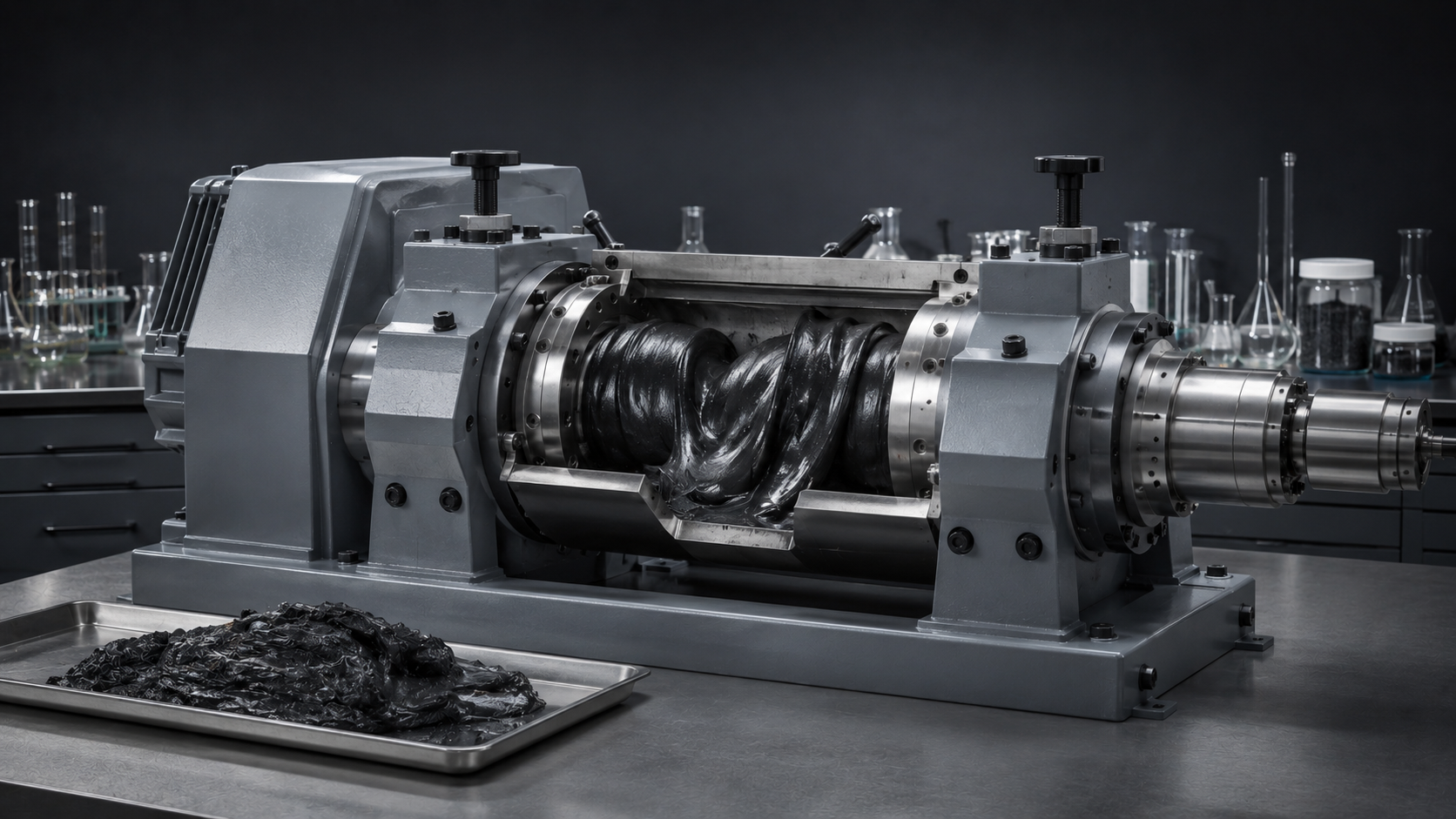
Rubber compounding sits at the center of product performance. Every formulation combines polymers, fillers, plasticizers, curing agents and specialty additives to achieve precise mechanical and chemical properties.
As customer requirements become more specialized, manufacturers require additional laboratory capacity to develop custom formulations more quickly. Expanded compounding facilities allow researchers to evaluate multiple formulations simultaneously before commercial production begins.
Additional capacity also supports:
Faster product development cycles for automotive, industrial equipment and battery manufacturers.
Improved testing under different environmental and operating conditions.
Better collaboration between suppliers and customers during product qualification.
Quicker response to changing market requirements and regulatory expectations.
The Growing Importance of Polymer Analysis
Polymer analysis has evolved far beyond routine quality testing. Today's laboratories examine molecular structure, thermal behavior, mechanical strength and long term durability to understand how materials perform throughout their service life.
Advanced analytical capabilities help manufacturers identify opportunities to improve formulations while maintaining production efficiency. This becomes especially valuable when introducing recycled materials or developing next generation compounds for demanding applications.
For buyers, stronger analytical capabilities reduce uncertainty during sourcing. Better testing produces greater confidence in product consistency across multiple production batches.
Battery Applications Are Creating New Demand
Battery manufacturing continues to create opportunities for advanced rubber and specialty polymer materials. High performance sealing systems, insulation components and protective materials require compounds that withstand demanding operating conditions.
Research facilities dedicated to battery applications enable manufacturers to develop materials with:
Higher chemical resistance.
Better thermal stability.
Improved electrical insulation properties.
Longer operational life under continuous stress.
These capabilities allow suppliers to participate in rapidly expanding industrial markets where performance requirements continue to increase.
Dedicated Chemistry Labs Support Advanced HNBR Development
A dedicated chemistry laboratory supporting an HNBR plant represents another important investment in specialty elastomer development.
Hydrogenated nitrile butadiene rubber (HNBR) serves applications that demand exceptional resistance to heat, chemicals and mechanical stress. Industries such as automotive, oil and gas, industrial machinery and energy systems rely on HNBR components where conventional elastomers may not deliver sufficient durability.
A specialized chemistry lab enables researchers to:
Improve polymer formulations before commercial production.
Accelerate troubleshooting during scale up.
Develop application specific compound grades.
Support customers requiring customized material performance.
The result is a more responsive manufacturing operation capable of adapting to evolving customer specifications.
Benefits for Global Chemical Buyers
Procurement teams increasingly evaluate suppliers on technical capability alongside production volume and pricing. Expanded research infrastructure demonstrates a manufacturer's commitment to continuous product improvement.
Key purchasing advantages include:
More reliable product quality supported by stronger laboratory validation.
Faster technical assistance when customers require formulation adjustments.
Improved supply continuity through better process optimization.
Greater confidence when qualifying materials for critical industrial applications.
These benefits extend beyond large multinational manufacturers. Regional processors and converters also gain access to better technical support and higher performing materials.
How Circular Innovation Strengthens Supply Chains
Supply chains become more resilient when manufacturers invest in research rather than focusing exclusively on production output.
Laboratory driven innovation helps identify process improvements before they become production issues. Better understanding of raw materials also allows manufacturers to qualify alternative feedstocks without compromising product performance.
For international traders, stronger research capabilities often translate into:
More stable product specifications across shipments.
Reduced quality related disputes.
Better documentation supporting regulatory compliance.
Faster introduction of new commercial grades.
These improvements simplify procurement planning while reducing operational risk.
What Procurement Teams Should Monitor
As rubber and polymer markets continue evolving, buyers should evaluate suppliers using broader performance criteria than price alone.
Important factors include:
Investment in research laboratories and analytical equipment.
Technical expertise supporting product development.
Capability to customize formulations for specific applications.
Experience with sustainable and circular material solutions.
Commitment to continuous process improvement.
Suppliers that strengthen these areas often build more resilient long term partnerships with industrial customers.
The Bottom Line for Procurement Teams
Expanding R&D hubs, larger rubber compounding facilities and dedicated chemistry laboratories represent strategic investments that extend well beyond research. They strengthen product quality, accelerate innovation and improve responsiveness across the chemical supply chain.
As circularity becomes a defining priority for manufacturers, companies with advanced research capabilities will play a greater role in supplying high performance polymer materials for automotive, industrial equipment, battery technology and other demanding applications. Procurement professionals who evaluate both technical capability and manufacturing strength will be better positioned to secure reliable supply partnerships in the years ahead.
Ready to source rubber compounds from verified global suppliers? Explore competitive offers on our platform today.