Artificial intelligence is becoming one of the strongest demand drivers for the specialty chemical industry.
As governments and technology companies continue investing in semiconductor manufacturing, demand extends far beyond silicon wafers and advanced chips.
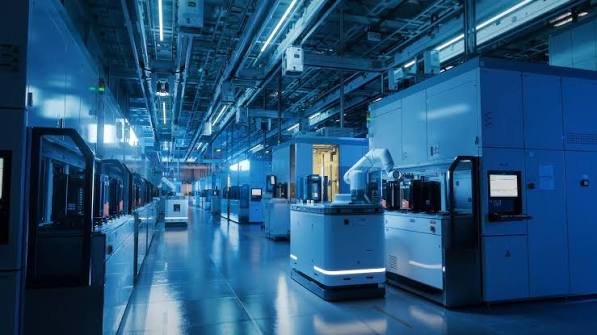
Every semiconductor fabrication facility depends on a sophisticated ecosystem of high-purity specialty chemicals that enable precision manufacturing at nanometre scale.
For procurement professionals, this creates a structural growth market that differs significantly from traditional commodity chemical cycles.
Semiconductor Manufacturing Depends on Specialty Chemicals
Modern chip fabrication requires a broad portfolio of electronic-grade chemicals, including:
These materials must meet exceptionally strict purity and consistency requirements, making supplier qualification a critical part of semiconductor manufacturing.
AI Infrastructure Is Expanding Chemical Demand
Growth in AI applications is driving investment across:
As semiconductor output increases, demand for high-purity process chemicals grows in parallel throughout the manufacturing supply chain.
Specialty Chemicals Differ From Commodity Markets
Unlike commodity chemicals, electronic materials often benefit from:
Higher technical barriers to entry.
Long customer qualification cycles.
Strict quality specifications.
High switching costs.
Long-term customer relationships.
Greater pricing stability.
These characteristics support more resilient business performance compared with many bulk chemical segments.
Global Investment Continues Expanding
Semiconductor manufacturing investment remains concentrated in several regions, including:
Taiwan.
South Korea.
Japan.
United States.
Europe.
As fabrication capacity expands, suppliers of specialty chemicals increasingly invest in regional production, technical support and secure supply networks to meet customer requirements.
Procurement Priorities Are Changing
Procurement teams supporting semiconductor supply chains increasingly evaluate suppliers based on:
Product purity.
Quality consistency.
Technical support capability.
Manufacturing reliability.
Supply continuity.
Regulatory compliance.
Capacity expansion plans.
These criteria often outweigh price alone because production interruptions can have significant downstream impacts.
AI Is Reshaping Procurement Priorities
As semiconductor manufacturing expands, procurement organisations are placing greater emphasis on supplier capability rather than simply production capacity.
Critical evaluation factors include:
Electronic-grade quality systems.
Manufacturing redundancy.
Geographic production footprint.
Process innovation.
Technical collaboration.
Long-term capacity investment.
Supply chain resilience.
For semiconductor manufacturers, reliability and consistency are often more valuable than incremental cost savings.
Electronic Chemicals Are Becoming Strategic Materials
The growing complexity of semiconductor manufacturing is increasing demand for highly specialised materials such as:
High-purity sulfuric acid.
High-purity hydrogen peroxide.
Isopropyl alcohol (IPA).
Hydrofluoric acid.
Photoresists.
CMP slurries.
Specialty gases.
Advanced packaging chemicals.
These materials are essential for wafer fabrication, cleaning, lithography and advanced chip packaging, making them critical components of modern semiconductor production.
AI Investment Supports Long-Term Specialty Chemical Growth
Unlike short-term commodity cycles, AI infrastructure investment is creating structural demand drivers through:
New semiconductor fabrication plants.
Expansion of advanced packaging facilities.
Growth in cloud computing infrastructure.
Increasing demand for AI processors.
Continued investment in memory manufacturing.
Government semiconductor industrial policies.
These trends support sustained demand for electronic chemicals over the medium and long term.
Procurement Priorities for H2 2026
Companies sourcing semiconductor-grade chemicals should prioritise:
Qualifying multiple high-purity suppliers.
Monitoring semiconductor capacity expansions.
Reviewing supplier quality certifications.
Evaluating regional manufacturing resilience.
Securing long-term supply agreements for critical materials.
Tracking technology roadmaps alongside production capacity.
Integrating semiconductor market intelligence into procurement planning.
These actions strengthen supply continuity in a market where qualification periods are long and switching suppliers can be operationally complex.
Looking Ahead to H2 2026
Artificial intelligence is emerging as one of the strongest structural growth drivers for the specialty chemical industry. Every new semiconductor fabrication facility requires a reliable supply of ultra-high-purity process chemicals, electronic materials and advanced packaging inputs. As investment in AI infrastructure accelerates, demand for these specialised products is expected to remain closely linked to global semiconductor production rather than traditional commodity chemical cycles.
For procurement professionals, this changing landscape requires a different sourcing approach. Supplier capability, quality assurance, technical expertise and manufacturing resilience are becoming just as important as price competitiveness. Long qualification timelines and stringent purity requirements make supplier selection a strategic decision that directly supports manufacturing continuity and product quality.
The key lesson for H2 2026 is that AI infrastructure growth is transforming specialty chemicals into strategically important enabling technologies. Procurement organisations that align sourcing strategies with semiconductor investment trends, supplier innovation and long-term capacity expansion will be better positioned to secure resilient supply while supporting the next generation of advanced electronics manufacturing.
Ready to source semiconductor-grade chemicals, electronic materials and other high-purity specialty chemicals from verified global suppliers? Explore competitive offers on our platform today.