Semiconductor Specialty Chemicals Market to Reach $148.1 Billion by 2034
The global semiconductor specialty chemicals market is entering a major expansion cycle, with its value projected to rise from roughly $47 billion in 2025 to $148.1 billion by 2034. That growth reflects more than rising chip volumes. AI accelerators, advanced-node processors and EUV lithography are increasing the complexity and chemical intensity of semiconductor manufacturing.
For chemical traders and procurement managers, this creates a market where demand increasingly depends on semiconductor technology rather than traditional commodity cycles.
As chipmakers move toward smaller process nodes and more sophisticated architectures, fabs require increasingly specialized materials with extremely high purity and tightly controlled performance characteristics.
The result is a rapidly expanding opportunity for suppliers positioned across the semiconductor chemical value chain.
AI Chips Are Changing Semiconductor Chemical Demand
Artificial intelligence is one of the strongest forces behind the semiconductor expansion.
AI training and inference require high-performance processors, accelerators and memory technologies. These products increasingly rely on advanced manufacturing processes that require sophisticated chemical inputs.
The impact reaches far beyond chip designers.
Every additional wafer processed through an advanced fab creates demand for numerous chemical materials used during cleaning, deposition, etching, lithography and surface preparation.
As AI infrastructure expands, semiconductor chemical suppliers therefore benefit from growth several stages upstream of the finished data-center hardware.
The $148.1 Billion Market Opportunity
The projected increase from approximately $47 billion in 2025 to $148.1 billion in 2034 represents a major expansion of the addressable market.
The opportunity is particularly significant because semiconductor chemicals serve multiple stages of chip manufacturing.
Demand can grow through both higher wafer production and greater chemical complexity per wafer.
That combination gives specialty chemical producers several routes to growth.
A supplier does not necessarily need to sell a large volume of commodity material to benefit. High-purity and highly engineered products can command value because semiconductor manufacturers prioritize consistency and defect control.
Advanced Nodes Increase Chemical Complexity
Moving to smaller semiconductor geometries creates new technical challenges.
At advanced nodes, manufacturers need tighter control over deposition thickness, etching profiles, contamination and surface quality.
Chemical processes become increasingly important to achieving those targets.
That creates opportunities for suppliers capable of producing materials with extremely consistent composition and purity.
For procurement teams, the focus shifts from simply securing sufficient volume to securing reproducible semiconductor-grade quality.
EUV Lithography Creates a Specialized Chemical Opportunity
Extreme ultraviolet lithography represents one of the most important technological developments in advanced semiconductor production.
EUV systems enable chipmakers to print extremely small circuit features, supporting leading-edge manufacturing.
The process also requires specialized chemical materials, including photoresists and related processing chemicals.
As more advanced-node capacity comes online, demand for EUV-compatible materials can rise alongside wafer production.
For chemical suppliers, this represents an attractive segment because qualification barriers can be substantial and product performance directly affects manufacturing yield.
Photoresists Sit at the Heart of Lithography
Photoresists allow semiconductor manufacturers to transfer microscopic patterns onto wafers.
As feature sizes shrink, photoresist performance becomes increasingly demanding.
Materials must respond precisely to exposure conditions while maintaining the resolution and process stability required for advanced manufacturing.
This creates a specialized market where chemical formulation expertise can be as important as production scale.
For procurement managers, supplier qualification therefore involves more than checking a standard specification sheet.
Etching Chemicals Support Pattern Transfer
After lithography creates a pattern, semiconductor manufacturers must selectively remove material to form the desired structure.
Etching chemicals play a central role in this process.
Advanced devices require increasingly precise etching because even small process deviations can affect electrical performance.
Chemical suppliers that can deliver consistent etching materials with extremely low contamination levels can therefore become strategic partners for semiconductor manufacturers.
Cleaning Chemicals Are Essential to Yield
Semiconductor fabrication involves repeated cleaning steps.
Particles, metallic contamination and organic residues can damage devices or reduce production yields.
As manufacturing becomes more sophisticated, cleaning requirements become increasingly stringent.
This makes high-purity acids, solvents and specialty cleaning formulations critical inputs.
For chemical traders, cleaning materials can represent an attractive market because they are consumed throughout the manufacturing process rather than only at one specialized stage.
Procurement Is Moving Toward Supply Security
The semiconductor industry's supply-chain disruptions exposed the risks associated with concentrated production.
Chemical procurement teams now increasingly evaluate geographic diversification alongside price and quality.
A supplier may offer competitive pricing but remain unattractive if its production depends on a single facility or vulnerable logistics route.
For advanced semiconductor chemicals, qualification of a new supplier can also take considerable time.
That encourages manufacturers to secure alternative sources before a disruption occurs.
Geographic Manufacturing Expansion Is Driving Chemical Investment
Semiconductor fabrication capacity is expanding across multiple regions.
The United States, Europe, Taiwan, South Korea, Japan and Southeast Asia are all important parts of the broader semiconductor manufacturing landscape.
New fabs create downstream opportunities for specialty chemical suppliers.
A chemical producer located close to a growing semiconductor cluster can gain advantages in logistics, technical support and supply responsiveness.
This makes fab construction an important leading indicator for chemical demand.
Semiconductor Chemical Plants Need to Follow the Fabs
Location strategy matters because many semiconductor chemicals require specialized transportation and handling.
Reducing delivery distances can improve supply reliability.
It can also allow chemical companies to provide faster technical support when manufacturers adjust processes.
As chipmakers build fabs in new regions, specialty chemical companies have an incentive to establish local production, purification or distribution capabilities.
The expansion of semiconductor manufacturing can therefore generate a secondary wave of industrial investment.
The AI Boom Favors High-Value Chemical Grades
AI-related chips often require advanced manufacturing technologies.
That benefits suppliers positioned toward high-performance chemical grades rather than undifferentiated bulk materials.
The market opportunity therefore has two dimensions.
One is volume growth from higher wafer production.
The other is value growth from increasingly sophisticated chemical requirements.
For specialty chemical companies, the second dimension may offer stronger margins and deeper customer relationships.
Chemical Qualification Creates Barriers to Entry
Semiconductor manufacturers cannot easily change suppliers for critical process chemicals.
A new material can affect yield, equipment performance and process stability.
Manufacturers therefore need extensive qualification before introducing an alternative product.
This creates significant barriers for new entrants.
For established suppliers, those barriers can protect customer relationships once qualification succeeds.
For traders, the implication is clear: sourcing a semiconductor chemical requires understanding not only price and availability but also whether the material comes from an approved or technically capable producer.
Long-Term Contracts Could Become More Important
Rapid semiconductor growth can make spot-market sourcing less attractive.
Chipmakers need confidence that critical chemicals will remain available as fab utilization increases.
Long-term contracts can provide suppliers with demand visibility while giving semiconductor manufacturers greater supply security.
These agreements can also support investment in additional purification and production capacity.
For specialty chemical producers, predictable demand can justify capital expenditure that would be difficult to support through short-term orders alone.
AI Is Increasing the Importance of Advanced Packaging
AI hardware growth is not limited to leading-edge wafer fabrication.
Advanced packaging has become increasingly important as manufacturers combine processors, memory and other components into high-performance systems.
Packaging processes also use specialized chemicals and materials.
That broadens the opportunity beyond front-end wafer fabrication.
Chemical companies supplying cleaning, surface treatment, plating and other advanced packaging materials can benefit as AI infrastructure expands.
Semiconductor Chemicals Are Becoming More Strategic
Historically, many chemical inputs were treated primarily as procurement categories.
That approach is changing.
A material that appears inexpensive relative to the value of a semiconductor can still be strategically critical if its absence stops production.
This creates a different procurement philosophy.
Manufacturers increasingly need to consider the cost of a supply interruption rather than only the purchase price of the chemical.
Sustainability Is Adding Another Requirement
Semiconductor fabs consume significant quantities of chemicals, water and energy.
Environmental performance is therefore becoming increasingly relevant to chemical sourcing.
Manufacturers are evaluating opportunities to reduce waste, recover chemicals and improve process efficiency.
Chemical suppliers can respond by developing products that deliver equivalent performance with lower environmental impact or reduced consumption.
The most competitive suppliers may eventually combine purity, performance, supply security and environmental efficiency.
Specialty Chemical Producers Face a High-Performance Market
The semiconductor sector offers attractive growth, but customers have demanding expectations.
Suppliers must demonstrate:
Extremely consistent product quality.
Strong contamination controls.
Reliable production capacity.
Specialized packaging and handling.
Technical support.
Detailed analytical capabilities.
Supply continuity across multiple regions.
Companies that meet these requirements can participate in a market with substantial long-term growth potential.
Traders Need to Understand the End Application
Chemical traders can play an important role in connecting specialty producers with semiconductor manufacturers.
But semiconductor chemicals require application-specific knowledge.
A product used for general industrial cleaning may not qualify for semiconductor production.
Similarly, two materials with similar chemical identities can perform differently because of purity, trace metals, particle levels or formulation characteristics.
Traders therefore need to understand the technical requirements behind the commercial specification.
Where Procurement Teams Should Focus
Buyers planning for semiconductor chemical growth should prioritize the materials most exposed to advanced-node expansion.
A practical sourcing strategy includes:
Map critical chemicals: Identify materials capable of stopping production if supply fails.
Build dual sourcing: Qualify alternative producers before capacity becomes tight.
Track fab investment: New wafer capacity can provide an early signal of future chemical demand.
Evaluate purity infrastructure: Confirm the supplier can consistently meet semiconductor-grade requirements.
Review logistics: Consider production location, transport conditions and emergency delivery capabilities.
Assess scalability: Make sure suppliers can expand alongside fab utilization.
This approach can reduce procurement risk while positioning buyers for future capacity growth.
The Supply Chain Opportunity Extends Upstream
The semiconductor chemical market does not begin at the fab gate.
Chemical producers need feedstocks, purification systems, specialty equipment, packaging materials and reliable utilities.
That creates opportunities across a wider industrial ecosystem.
A shortage of a seemingly minor upstream input can eventually affect semiconductor chemical availability.
For traders, monitoring these upstream relationships can provide an earlier view of potential market tightness.
What the $148.1 Billion Forecast Means for Suppliers
The projected $148.1 billion market by 2034 signals more than a large revenue opportunity.
It indicates that semiconductor manufacturing is becoming a major demand center for specialty chemicals.
AI is accelerating this trend, while EUV lithography and advanced-node fabrication increase the technical sophistication of the materials required.
The strongest opportunities will likely sit where high growth meets high qualification barriers.
Suppliers that can combine advanced chemistry with reliable global production will be better positioned than companies competing purely on price.
What Procurement Teams Should Do Now
Procurement managers should treat semiconductor chemical sourcing as a strategic category.
Start by identifying the chemicals that directly affect yield and production continuity.
Then evaluate supplier capacity, geographic concentration and qualification status.
Where a critical material depends on one producer or one region, begin developing an alternative before market conditions force an emergency decision.
Buyers should also maintain close communication with suppliers about planned capacity expansions.
Early visibility can help secure material allocations before new semiconductor fabs reach high utilization.
The Bottom Line for Semiconductor Chemical Buyers
The global semiconductor specialty chemicals market is projected to expand from roughly $47 billion in 2025 to $148.1 billion by 2034, creating a substantial growth opportunity for chemical producers, traders and procurement organizations.
AI chip demand provides the headline growth engine, but the underlying opportunity is broader. EUV lithography, advanced-node fabrication, sophisticated deposition and etching processes, advanced cleaning and packaging are all increasing demand for high-purity and highly engineered chemical materials.
For buyers, the market's growth also brings new supply-chain challenges. Qualification requirements, geographic concentration and purity standards can make substitution difficult, so securing reliable sources before capacity tightens will become increasingly important.
For chemical suppliers, the message is equally direct. Semiconductor manufacturing is moving deeper into the specialty chemicals value chain, and companies able to deliver purity, consistency, technical performance and dependable supply can capture a larger share of the next decade's growth.
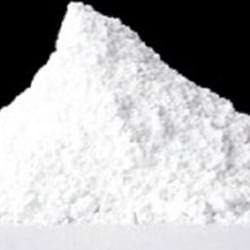
Titanium Dioxide
Found this useful?