Shell Acquires 30% Stake in Canada’s Bay du Nord Project, Supporting 2027 Investment Plans
Shell’s decision to acquire a 30% stake in Canada’s Bay du Nord offshore oil project marks an important development for international energy investment. Announced in October 2026, the agreement gives Equinor a major partner as it advances the project toward an early-2027 final investment decision. Equinor will retain a 70% interest and continue operating the development.
For energy traders, procurement managers and industrial buyers, the partnership offers a useful signal about long-term oil supply planning, offshore infrastructure demand and investment in Canada’s energy sector. Although Bay du Nord will not produce oil immediately, its development could create commercial opportunities across equipment manufacturing, marine logistics, industrial services and petroleum supply chains.
The project also highlights the importance of partnerships in large-scale energy developments, where companies must balance capital commitments, engineering requirements and future market demand before approving major investments.
What Shell’s 30% Stake Means for Bay du Nord
The agreement brings Shell into a major offshore oil development in Newfoundland and Labrador, Canada. Shell will acquire a 30% non-operated interest, while Equinor will retain the remaining 70% and responsibility for operating the project.
This ownership structure gives Shell exposure to the project's potential resources without taking over day-to-day operatorship. For Equinor, the partnership provides an opportunity to share the financial exposure associated with developing a technically demanding offshore asset.
The agreement supports continued engineering and commercial planning ahead of the targeted investment decision in early 2027. However, the companies must still complete their internal approval processes and meet applicable regulatory requirements before committing to full development.
The partnership matters for three reasons:
Capital sharing: A second major energy company participates in the financial commitments and potential returns associated with the development.
Project development: Shell's participation strengthens the ownership partnership as Equinor advances engineering, cost planning and execution preparations.
Long-term supply planning: The project could contribute new offshore oil production in the next decade, depending on the final investment decision and construction schedule.
For buyers and suppliers, the ownership change signals progress toward the next development stage. It does not, by itself, mean that construction has received final approval or that new oil is already entering the market.
Bay du Nord’s Location and Deepwater Development Model
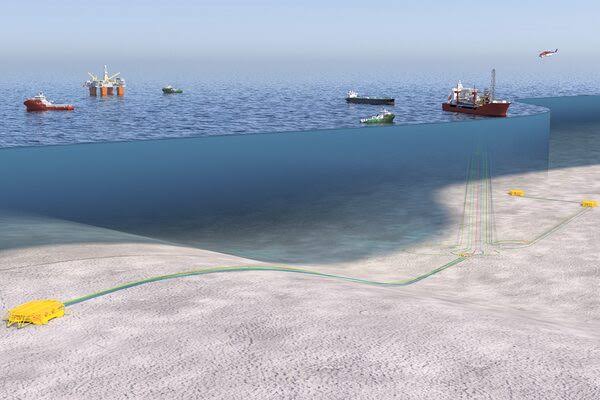
Bay du Nord lies in the Flemish Pass basin, approximately 500 kilometres offshore Newfoundland and Labrador. Its proposed development uses subsea production infrastructure connected to a floating production, storage and offloading vessel, commonly known as an FPSO.
An FPSO receives hydrocarbons from subsea wells, processes the produced fluids and stores oil before it transfers the cargo to shuttle tankers. This approach allows operators to develop offshore resources without relying on a conventional fixed production platform connected directly to shore.
Deepwater projects require specialised engineering, offshore drilling systems, subsea equipment and marine support. Their remoteness also makes transportation planning, maintenance access and the availability of critical spare parts important throughout the development and operating phases.
The Bay du Nord concept includes an initial development phase involving the Bay du Nord and Cambriol discoveries. Additional discoveries could provide opportunities for future subsea connections, potentially extending the value of the offshore infrastructure if the partners approve further development.
For procurement teams, this development model creates several categories of potential demand:
Subsea production equipment, valves, connectors and control systems designed for demanding marine conditions.
Specialised steel components, piping systems and materials used in offshore processing facilities.
Marine transportation, vessel support, maintenance services and equipment handling.
Industrial chemicals and process materials selected for specific operational requirements.
Actual purchasing volumes and supplier opportunities will depend on the project's engineering specifications, contracting strategy and procurement schedule.
Investment Timeline, Production Potential and Market Significance
The early-2027 final investment decision is the next major milestone for Bay du Nord. The project remains in the pre-final-investment stage, with the partners continuing front-end engineering and design work to strengthen cost efficiency, execution planning and overall project readiness.
The initial development phase targets more than 400 million barrels of recoverable oil. Shell's announcement also identifies a planned gross production capacity of 160,000 to 175,000 barrels of oil equivalent per day, with first oil anticipated in 2031.
These figures describe the project's potential rather than current output. The eventual production profile will depend on the final design, investment approval, construction progress and successful commissioning.
The expected timeline has several commercial implications:
Before the investment decision: Engineering contractors, equipment manufacturers and prospective suppliers may focus on technical specifications, qualification processes and tender preparation.
During development: Approved contracts could generate demand for offshore construction, fabrication, transport and specialist industrial services.
During operations: Production activities could support recurring requirements for maintenance materials, replacement components, process chemicals and marine services.
After production begins: Additional offshore output could contribute to Canada's export capacity and the wider Atlantic energy trade, depending on production performance and commercial arrangements.
The distinction between project investment and actual oil supply is particularly important for commodity buyers. A development moving toward approval can influence expectations, but it cannot replace near-term supply or guarantee future prices.
How the Project Could Affect Energy Supply Chains
Large offshore developments create demand across multiple industries well before the first barrel of oil reaches the market. Bay du Nord could generate business for suppliers serving oil production, marine engineering, industrial fabrication and specialised logistics.
For chemical traders, the opportunity lies in identifying the materials that offshore operators and their contractors may require. Depending on technical specifications, offshore operations can use lubricants, corrosion inhibitors, cleaning agents, water-treatment chemicals and other specialised formulations. These products must meet the relevant performance, safety and environmental requirements.
Industrial buyers should distinguish between potential demand and confirmed purchasing requirements. A project announcement does not establish which chemical grades, quantities or suppliers the operators will select.
Procurement teams can prepare by:
Monitoring engineering milestones and supplier qualification announcements from the project partners.
Reviewing product specifications, safety data sheets, technical documentation and applicable transport requirements.
Building relationships with qualified distributors and manufacturers that can support consistent quality and delivery.
Evaluating shipping routes, lead times, storage conditions and contingency arrangements for critical materials.
Suppliers that prepare documentation and demonstrate dependable delivery capabilities may be better positioned to compete when relevant procurement opportunities become available.
Key Commercial Risks for Energy Buyers and Suppliers
Despite the potential scale of Bay du Nord, several factors could affect the development timeline and the commercial opportunities associated with it.
Investment approval remains critical. The partners are targeting an early-2027 investment decision, but the project must satisfy their investment criteria and applicable regulatory requirements. Changes in these processes could affect when major contracts move forward.
Capital costs require close attention. Deepwater projects depend on complex equipment, specialised contractors and extensive marine operations. Changes in engineering requirements, equipment costs or construction schedules can influence project economics and procurement budgets.
Oil market conditions can change. Future production economics will depend partly on crude oil prices, demand, competing supply and broader market conditions. A strong long-term resource outlook does not eliminate short-term commodity price volatility.
Logistics can affect delivery reliability. Offshore operations require materials and equipment to reach designated locations on schedule. Weather, vessel availability, port capacity and transport disruptions can complicate deliveries, particularly when suppliers operate across international borders.
Buyers can reduce exposure by obtaining competitive quotations, checking supplier capacity and avoiding unnecessary dependence on a single source for critical materials. They should also account for inventory requirements and delivery contingencies when negotiating supply agreements.
What the Partnership Means for Canada’s Energy Trade
Bay du Nord represents a potential long-term addition to Canada's offshore petroleum industry. Its development could support employment and commercial activity across engineering, fabrication, drilling, marine transportation and maintenance.
The project could also create opportunities for domestic and international suppliers, although the availability of contracts will depend on procurement rules, technical qualifications, pricing and delivery performance. Equinor identifies local procurement and supplier participation as important
For international traders, this creates a reason to monitor Canada's offshore investment pipeline rather than focusing only on current crude oil production. Early awareness of project milestones can help companies identify relevant buyers, assess regional distribution opportunities and prepare for future tenders.
However, suppliers should not assume that every category of industrial material will be purchased in significant quantities. Offshore operators specify materials according to operational requirements, and some products require specialist approvals that standard commercial suppliers may not possess.
What Procurement Teams Should Do Before 2027
The period leading to the planned investment decision offers suppliers and industrial buyers an opportunity to strengthen their commercial readiness.
A practical approach includes four priorities:
1. Track project milestones. Follow announcements concerning engineering progress, investment approval and procurement activity to understand when opportunities may become actionable.
2. Prepare supplier documentation. Keep technical specifications, certificates of analysis, safety data sheets and quality management records organised for the products your business supplies.
3. Review commercial competitiveness. Assess pricing, minimum order quantities, freight costs, payment terms and delivery lead times before responding to potential enquiries.
4. Build supply resilience. Identify alternative qualified sources, establish realistic delivery schedules and maintain clear communication with customers about availability and shipment status.
Chemical traders should also confirm whether their products match the specifications of prospective industrial customers. Reliable sourcing, transparent documentation and responsive logistics can provide a competitive advantage when buyers compare suppliers.
Looking Ahead to 2027 and Beyond
Shell's planned 30% interest in Bay du Nord strengthens Equinor's partnership as the companies work toward an early-2027 investment decision. With Equinor retaining 70% ownership and operatorship, the project remains focused on completing the engineering and commercial work required for a potential deepwater oil development.
If approved and delivered according to the anticipated schedule, Bay du Nord could begin producing oil in 2031. Before then, the project may create commercial opportunities in offshore equipment, engineering, industrial materials and logistics, although specific purchasing requirements will depend on future contracts.
For procurement managers and international traders, the most useful response is to monitor confirmed milestones, qualify reliable suppliers and prepare competitive offers without treating planned production as current market supply. Careful planning can help businesses respond more effectively as major energy projects move from engineering toward construction and operations.
Ready to source Sulphur from verified global suppliers? Explore competitive offers on our platform today.

Sulphur
Found this useful?